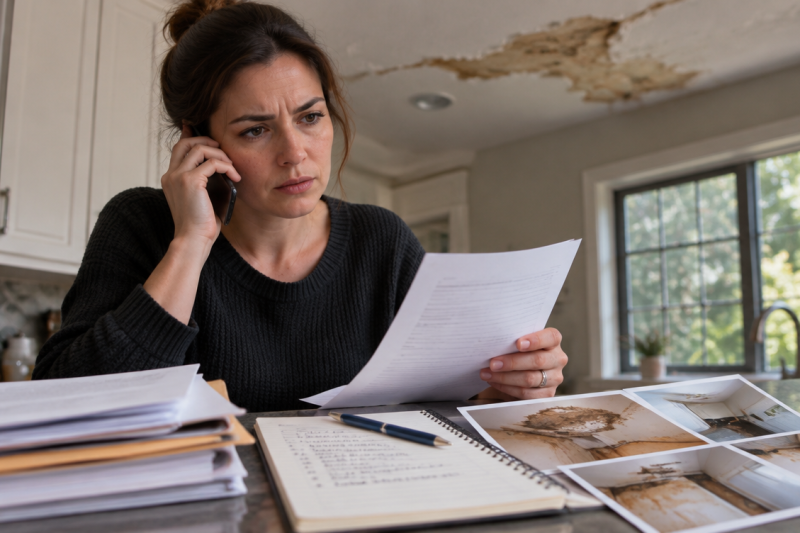
Your homeowners policy expects you to protect your house from more damage after a loss. Here is what counts as a reasonable temporary repair, what your insurer usually reimburses, what to photograph first, and the mistakes that turn a covered claim into a dispute.

Recorded Statement for a Home Insurance Claim: Do You Have to Give One?
Most advice says never give an insurance adjuster a recorded statement. That advice is written for car accident victims dealing with someone else’s insurer. When the request comes from your own home insurer, refusing can stall your claim. Here is how to handle it safely.
Xactimate Estimate: How to Read and Challenge Your Insurer’s Numbers
Most home insurance settlement offers start as an Xactimate estimate. Here is how to read one line by line, where the numbers come from, the items adjusters most often miss, and how to challenge the estimate with evidence your insurer has to answer.
Personal Property Claim: How to Get Paid for Your Belongings
After a fire, theft or flood, the contents part of your claim is often the hardest to finish. Here is how to build an inventory that gets paid, how depreciation works, when to ask for an inventory waiver, and how to collect the full replacement cost.
Homeowners Insurance Bad Faith: Signs, Examples and What to Do
Not every low offer or denial is bad faith. Here is what insurance bad faith actually means in a home claim, the warning signs, how state laws treat it, and the step by step record you need before you talk to a lawyer.
CLUE Report: How Your Claims History Affects Home Insurance
Insurers check your CLUE report before they quote or renew a home policy. Here is what the report shows, how a phone call can end up on it, how to get your free copy, and how to dispute mistakes before they cost you money.
Examination Under Oath: How to Prepare for an Insurance EUO
An examination under oath is a formal, recorded interview your insurer can require before paying a property claim. Here is what it is, why insurers ask for one, what happens if you refuse, and how to prepare so your testimony helps your claim.
Reservation of Rights Letter: What It Means for Your Claim
A reservation of rights letter means your insurer is still handling the claim but may deny some or all of it later. Here is how to read one, what it signals in a home insurance claim, and how to respond without hurting your case.
How Long Does an Insurance Company Have to Pay a Claim?
Most states give insurers a set number of days to acknowledge, decide and pay a home insurance claim. The catch is when the clock starts. Here are the deadlines in Texas, Florida, California, Louisiana, Georgia and Oklahoma, what pauses them, and how to put your insurer on the clock in writing.
Public Adjuster: How to Tell If Hiring One Will Pay Off
A public adjuster can raise your insurance settlement and still leave you with less money than … Public Adjuster: How to Tell If Hiring One Will Pay OffRead more