Property damage liability limits in car insurance determine the maximum your insurer will cover when you cause damage to another individual’s property. California, for example, requires only $5,000 for property damage under state law, sometimes referred to as the “10/20/5” split, which is quite low for LA repair costs.
Many drivers choose $50,000 to $100,000 or higher since it provides better protection. Claims can involve cars, fences, storefronts, and city fixtures.
Next, key considerations, real L.A. Examples, and how to select limits.
Understanding Your PD Limit
PD is the most your insurer pays per accident for damage you cause to someone else’s property. It is per accident, not per car or per individual. If combined costs top your PD limit, you pay the remainder out of pocket. Knowing your limit keeps surprise bills at bay and allows you to plan for actual repair costs.
1. What It Covers
PD liability applies to other people’s stuff you damage in a crash: cars, SUVs, trucks, buildings, garages, fences, gates, landscaping, and mailboxes. It comprises public property, like street signs, guardrails, and the city’s utility poles.
It won’t pay for your car, that’s collision. It’s coverage for damage you do to others, whether the crash occurs on a Los Angeles boulevard or a suburban cul-de-sac. If you’re sued for property damage, most policies cover legal defense costs within or on top of the limit depending on the policy form.
Record the scene, file a claim quickly, and hang on to receipts and estimates. Good documentation accelerates adjuster screenings and payments.
2. What It Excludes
PD liability won’t repair your own vehicle. Collision coverage takes care of your repairs, minus the deductible.
It excludes injury costs to individuals, which come under bodily injury liability. Deliberate damage or crime are out too. Certain business-use or commercial losses may be limited or excluded under a personal auto policy, so check endorsements if you use your car at work.
3. The Numbers
Your PD limit is a dollar amount, per accident, such as $10,000, $50,000 or $100,000. Locate it on your policy’s Declarations Page under ‘Property Damage Liability’.
Most policies have split limits for liability such as 100/300/50, with the latter being PD. Some have a combined single limit for all liability, but PD is typically a single number on split plans.
Write in scenarios. A $10,000 PD limit might not pay for a luxurious bumper, bent axle, and a knocked down pole. A $50,000 limit more effectively absorbs multi-car chain reaction damage.
4. State Minimums
All states define a minimum PD limit. Examples include California with $5,000, Florida with $10,000, and Texas with $25,000.
These minimums frequently do not cover actual repair or replacement costs, particularly in high-value locations or where labor rates are expensive. Know your PD limit.
5. Recommended Levels
Higher limits provide a buffer for serious accidents, not everyone requires the highest level. A lot of motorists go with $50,000 to $100,000.
Think about your possessions, your earnings, and local property rates. If you own a luxury auto or often park in crowded downtown areas, err on the side of more.
Explore your insurer’s sample claims, run “what if” totals, and weigh premium savings against risk. A good PD limit can smooth claim negotiations and let you hold your ground with adjusters. It provides peace of mind, but cautious, defensive driving still counts.
Why State Minimums Fail
State minimums establish a legal floor, not a safe standard. These are real crash costs, not state minimums, and they move faster than the law. The gap becomes your bill. Minimums seldom align with contemporary restoration fees, healthcare expenses, and multi-claimant demands.
When damages surpass your limit, creditors go after your savings, your wages, and your future earnings.
The Value Gap
Today’s cars are sensors, cameras, and aluminum parts, all with repair bills to match. A single bumper with ADAS recalibration can run thousands. It doesn’t even require a high-speed crash to exceed a property damage limit of $10,000 to $25,000.
Luxury, EV, and new models send costs even higher. A Tesla fender fix and battery diagnostics can top $8,000. A newer pickup and a luxury sedan in a moderate impact can blow through a low PD limit quickly.
If your $25,000 PD limit runs into $35,000 in repairs, you’re on the hook for the $10,000 difference. Common scenes add up: Fifteen thousand dollars damage to one car and twenty thousand dollars to another already hits thirty-five thousand dollars.
Stick a third vehicle or a bent light pole in there and you’re light years beyond a lot of state minimums. Medical bills dwarf bodily injury minimums — a twenty-five thousand dollars per-person limit doesn’t cover major trauma that can cost into the hundreds of thousands.
Take recent loss data from your insurer or state dot to model likely costs. Think price for two late-model cars or an electric vehicle or luxury SUV-type deal. Compare labor rates in your city and advanced driver-assistance systems recalibration costs. Construct your limit from those figures, not from law.
Multi-Car Accidents
One wreck can be a three or more vehicle pileup, and your PD limit is an aggregate limit, not a per vehicle amount. Even at low speeds, chain reactions distribute damage across dozens of bumpers, hoods, sensors, and wheels.
Static on your freeway – Pileups on I-5 or 405 demonstrate just how quickly costs balloon. A four-car tap can cross $40,000 to $60,000 in repairs with rentals and tow bills. If your PD limit is $15,000 or $25,000, insurers pay that first, then letters come for the balance.
Low limits pass the buck to victims when the negligent driver is underinsured. Examine local crash figures, including multi-vehicle frequencies, typical claim severity, and repair expenses, to establish a reasonable PD threshold for where you drive.
High-Value Property
Smashing a box truck, storefront, or utility pole racks up harsh bills. Commercial trucks signify expensive body work and time lost claims. Storefront glass, façades, and fixtures all multiply costs.
City assets, such as signals, guardrails, and fiber cabinets, come with fixed replacement costs that accumulate. Dense urban corridors in Los Angeles, downtown hubs and commercial strips increase the likelihood you’ll encounter pricey property.
A $50,000 judgment, with amortization over time and interest, can snowball and wipe out investment returns over years. Most drivers upgrade to 100/300 with higher PD to protect assets and future income.
Know what minimums don’t cover. Wear holes around rentals, towing, or specific losses can still leave you vulnerable.
The Cost of More Coverage

More PD coverage increases premiums, but the increase is typically minor relative to the additional protection. The cost depends on the insurer, driving history, vehicle type, and usage. In LA and other larger U.S. Cities, claim severity and repair costs can be higher, and that can make modest limit increases a clever trade.
Premium Impact
Increasing your PD limit usually results in a minor increase in monthly premiums. The price of additional coverage typically increases as limits increase too, but not linearly. The incremental cost per step is often small.
To most drivers, the marginal cost per $10,000 of extra coverage is cheap relative to the potential out-of-pocket risk. Most insurers reduce the bite with safe-driving, multi-car, good credit or bundle (home and auto) discounts. Those savings can more than offset going from a state minimum property damage limit to fifty thousand, one hundred thousand, or even higher.
Premium changes differ by driver age, experience, record and vehicle. A newer luxury SUV in LA can be more to insure than an older sedan in a sleepy suburb. Yet the price minus protection ratio frequently supports higher PD limits.
| PD Limit (per accident) | Est. Monthly Premium Change vs. State Min | Notes |
|---|---|---|
| $25,000 (min in many states) | baseline | lowest protection |
| $50,000 | +$5–$12 | small jump, big gain |
| $100,000 | +$10–$20 | common “recommended” tier |
| $250,000 | +$18–$35 | strong shield in urban areas |
| $500,000 | +$30–$55 | large assets or higher risk |
Financial Exposure
Low PD limits shove costs back on you if damages exceed your cap. If you sum two newer cars or knock down a storefront, repair and replacement can blow past $25,000 quickly. Anything over your limit is out of your pocket.
Uninsured damages can lead to liens, wage garnishment, or forced asset sales. In extreme cases, bankruptcy ensues. Higher limits lower the risk that one accident ruins your finances.
Weigh premium against probable risk. If you drive every day in Los Angeles gridlock, park in tight parking lots, or commute on the 405, the chance of an expensive claim is high. If you drive less, have a clean record, and own few assets, extreme limits may not be cost-effective.
The Tipping Point
The tipping point is where every additional dollar of premium purchases less valuable coverage. You hit it when your PD limit pays for reasonable worst-case harm for your region and driving habits.
Review your net worth, income and appetite for risk. A lot of drivers get great value at $100,000 to $250,000 PD without opting up to the highest tier.
Reassess limits when you purchase a more expensive vehicle, add a teen driver, relocate to a densely populated zip code or combine policies. Request quotes for multiple PD levels and check associated coverages as well.
Bodily injury limits, for example, $50,000 per person and $100,000 per death per person may be more expensive than a lower amount. Uninsured and underinsured motorist coverage assists in the event of an uninsured driver. More coverage is usually more expensive, but not always in a linear fashion.
When Your Limit Is Not Enough
If property damage from a crash exceeds your policy’s limit, your insurer pays up to that cap and stops. You are on the hook for every dollar over it. The other side can sue to collect the remaining balance, and courts can enforce judgments with liens, asset seizure, or wage garnishment.
Be aware of your exposure pre-loss, particularly in states with low minimums and high repair costs.
Out-of-Pocket Costs
- Vehicle repairs or replacement above your PD limit
- Damage to buildings, utilities, guardrails, and city property
- Towing, storage, rental car charges, and diminished value claims
- Legal fees not covered once limits are exhausted
- Interest on judgments and court costs
These bills don’t wait. Once your carrier pays the limit, other charges are due now. If you crash into two late-model cars in L.A., even a “minor” fender-bender can exceed twenty-five thousand dollars in bodywork and parts.
Toss in a broken stop light and seven-day leases, and the divide widens. Medical bills can stack on top of property claims in the same event. Serious injuries can cost over $15,000 per person, and state minimums for bodily injury frequently range from $15,000 to $50,000 per person and from $30,000 to $100,000 per accident and may not be sufficient.
Uninsured motorist and PIP ranges are comparable and can come up short in tough cases. Hold cash for emergencies and price out an umbrella policy. A one million dollar umbrella is usually a cheap add-on if you already have higher auto limits.
Asset Seizure
Courts can order seizure of assets if you can’t pay damages beyond your policy cap. That can mean levies on bank accounts and liens on a home or sheriff’s sale of non-exempt property to satisfy a judgment. It doesn’t happen overnight, but it can come after settlement talks fall through and the plaintiff obtains a verdict.
The long tail is real. A lien can sit on your property for years and interest can push the balance higher. The havoc and sense of loss of control over your money and big things can resonate through family plans and business ambitions.
Set PD limits to real risk. In crowded, high-value markets with expensive cars and public fixtures, select limits that correspond with replacement costs, not just legal minimums.
Wage Garnishment
If you can’t pay a court-ordered balance, a creditor can garnish wages. Your take-home pay decreases each cycle until the judgment, fees, and interest are satisfied. This can harm credit, increase borrowing costs, and restrict housing choices.
Don’t take that chance – pick PD limits that address multi-vehicle crashes and city property claims. If limits still aren’t enough, you’ll have to sue or negotiate. Most states give you two years to file for injuries and three for property damage.
Beyond the Bumper
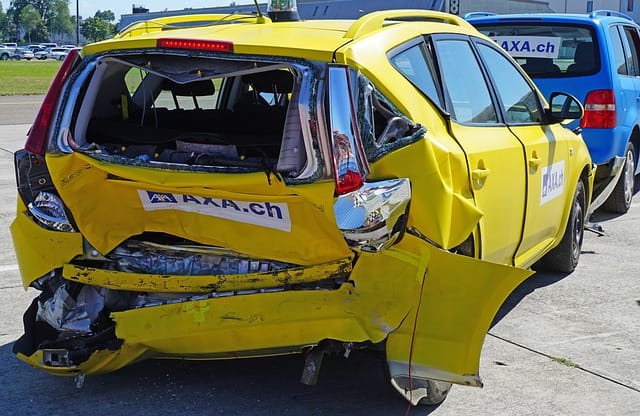
Property damage (PD) pays for damage you do to others’ property, not yours. It extends beyond dings and lacquer. Besides parked cars, claims can consist of garage doors, fences, gates, stucco, brick walls, lawns, sprinklers, trees, mailboxes, and business fixtures such as signs or glass storefronts.
City assets, including curbs, traffic signs, streetlights, guardrails, fire hydrants, and utility poles, too factor in. Each dollar you pay for these items exhausts your single PD deductible. Consult your policy and endorsements for the complete list of covered property types and exclusions.
Diminished Value
Diminished value is the loss in your car’s value after it has been repaired, notwithstanding if the work is great. Buyers pay less for a car with an accident history and that differential is what the owner can potentially capture.
If you cause the crash, you can be on the hook for this loss. Luxury and late-model cars exhibit the largest deltas. A fixed-up $90,000 SUV probably sells for thousands less than a comparable clean-title vehicle.
Other property claims tuck diminished value into the check, which sneaks totals beyond parts and labor alone. Including towing, storage, and appraisal fees, the expenses mount quickly.
When you select a PD limit, expect diminished value to be on the tab. Minimums in a few states drop to $20,000, but that can be slim if you strike a costly vehicle or multiple vehicles.
Loss of Use
Loss of use is how much it costs the owner to get around as the beaten-up car languishes in a garage. That could be a rental car, rideshare credits, or per-day fees by the vehicle’s manufacturer.
You might be responsible for these charges when you wreck someone else’s car. The meter begins running immediately and doesn’t halt until parts are received and work is performed.
For commercial vehicles—say contractor vans, delivery trucks, or rideshare cars—loss of use accrues since downtime leads to missed income. A week or two in recovery can be more than the repair bill.
Leave some room in your PD limit for loss of use. The average PD claim is $6,551, but when you add loss of use, diminished value, and two cars, totals can soar.
Public Property
We’re talking streetlights, guardrails, traffic signs, signal boxes and utility poles. Striking one can lead to huge invoices as a result of specialized labor, lane closures and machinery.
City and utilities are likely to want payback quick and complete. They can go to collections, and if a judgment falls, liens, wage garnishment or frozen accounts may ensue.
PD is a boom covering risk, only if the limit matches actual risk. Most specialists prefer at least 100/300/100, often about $5 to $10 more per month, and asset holders might opt for 250/500/100 or more.
Low state minimums likely won’t cover multi-car or high-value losses.
How to Choose Your Limit
PD limit means balancing what you own, your driving habit, and your affordability. The goal is simple: cover the likely financial hit from a crash, which includes damage to cars, buildings, and even injury claims tied to property losses, without paying more than you need.
- Map your exposure: list assets, income, and what could be at risk if you’re sued. Add home equity, savings, investments, and valuables.
- Check state minimums: requirements vary. Some states establish $25,000 minimums in North Dakota, Ohio, Oklahoma, and Rhode Island, which wouldn’t even cover a multi-car pile-up.
- Estimate real-world costs: price out a new luxury SUV, a storefront, traffic signal, or fencing. Repairs and parts continue to increase with inflation.
- Use tools: run insurer calculators to model claims and premium impact for $25,000, $50,000, $100,000, and $250,000 limits.
- Compare costs and benefits: higher limits raise premiums but shield more assets.
- Align with your net worth and income: many experts suggest a PD limit at least equal to your net worth. Consider future earnings too.
- Set priorities: rank cost, protection, and peace of mind before you decide.
- Think about an umbrella policy for additional liability over and above your auto limits.
Assess Your Assets
Add up home equity, savings, brokerage accounts, retirement balances, business interests, and valuables about how to choose your limit. Use market value, not purchase price, and list any debts to get net worth.
Shoot for a PD limit that is equal to or greater than your net worth. That amount provides protection for assets from a lawsuit in the event a single incident causes significant losses, such as several total vehicles and a building.
Factor in future income and retirement contributions. Judgments can grow with wages so higher limits might be wise if your income is increasing.
Build a simple worksheet with columns for asset type, value, debt, and net. Update it when your finances change.
Consider Your Location
Risk moves around based on where and how you drive it. Dense cities, busy corridors, and affluent areas attract more expensive claims, as cars and properties that are more expensive are packed into small spaces.
Local repair rates, parts availability, body shop labor – all of that matters. If you travel by or near high-end shopping areas or gated communities, one accident can go beyond low limits quickly.
If your commute goes through prime property areas, nudge your PD upward. This is handy for daily freeway commutes in big metros and for long miles.
Review state or regional crash statistics at DOT or insurance department sources. A greater frequency of accidents and higher average claim costs indicate that you should consider selecting larger limits.
Review Annually
Confirm your PD limit at each renewal. Finances, risk, and prices vary.
Update after big life moves: buying a house, adding a teen driver, a job change, or a new car. Inflation and repair costs can push last year’s limit too low.
Set a reminder on your calendar. Include a rapid tool test and quality comparison to maintain coverage on par.
Conclusion
Property damage limits really do some heavy lifting in your car insurance on bad days. A fender bender on a busy LA street can rack up six figures in no time. A new SUV, two parked cars, a bent gate, and a snapped pole all add up. State minimums max out quick. Higher limits provide actual space.
To establish a clever limit, consider your drive mix, your net worth and local expenses. LA fix-it rates are sky high. Traffic remains heavy. Claims linger. A 100/300/100 split suits a lot of motorists. Higher is good assistance if you drive new cars or valet park frequently.
To see where your gap is, take your policy, request quotes at 100k, 250k, and 500k PD, and examine the leap. Got questions on LA rates and limits? Contact.
Frequently Asked Questions
What is a property damage (PD) liability limit?
Your PD liability limit is the maximum your insurer pays to repair damage you cause to someone else’s property. It includes cars, houses, fences, and whatever else. Typical limits come in the form of split limits, such as 100/300/100. Your PD limit is that last number.
Are state minimum PD limits enough in Los Angeles?
Typically no. Repair and replacement costs in L.A. Are high. State minimums can be as low as $5,000 to $10,000. One wreck with a posh car or storefront can surpass that quickly. Higher limits protect you from the risk of out-of-pocket loss.
How much PD coverage should I choose?
Target at minimum the $100,000 to $250,000 range here in L.A. A lot of drivers go with $300,000 or $500,000. Correspond your limit to your assets and local prices. Upper limits are inexpensive relative to the potential of a huge claim.
What happens if damages exceed my PD limit?
You cover the remainder. The other guy can come after you personally. Your savings, wages, or assets could be on the line. Think about an umbrella policy for coverage over and above your auto policy.
Does PD liability cover my car repairs?
No. PD liability covers damage you cause. To repair your vehicle, you’ll require collision coverage. If it’s another driver’s fault, their PD liability ought to pay for your property damage.
How much more does higher PD coverage cost?
Frequently lower than you assume. Simply increasing your property damage liability limits from state minimums to $100,000 to $300,000 PD can add a modest amount to your premium. In L.A., it’s typically a small amount relative to potential six-figure claims.
What property is covered “beyond the bumper”?
PD liability can cover more than cars: buildings, garages, fences, signs, utility poles, landscaping, and sometimes government property like guardrails. It doesn’t cover injuries; that’s bodily injury liability.