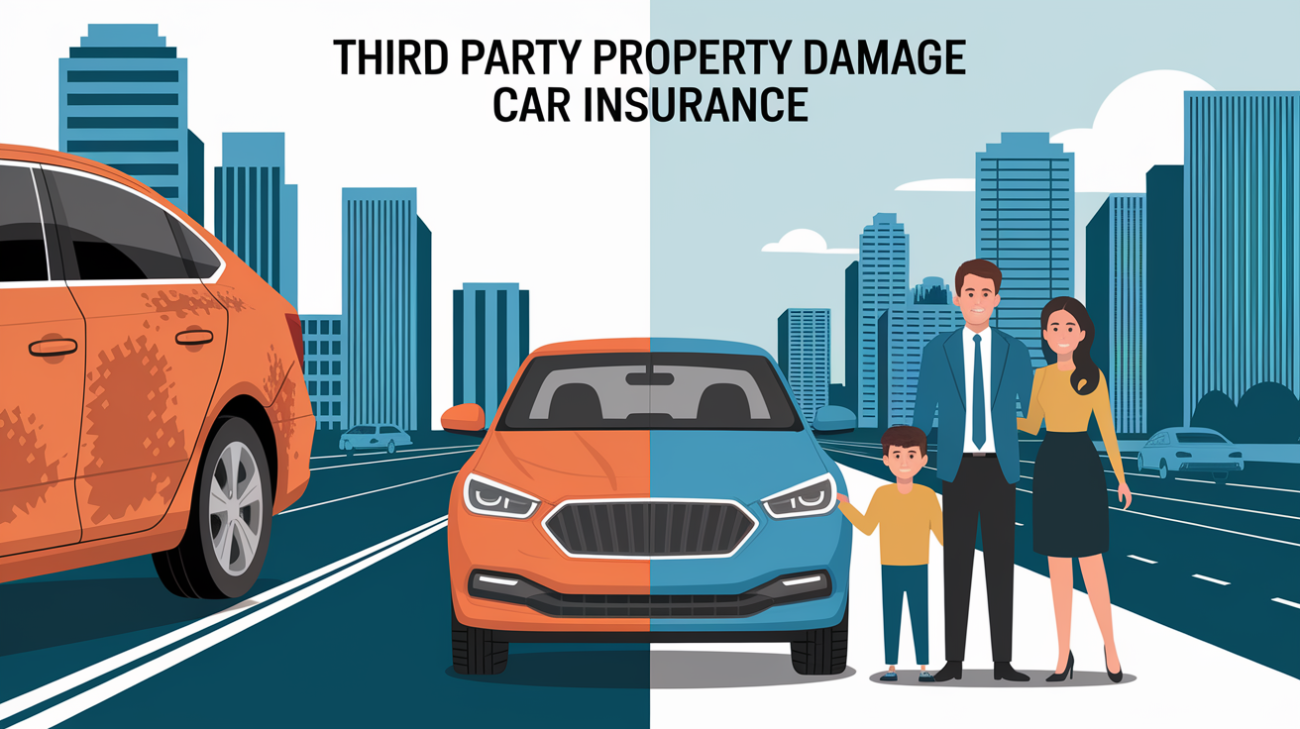
Third party property damage car insurance compare lists State Farm, Geico, and Progressive run between $38 and $52 a month for a $25,000 cap in California.
Every quote has the same 5/15/25 split, but factors like uninsured motorist and glass coverage do increase the bill.
The following block details live quotes, secret surcharges, and DMV filing tips that allow you to secure the most affordable legitimate plan immediately.
Understanding Property Damage Liability

Property damage liability coverage is a crucial component of your auto insurance policy that handles costs when you accidentally damage third party property, such as rear-ending someone’s mailbox or smashing a shop window. While it doesn’t cover your own vehicle, it protects you from paying out-of-pocket for damages to others. All states except New Hampshire require at least a minimal amount of this coverage, and lenders often demand proof of your third party car insurance before you can drive off the lot.
The Core Concept
Consider it a bucket of cash you lease annually. You select the size—$25,000, $50,000, or $100,000 say—then fling the bucket at your insurer when the sh*t hits the fan. If you sideswipe a Prius and the body shop bill is $8,200, the insurer jumps in and pays. Whatever spills over falls back on you.
The bucket insures property damage, not hospital bills and certainly not your own set of wheels. Most people in CA begin with the state minimum of $5,000, but one twisted 405 guardrail can fly through that in an instant. Bumping it up to $50,000 will normally add only around eight bucks a month, less than two lattes.
Your Legal Shield
One quick call to claims and they rent the lawyers. They negotiate with the irate neighbor, write the check to the city for the toppled light pole, and keep this entire fiasco off your credit report. Without it, a $30,000 repair bill becomes a wage-garnishment order.
California allows judgment holders to reduce up to 25% from your paycheck until the bill is paid. A mid-tier 100/300/100 policy—industry speak for $100,000 per crash—costs about $220 a year for a clean driver in L.A. County. That’s less expensive than a single traffic lawyer’s retainer.
Bodily Injury vs. Property Damage
Property damage writes checks for stuff you can kick—fenders, fences, storefront glass. Bodily injury pays people you injure—ambulance rides, x-rays, lost wages. They lay side by side on the same declaration page but never commingle funds.
If you clip a cyclist and smash her carbon bike, property damage buys the bike and bodily injury pays for her broken wrist. State minimums split them apart: California asks for $5,000 property yet $15,000 bodily, a gap that shocks drivers who assume one limit covers everything.
Smart shoppers pair both limits so one bad day doesn’t suck the bank dry. Match limits to your savings and then drive calmer.
Compare Third Party Property Damage Insurance

Third party property damage car insurance pays for the other guy’s dented bumper, mailbox, or storefront wall when you’re to blame, providing essential third party property damage liability coverage. This limited focus keeps the cost low, but the compromises become apparent quickly when you compare car insurance options side by side.
Coverage Limits
Most insurers offer the same headline figure of $20 million in legal liability, but it’s the fine print that divides them. A few continue to limit rental-car bills to $30 a day; others pay for a like-sized SUV for thirty days. One national brand limits property damage to $25,000 for a job errand-related crash.
Another maintains the full limit but excludes bulldozers and trailers over 10,000 pounds. See if that dollar amount shrinks outside of California since two heavy hitters silently fall to $5 million once you cross the border into Mexico or Canada.
Premium Costs
A clean-record driver in downtown L.A. With a 2012 Civic gets quotes ranging from $188 to $364 a year for the same limits. The difference is even wider if you just have an SR-22; one provider adds 42 percent, another adds 8 percent. Pay-per-mile start-ups can get you below $140, but they add a 5 cent-per-mile fee after 12,000 miles.
This option is great for weekend users but brutal for commuters. Always inquire if that price is bundled with uninsured motorist coverage. Some sites list the combo rate first, so the bare-bones policy appears less expensive than it is.
Insurer Reputation
AM Best rates the top 7 sellers here A+ or better, yet complaint counts at the California Department of Insurance run 3 to 1. Use the NAIC index: a score of 1.0 means average gripes; anything above 2.0 spells hassles.
One big lender’s captive insurer rates 2.4, mainly due to late property appraisals. Reddit threads and local body-shop gossip bolster the numbers. Query any shop on Ventura Blvd which adjuster drags feet and they’ll name the same two firms.
Endorsement Options
You can add on simple additions without leaping to complete coverage. Non-owned trailer riders are $12 to $18 annually and increase your property cap to $50,000, which is useful if you tow boats to Castaic Lake.
A “driving other cars” clause runs roughly $25 and maintains the $20 million shield when you borrow a neighbor’s pickup. Not every carrier offers it past 65. Roadside labor is typically limited to $75 per tow unless you pay an additional $8 for the “plus” tier, which doubles the payout and includes winching.
Claims Process
Phone apps now enable you to upload crash photos at 2 am, making the claims process smoother. Some insurers offer quick estimates for minor dents and even provide a third party car insurance payout of $1,500 before sunrise. However, others may still send an adjuster out in forty-eight hours and issue paper checks ten days later.
It’s essential to find out if your insurance company allows you to choose the repair shop, as some steer you towards their “preferred” network, limiting your options. If your vehicle is undrivable after a freeway sideswipe, be aware that roadside reimbursement caps can vary significantly based on your third party property damage car insurance policy.
For instance, State Farm covers $150 per tow, while Progressive offers $200, and Farmers provides only $50 unless you opt for the deluxe add-on. Understanding these car insurance options can help you avoid unexpected expenses during your recovery from an accident.
What Your Policy Excludes

To explain, third party property damage car insurance covers the other guy’s repair bill, not yours, leaving gaps where your wallet remains open!
Your Own Vehicle
As the proud owner of your vehicle, any dent, blown tire, or cracked windshield is your responsibility. If you skid on Sunset Boulevard and hit a pole, your auto insurance policy may cover third party property damage, writing a check to the city for the bent sign. However, incidents like carport theft in WeHo or a flood beneath the 110 overpass do not activate third-party payouts, leaving you with potential out-of-pocket expenses. Furthermore, if you have a second weekend car that isn’t listed, and it gets rear-ended on PCH, your insurer may deny both the third party claim and defense expenses, emphasizing the importance of having comprehensive car insurance to protect against such risks.
Additionally, custom wheels can complicate matters. A few months ago, my assistant informed me that the limo company had reached out again, stating I had been involved in an accident, highlighting how crucial it is to keep track of your insurance needs.
Intentional Acts
Mash the accelerator to frighten a tailgater and scrape their bumper—declined. Street racing on Imperial Highway, brake-checking on the 101, or swerving toward a scooter in anger—all void cover. Courts term it ‘willful misconduct,’ and insurers repeat that phrase.
Punitive damages a jury later appends—say $50k for road-rage harm—fall in your lap.
Commercial Use
DoorDash bags on the seat invalidate your personal policy as soon as you hit “start delivery.” The same applies for lugging equipment to half-paid gigs in Anaheim or operating an Airbnb airport shuttle with the minivan. Insurers check trip logs after major claims.
If the app was running, they back off and give you the tab. Commercial plates or a rideshare rider fill this gap, but the underlying third-party policy remains quiet.
Non-Permissive Use
Allow your roommate to borrow the keys and they crash into a Tesla store kiosk–coverage remains intact due to you consented. If they just took the car, insurers label it theft-by-conversion. You pay the Tesla store up front, then pursue the roommate.
Except for he’s listed on the policy. See who has keys, unnamed drivers equal unpaid bills.
State-Specific Insurance Mandates

Each state pens its own rulebook for third party property damage, so a policy that has you covered in Oregon can leave you under-covered in Louisiana. The patchwork starts with two basic camps: those that let you sue the at-fault driver for every dent and those that make you file first under your own third party insurance coverage. Where you register your vehicle determines which camp applies, and the dollar minimum you have to carry shifts at every border.
At-Fault vs. No-Fault
In tort states—Texas, Georgia, California—the driver who causes the crash pays the bill. You sue against the other guy’s property damage limit and if their carrier delays, you can sue. That sounds easy until you discover that twelve states and D.C. Operate a no-fault twist to injury claims.
In New York, for example, your own PIP pays the medical bills up to $50,000 no matter who ran the red light, yet the old rule still governs fenders: the at-fault driver’s $10,000 property minimum still fixes your bumper. Florida goes the other way, mandating $10,000 PIP and $10,000 property, but eliminating the BI mandate except if a court order compels you to purchase.
Pennsylvania allows you to select full tort or limited tort at every renewal. If you pick limited, you give up your right to sue for pain and suffering in exchange for a lower rate. It’s not always clean—Michigan is no-fault for injuries but retains property damage under the classic tort arrangement, so you still pursue the other carrier for a mailbox you flattened.
Minimum Requirements
Most legislatures land near 25/50/25: $25,000 per injured person, $50,000 total crash, $25,000 for cars or fences you hit. Maine nudges up at 50/100/25 and adds $2,000 med-pay for the driver. Texas caps it at 30/60/25 and Massachusetts sinks to 20/40/5—just a little more than a used Camry bumper.
New Hampshire alone says to skip it if your record is clean, but you have to post a bond or demonstrate available funds equivalent to the 25/50/25 tier. If you have less on you, the DMV can yank plates on the spot.
Regional Rate Factors
Rural zip codes in Montana still spike premiums even with that same 25/50/25 floor since the repair shops sit two hours away and jurors pass out bigger pain-and-suffering checks. Louisiana’s 10/20/10 minimum seems stingy, but courts permit stacked lawsuits to flourish so carriers charge for risk, not the posted limit.
Up in Maine, winter salt rusts vehicles more quickly, fueling comp claims and floating property damage prices upward notwithstanding the state’s higher limits. Cross into North Dakota and that same driver profile declines 18% in part due to its no-fault law limits injury suit potential and due to rural crash rates are low.
The Hidden Costs of Underinsurance

The $25,000 state minimum for third party property damage car insurance may sound appealing, but it can quickly become inadequate. For instance, if a Tesla Model S bumper costs $18,000 and the owner sues for lost income, the gap between your coverage and court mandates can wipe out years of savings in just a week.
Asset Seizure
Courts don’t care that your checking account is reserved for rent. Once a judgment exceeds your limit, the sheriff can mark your car, your gaming rig, and even the equity you’ve built in a condo. In California, a collector can put a lien on any property in your name.
If you sell later, the buyer’s escrow pays the creditor first. One Bay Area motorist we examined maintained just $15,000 for property damage. When he t-boned a pair of parked vehicles—an Audi and a Porsche—the final tab came to $42,700.
The court froze his $28,000 Robinhood portfolio and ordered the sale of a paid-off Tacoma to bridge the gap. Bankruptcy stops the bleed, but exempt assets in most states only reach a few thousand dollars, leaving most of us still stripped of wheels and liquidity.
Wage Garnishment
After assets, paychecks are next in line. Federal law allows judgment holders to garnish as much as 25 percent of disposable income until the balance dies. If you make $70,000 in LA, that’s about $1,100 out the door every month in addition to new insurance costs.
Employers despise the paperwork but are required by law to comply, so a few tech companies are even auto-deducting to dodge liability. Illinois establishes its own lower garnish floor, but a $50,000 multi-victim wreck can still outpace that cap when a couple of commuters break bones.
Miss two payments and interest accrues at 9 percent a year, so the pit gets deeper even as you slumber.
Long-Term Debt
What doesn’t make the auction block or paycheck sits around as unsecured debt. Rehab for the other driver’s spinal injury cost $190,000 for one Denver mechanic. His $25,000 limit left $165,000 turning into a 12-year note at 11 percent interest.
Credit score drops 120 points overnight, pushing card APRs beyond 28 percent and turning upcoming car loans sub-prime. Others, like these guys, double down on third-party-only policies to save $18 a month, never running the math that tells them one bad left turn can cost $1,400 a month for 10 years.
Compound interest transforms a late-night freeway skid into a second mortgage you never intended to take out.
Finding the Best Car Insurance Quotes

Rates move semi-annually in most states, so pulling fresh figures every six months keeps you from overpaying on third party property damage limits. Have your driver’s license, VIN, and last policy declaration page at the ready before you open your first browser tab. Inputting those incorrectly can move a quote by fifty dollars or more.
Choose companies that maintain claim offices in your time zone. Los Angeles motorists wait three days less when damage adjusters put in their hours on the Pacific clock.
For Personal Vehicles
A 30-year-old Prius driver in L.A. County who only wants the state minimum $5,000 property cap can compare rates ranging from $220 to $490 a year for that single line item. Bumping the limit to $25,000 reduces the spread to $410 to $620. Run those same details on at least three national sites and two local brokers.
One regional firm equaled Geico’s price but added in free roadside. Check the split limits line: 15/30/5 saves cash until you tap a Tesla bumper, then the last number hits your savings. Check the California DOI complaint index. A company may seem cheap until you factor in the BBB complaints of slow payouts on mailbox posts and garage doors.
For Commercial Vehicles
A Sprinter van that hauls flowers cross-county requires a business auto policy although you’re the sole driver. Carriers convert personal policies once they see commercial plates. Ask each underwriter if they use Symbol 1 (any auto) or 7 (scheduled autos) since that determines whether that quick-rental van you snag last-minute is covered for the $19,000 Mercedes bumper you backed into.
Food-truck owners in Orange County saved $312 on annual premiums by increasing the property damage deductible from $500 to $1,000 with the $1 million limit in place. This is more than enough to rebuild a taco stand. Print the quotes, circle the property damage line, and pile them.
One national name added complimentary fire-suppression reimbursement that a bargain brand glossed over, which is worth every penny when fry-oil claims exceed $40,000.
Conclusion
If you looked at the rules, you compared quotes. You saw how fast a fender-bender can empty a piggy bank. Choose the limit that covers actual labor rates in your area, not the state low-ball. Pay the additional twenty a month there and avoid the ten-grand bill down the road. Run one last quote tonight, lock it in, and hit the road knowing your bank card stays in your pocket if a mailbox jumps out.
Frequently Asked Questions
What is third-party property damage coverage?
Third party property damage car insurance is essential when you crash and damage someone else’s vehicle, fence, or building, but it does not cover repairs to your own car.
How much property damage liability do I need in California?
We are required by law to have a minimum of $5,000 in third party property damage car insurance, but a single fender bender on the 405 can run $15,000. Most LA drivers purchase $50,000 or more in car insurance coverage.
Does third-party insurance cover parked car damage?
Yes. If you swipe a parked Subaru on Sunset, your third party property damage liability insurance picks up the repair bill up to your limit.
Is a high-deductible worth it for property damage liability?
There is no deductible for third party property damage liability; you select a limit, and your auto insurer pays up to that limit.
How do I compare quotes fast?
Break out your existing declarations page, enter the same limits at three car insurance companies, and pick the lowest price with an A-rated third party car insurance provider.