
Table of Contents
- How to Get Auto Insurance Quotes Online Now in Minutes
- What Information Is Needed for a Car Insurance Quote
- Factors Affecting Auto Insurance Premiums You Should Know
- How to Compare Car Insurance Rates Without Getting Burned
- Using a Car Insurance Quote Comparison Tool Effectively
- Coverage Options Every Policyholder Should Understand
- Discounts, Flexible Payment Options, and How to Save More on Auto Insurance Quotes Online Now
- Conclusion
Last Updated: June 7, 2026
Getting auto insurance quotes online now is faster than most people expect, but the process trips up first-time buyers more often than it should. At Covera, we’ve guided thousands of readers through the quote process, and the single biggest mistake we see is rushing into a comparison without understanding what you’re actually comparing. The result: people pick the cheapest number on screen and end up underinsured. Below, we’ll show you exactly how to gather quotes efficiently, decode coverage options, spot discounts, and use a side-by-side comparison to find the policy that actually fits your life.
How to Get Auto Insurance Quotes Online Now in Minutes
The online quote process is straightforward once you know what to expect. Most insurers generate an instant estimate in under ten minutes if you arrive prepared. The steps below apply whether you’re shopping for the first time or switching carriers mid-policy.
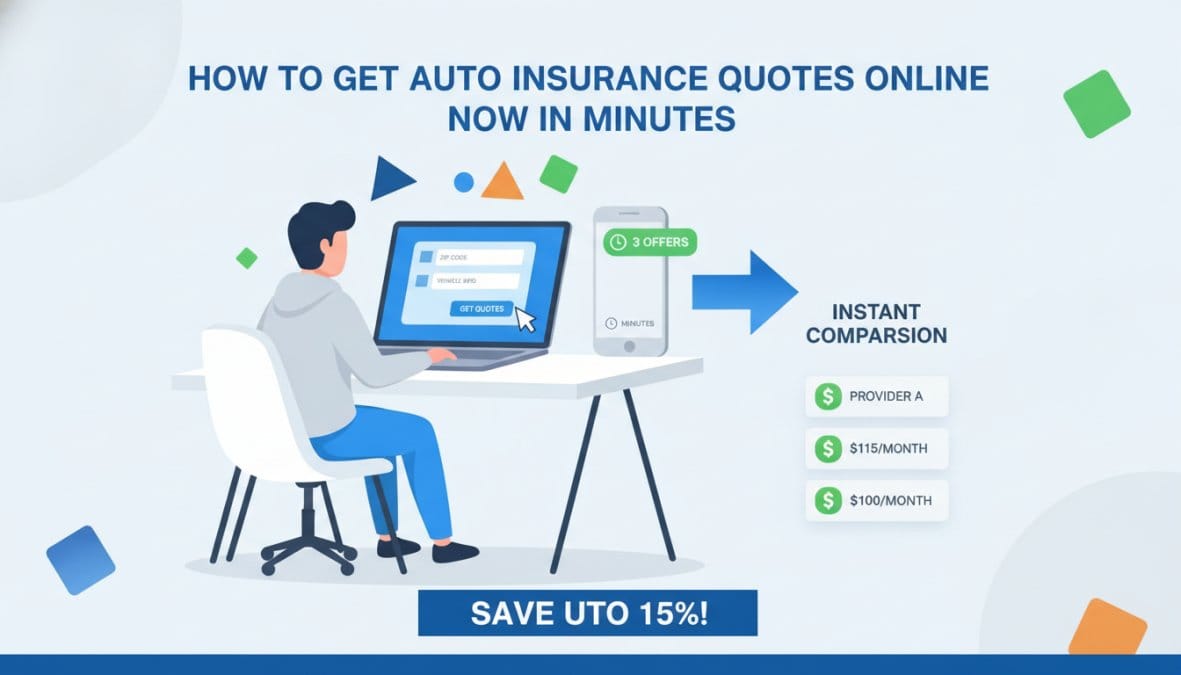
Step 1: Gather Your Personal and Vehicle Information
Before you open a single quote form, pull together the following:
- Driver’s license numbers for all drivers in the household
- Vehicle identification number (VIN) for each car
- Current odometer reading
- Your current insurer’s name and policy number (if applicable)
- Your zip code and garaging address
The VIN is the detail most people forget. It tells the underwriting system everything about your vehicle: make, model, year, safety features, and theft risk. Without it, you’ll get a rough estimate. With it, you get a binding-ready quote.
If you’re unsure where to find your VIN, check the driver’s side dashboard (visible through the windshield), your vehicle registration, or your existing insurance card. The number is 17 characters long.
Step 2: Choose Your Coverage Options and Limits
This is where most first-time buyers stall. The form asks you to select coverage types and limits before you fully understand them. Resist the urge to click through quickly, your choices here directly determine your annual premiums and what the insurer actually pays if something goes wrong.
At minimum, you’ll need to set:
- Liability coverage limits (bodily injury and property damage)
- Deductible amounts for collision and comprehensive coverage
- Uninsured motorist coverage (required in many states)
Step 3: Review Your Instant Estimate and Bind Your Policy
Once you submit your information, most online portals return an instant estimate within seconds. Review the coverage limits carefully before comparing the premium number, two quotes showing the same monthly payment can carry wildly different coverage gaps. If the quote looks right, most carriers let you bind policy immediately online, pay via card or bank transfer, and receive digital proof of insurance within minutes.
What Information Is Needed for a Car Insurance Quote
Knowing what information is needed for a car insurance quote ahead of time eliminates the friction that causes most people to abandon the process halfway through. Insurers need two categories of data: personal information and vehicle information.
Personal information typically includes:
- Full legal name, date of birth, and address
- Driving history for the past three to five years (accidents, violations, claims)
- Marital status and, in some states, occupation
- Credit score authorization (more on this below)
Vehicle information typically includes:
- Year, make, model, and trim level
- Annual mileage estimate
- Primary use (commuting, pleasure, business)
- Safety features (anti-lock brakes, blind spot monitoring, etc.)
- Whether the vehicle is financed or leased
Lenders who hold a lien on your vehicle will require full coverage, so if you’re still paying off a car loan, comprehensive and collision aren’t optional regardless of what the state minimum requires.
Providing inaccurate mileage estimates to lower your premium is considered material misrepresentation. If a claim occurs and the insurer discovers the discrepancy, they can deny the claim or cancel your policy outright.
Factors Affecting Auto Insurance Premiums You Should Know
Several variables determine what you’ll pay, and understanding them helps you identify where you have room to improve before you shop. According to the Insurance Information Institute’s consumer guidance, the factors most commonly used in underwriting include your driving record, vehicle type, location, coverage selections, and credit history.
The factors you can control include your deductible level, coverage limits, and discount eligibility. The factors you can’t immediately change, such as your driving record or credit score, still matter, but knowing how they’re weighted helps you set realistic expectations.
How Your Credit Score Impacts Your Premium
Most states allow insurers to use a credit-based insurance score, distinct from your FICO score but derived from similar data: payment history, outstanding debt, length of credit history, and new credit inquiries. The underwriting logic is that policyholders with lower credit scores file claims more frequently on average.
Practically speaking: if your credit score has improved since you last shopped, you may be paying a higher premium than your current risk profile warrants. Shopping for new quotes after a meaningful credit improvement (typically a 50+ point increase) can lower annual premiums without changing your coverage at all.
A few states, including California, Hawaii, and Massachusetts, prohibit the use of credit scores in auto insurance pricing. If you’re in one of these states, this factor doesn’t apply to your quote.
How to Compare Car Insurance Rates Without Getting Burned
The most common trap in comparing car insurance rates is treating premium price as the primary variable. Two quotes at the same monthly cost can differ dramatically in what they actually cover. The right approach is coverage-first, price-second.
| Factor | What to Compare | Why It Matters |
|---|---|---|
| Liability limits | 25/50/25 vs. 100/300/100 | Higher limits protect your assets in a serious accident |
| Deductible amount | $500 vs. $1,000 | Lower deductible = higher premium, but less out-of-pocket at claim time |
| Comprehensive included | Yes vs. No | Required by lenders; covers theft, weather, and non-collision damage |
| Uninsured motorist | Included vs. Add-on | Protects you if the at-fault driver has no coverage |
| Claims process rating | Online vs. agent-only | Affects speed and ease of resolution |
| Discount eligibility | Multi-car, safe driver, paperless | Reduces annual premiums without changing coverage |
Never compare auto insurance quotes on premium price alone. Match the coverage limits and deductibles first, then compare cost. A $20/month difference means nothing if one policy leaves you with a $50,000 coverage gap.
Using a Car Insurance Quote Comparison Tool Effectively
A car insurance quote comparison tool pulls rates from multiple carriers simultaneously, which saves time but creates a new problem: volume. Seeing fifteen quotes at once without an evaluation framework leads to decision paralysis. Use the comparison tool as a shortlist generator, not a final decision-maker.
Here’s the process that works:
- Enter your information once and generate the full list of quotes
- Filter immediately by coverage level: eliminate any quote that doesn’t meet your minimum coverage requirements
- Sort the remaining quotes by deductible amount, not premium
- Identify the top three carriers by combined coverage value and price
- Visit each carrier’s portal directly to verify quote details and check customer satisfaction ratings
According to J.D. Power’s auto insurance satisfaction research, claims handling and communication quality are the top two drivers of customer satisfaction, ahead of price. A carrier that’s $15/month cheaper but has poor claims handling will cost you more in time and stress when you actually need them.
Coverage Options Every Policyholder Should Understand
Auto insurance is not a single product, it’s a bundle of separate protections, each with its own limits, deductibles, and exclusions. Understanding the structure before you shop prevents the most expensive mistake in insurance: discovering a coverage gap after a loss.

Liability, Collision, and Comprehensive Coverage Explained
Liability coverage is the foundation of any auto policy. It pays for bodily injury and property damage you cause to others in an at-fault accident. It does not cover your own vehicle or medical bills.
Collision insurance covers damage to your own vehicle from a collision with another car or object, regardless of fault, a guardrail, a parking lot post, a sideswipe.
Comprehensive coverage covers non-collision damage: theft, vandalism, fire, flooding, hail, and animal strikes. If a tree falls on your car during a storm, comprehensive pays for the repair minus your deductible.
Rideshare insurance is a separate consideration for drivers using platforms like Uber or Lyft. Standard personal auto policies typically exclude coverage when you’re logged into the app but haven’t accepted a ride, a gap many drivers don’t discover until they file a claim.
State Minimums vs. Full Coverage: What the Law Requires
Every state sets a minimum liability coverage requirement, but state minimums are almost universally too low to protect your assets in a serious accident. A state minimum might require $25,000 in bodily injury coverage per person, but a single emergency room visit can exceed that amount.
“Full coverage” is not a legal term, it’s industry shorthand for a policy that includes liability, collision, and comprehensive. If you’re financing or leasing, your lender defines what full coverage means in your loan agreement, and their requirements typically exceed state minimums. As documented in the National Association of Insurance Commissioners’ consumer resources, state-specific requirements vary significantly in both minimum limits and mandatory coverage types.
Discounts, Flexible Payment Options, and How to Save More on Auto Insurance Quotes Online Now
Finding auto insurance quotes online now is only half the equation. The other half is knowing which discounts apply to you and how to structure your payment to minimize total cost.
The most commonly available discounts include:
- Safe driver discount: Clean driving record for three to five years
- Multi-policy discount: Bundling auto with home or renters insurance
- Multi-car discount: Insuring more than one vehicle on the same policy
- Good student discount: Full-time students with a qualifying GPA
- Paperless discount: Opting for electronic documents and billing
- Telematics/usage-based discount: Allowing the insurer to monitor driving behavior via an app or device
Paying annually typically generates a discount of several percentage points compared to monthly billing, because it eliminates billing administration costs and reduces the risk of mid-term cancellation.
One thing nobody tells first-time buyers: your discount eligibility resets every time you shop. A discount you didn’t qualify for two years ago may be available now. Shopping every 12 to 18 months is one of the most reliable ways to keep premiums competitive without reducing coverage.
For a structured approach to post-quote evaluation, use this checklist before you bind any policy:
Post-Quote Comparison Checklist:
- Confirm liability limits match or exceed your net worth
- Verify deductible amounts are amounts you can pay out of pocket today
- Check that comprehensive and collision are included if you have a lender
- Confirm uninsured motorist coverage is included
- Review the claims process: is it online, by phone, or agent-only?
- Check customer satisfaction ratings from an independent source
- Confirm all applicable discounts have been applied to the quote
- Verify the coverage start date aligns with your current policy expiration
According to the Consumer Financial Protection Bureau’s insurance guidance, reviewing your auto insurance policy annually is one of the most straightforward financial maintenance steps available to most households, yet most policyholders go three or more years between reviews. The real opportunity isn’t finding the cheapest quote, it’s finding the most coverage for the premium you’re already paying.
Shopping for auto insurance can feel like comparing apples to oranges when every carrier presents information differently and buries coverage details beneath the premium number. Covera exists to cut through that confusion: our detailed policy breakdowns, comprehensive comparison resources, and expert guidance across auto, home, and specialty insurance give you the context to make a genuinely informed decision. Get started with Covera and walk into your next quote with a clear understanding of what you’re buying, what it costs, and what it actually covers.
Frequently Asked Questions
Can I get car insurance quotes online instantly?
Yes. Most insurers and comparison platforms provide an instant estimate within minutes of submitting your information online. You’ll typically enter your zip code, vehicle details, and driving record, and the online portal returns quote results in real time. Keep in mind that the instant estimate may adjust slightly during underwriting before you officially bind the policy, so the final premium could differ marginally from the initial figure shown.
What information is needed to get an auto insurance quote online?
To get an accurate auto insurance quote online now, you’ll need your full name, date of birth, address and zip code, driver’s license number, vehicle make, model, year, and VIN, your current driving record, and details about your desired coverage limits and deductible. Some insurers also request your Social Security number to check your credit score, which can influence your annual premiums depending on your state’s regulations.
Do online insurance quotes guarantee the final price?
Not always. An online auto insurance quote is an estimate based on the personal information you provide. Once you move forward, the insurer’s underwriting process may verify your driving record, credit score, and vehicle details, which can cause the final premium to differ slightly. To minimize surprises, provide accurate information upfront and review the coverage options and limits carefully before you bind the policy.
How can I effectively compare car insurance rates online?
Use a car insurance quote comparison tool to view side-by-side results from multiple carriers at once. Make sure you’re comparing identical coverage options, same liability coverage limits, deductible amounts, and any add-ons like rideshare insurance or roadside assistance. Also check discount eligibility, flexible payment options, and the claims process reputation of each insurer. Focusing only on price without evaluating coverage gaps can leave you underinsured.
Is it cheaper to buy car insurance online?
Buying car insurance online can be cheaper in some cases because many insurers offer paperless discounts and reduced overhead costs compared to working through an agent. However, the biggest savings come from comparing multiple quotes rather than from the online channel alone. A licensed insurance agent can sometimes find discounts a self-service portal misses, so the best approach is to use an online comparison tool first, then verify with an agent if your situation is complex.