Driving for app-based delivery platforms like DoorDash, Uber Eats, Grubhub, or Instacart offers great schedule flexibility. Transforming your personal vehicle into an income source is one of today’s most popular side gigs. However, thousands of gig workers put their financial security at risk every day due to a critical misunderstanding about automotive insurance.
Most couriers assume standard personal car insurance satisfies legal requirements or that platform insurance protects them automatically. In reality, standard personal auto policies specifically exclude commercial deliveries. Getting into an accident while logged into a delivery app can result in denied claims, cancelled policies, and devastating out-of-pocket liabilities. If you manage multiple gigs, our guide on the best insurance for side hustles outlines how to structure proper protection across various earnings streams.
This guide analyzes delivery driver insurance, breaks down platform coverage differences between DoorDash and Uber Eats, and reveals how to stay fully protected without paying for unnecessary commercial policies.
Table of Contents
- The Three Phases of Delivery Driving Coverage
- DoorDash vs. Uber Eats: Coverage and Deductibles
- Crucial Gaps Most Competitors Miss
- How Much Does Delivery Driver Insurance Cost?
- Top Insurance Providers for Delivery Couriers
- Step-by-Step Accident Protocol for Gig Drivers
- Frequently Asked Questions (People Also Ask)
- Key Takeaways for Gig Workers
The Three Phases of Delivery Driving Coverage
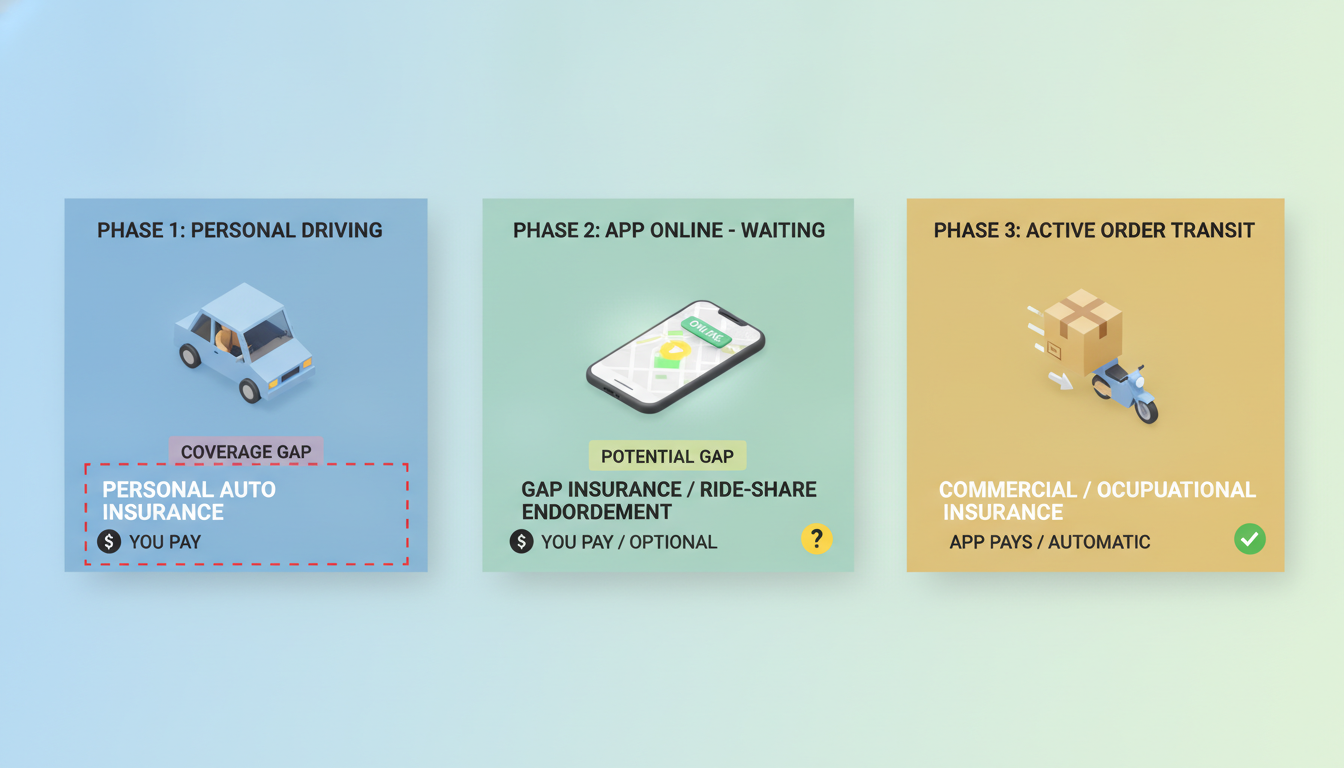
Insurers and delivery apps evaluate your auto liability across three distinct operational phases based on your app status at the exact time of an accident.
Phase 1: App Offline (Personal Driving)
When delivery apps are turned off and you run personal errands, standard personal auto insurance applies normally. Delivery companies offer zero coverage during Phase 1.
Phase 2: App Online, Waiting for Requests
This is the most vulnerable window for delivery drivers. Your app is online as you cruise hot spots or wait in parking lots. Standard personal auto insurance excludes coverage because you are available for hire. Simultaneously, DoorDash provides zero liability or physical vehicle coverage during Phase 2 in most states. Uber Eats provides minimal third-party liability ($50,000 per person, $100,000 per accident, and $25,000 property damage), but no collision coverage for your car.
Phase 3: Active Delivery (Order Accepted to Drop-off)
Phase 3 starts when you accept an order and ends upon doorstep completion. Both DoorDash and Uber Eats provide $1 million in third-party liability during this phase. However, critical gaps exist regarding vehicle repair coverage.
DoorDash vs. Uber Eats: Coverage and Deductibles
When an at-fault accident occurs, company insurance treats vehicle damage very differently:
| Feature | DoorDash | Uber Eats | Instacart |
|---|---|---|---|
| Phase 2 Liability | None (most states) | $50k/$100k/$25k | None |
| Phase 3 Liability | $1,000,000 | $1,000,000 | None |
| Your Vehicle Damage | $0 (Zero coverage) | Contingent cash value | None |
| Deductible | N/A (Driver pays all) | $2,500 deductible | N/A |
DoorDash only protects third parties. If you damage your own car on an active DoorDash run, DoorDash pays zero dollars toward repairs.
Crucial Gaps Most Competitors Miss
Generic insurance articles usually quote basic policy limits while overlooking realistic operational hazards:
1. The Material Misrepresentation Risk
Hiding delivery driving from your auto insurer is dangerous. If you crash with thermal bags in your vehicle, adjusters investigate app records. Unreported commercial driving constitutes misrepresentation, allowing insurers to cancel your policy retroactively and force you into costly high-risk risk pools.
2. The High Deductible Burden
Uber Eats offers collision coverage during Phase 3, but imposes a high $2,500 deductible. If your vehicle suffers $3,000 in damage, Uber pays only $500. Without a rideshare endorsement bridging deductible differences, even minor incidents eliminate months of profit.
3. Tax Deductibility of Insurance Surcharges
Independent delivery couriers report taxes on IRS Schedule C. The business-use portion of your auto insurance and delivery rider premiums is fully tax-deductible. As explained in our overview of business insurance for online store owners, deducting operational insurance shields gig workers from excessive self-employment taxes.
How Much Does Delivery Driver Insurance Cost?
Couriers rarely need standalone commercial auto insurance, which often costs $150 to $300 monthly. Instead, drivers simply need a rideshare or delivery endorsement attached to their existing personal policy.
These endorsements typically cost between $15 and $35 per month (a 15% to 20% premium addition). When combined with health coverage essentials outlined in our guide to the best health insurance for freelancers, an affordable auto rider provides complete professional security.
Top Insurance Providers for Delivery Couriers
- Progressive: Offers flexible rideshare riders covering food and grocery delivery across all three phases while bridging deductible gaps.
- State Farm: Extends full personal liability and collision limits to delivery drivers for a moderate 15% to 20% surcharge without deductible hikes.
- Allstate: Provides Ride for Hire endorsements reimbursing up to $2,500 toward platform deductibles and closing Phase 2 waiting gaps for $15 to $20 monthly.
- Erie & Auto-Owners: Regional insurers providing economical business-use extensions for gig delivery drivers.
Step-by-Step Accident Protocol for Gig Drivers
If a collision happens during a delivery, follow these steps immediately:
- Ensure safety: Call 911 if medical help or police documentation is needed.
- Screenshot delivery app status: Capture active delivery screens, order IDs, and drop-off addresses before apps refresh or unassign orders.
- Exchange information: Collect driver licenses, plate numbers, and policy details from involved parties.
- Notify personal insurer first: Contact your insurer with your delivery endorsement to direct communications with platform adjusters.
- Submit app incident report: File a formal report via your Dasher or Uber Driver app.
Frequently Asked Questions (People Also Ask)
Do I have to tell my car insurance company if I drive for DoorDash or Uber Eats?
Yes. You must inform your insurer about delivery work. Unreported business use leads to denied claims and immediate policy cancellation after an accident.
Does DoorDash cover damage to my own car if an accident is my fault?
No. DoorDash provides third-party liability only. They provide zero collision or comprehensive protection for your own car.
How much does a delivery driver insurance endorsement cost per month?
Rideshare and delivery endorsements generally cost between $15 and $35 per month, making them far cheaper than full commercial policies.
Is driving for food delivery without notifying your insurer illegal?
While basic state registration may exist, driving without proper commercial or endorsement coverage leaves you effectively uninsured, creating serious financial and license suspension risks.
Does Instacart provide insurance for its shoppers and delivery drivers?
No. Instacart provides zero auto insurance for shoppers or couriers. Drivers must maintain an individual policy with delivery coverage.
Key Takeaways for Gig Workers
Food delivery offers great income potential, but driving without an endorsement creates massive financial risk. Contact your insurer today to add a rideshare or delivery rider so you remain fully protected on every route.