Totaling a car with full coverage is when the insurance company determines that the repair costs are more than the auto’s actual cash value or another threshold.
In the U.S., states and insurers have various total loss formulas, but the payout typically amounts to actual cash value less your deductible. Claims usually include taxes, title, and fees, and lenders get paid first if you have a loan.
Gap or new car replacement can cover shortfalls. The sections below outline timelines, steps, and common pitfalls.
When Your Car Is Totaled
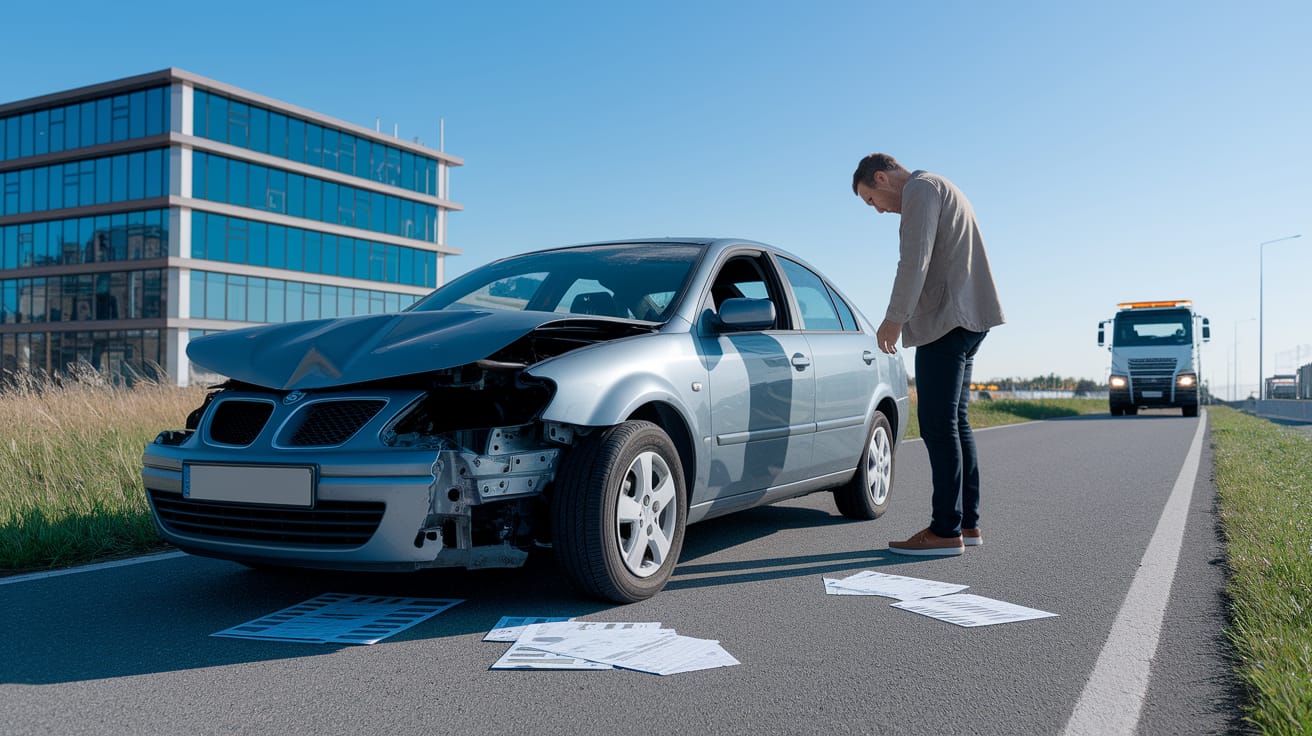
A totaled vehicle means that the repair costs exceed the vehicle’s worth according to your insurer’s total loss formula. With comprehensive car insurance coverage, the payout is capped at actual cash value (ACV) minus your deductible. The insurance company follows a set claims process: assess damage, determine value, compare costs, and then settle. If you have a financed car or lease, expect lienholder rules and possible coverage gaps.
The Financial Calculation
Insurers rely on a total loss formula that contrasts estimated repair costs and potential supplementals to the car’s fair market value. If damages exceed a given percentage of value or the repair-plus-salvage number surpasses the actual cash value (ACV), the vehicle is deemed a totaled car. In most states, the threshold is between 50% and 100%, with 70% being typical. For instance, if a $6,000 financed car requires $4,200 in repairs, it is considered totaled.
The value of a totaled vehicle is based on several factors, including age, mileage, trim, condition, options, and local sales data. Insurance companies investigate ACV by pulling comps from your ZIP code, auction results, and dealer listings. They also factor in allowances for previous wear, reconditioning, and market fluctuations.
An adjuster examines the car, creates a preliminary estimate, and can add hidden damage once the vehicle is disassembled. They then compare the final estimate to the actual cash value and apply the state threshold. If the actual cash value is $10,000 and your deductible is $1,000, the insurance payment will be $9,000 after lien payoff if you have an outstanding loan.
It’s important to list custom parts that add measurable value, such as upgraded wheels, OEM performance packages, and new tires. Providing receipts and photos can help the insurance carrier consider these additions when determining the totaled car valuation, as they may add depreciated value if installed permanently.
State Thresholds
Here are some examples. States use either a percentage of ACV or a formula that balances repair and salvage.
State | Threshold Type | Total Loss Trigger |
|---|---|---|
California | Formula | Repair + salvage ≥ ACV |
Texas | Percentage | 100% of ACV |
Florida | Percentage | 80% of ACV |
New York | Percentage | 75% of ACV |
Georgia | Percentage | 75% of ACV |
Illinois | Percentage | 70% of ACV |
Colorado | Percentage | 100% of ACV |
A greater percentage or formula can slow the total-loss call, since the shop has to strip parts to uncover hidden damage. Lower cutoffs accelerate decisions, as initial estimates frequently pass the threshold.
Thresholds determine timing, salvage branding on the title, and if the car is repairable by state regulations.
Damage vs. Value
Against pre-accident value versus total, itemized repair plan. Think frame pulls, airbags, sensors, ADAS calibration, and paint materials.
Under-the-radar things count. Radiator support bends, wiring loom shorts, and floor pan ripples can push costs far beyond the initial dollar figure.
Older or high-mile cars total from modest hits. A ten-year-old sedan that costs $5,500 can be totaled from a bumper, headlamp, and airbag replacements.
Write it all down. Take wide and close-up photos, obtain at least one independent estimate, hold on to receipts, and share maintenance records to bolster ACV.
Once released, the majority of carriers mail or wire settlements within approximately one week. If there’s a loan, the lender comes first. Consider gap coverage if you owe more than ACV.
The Total Loss Process
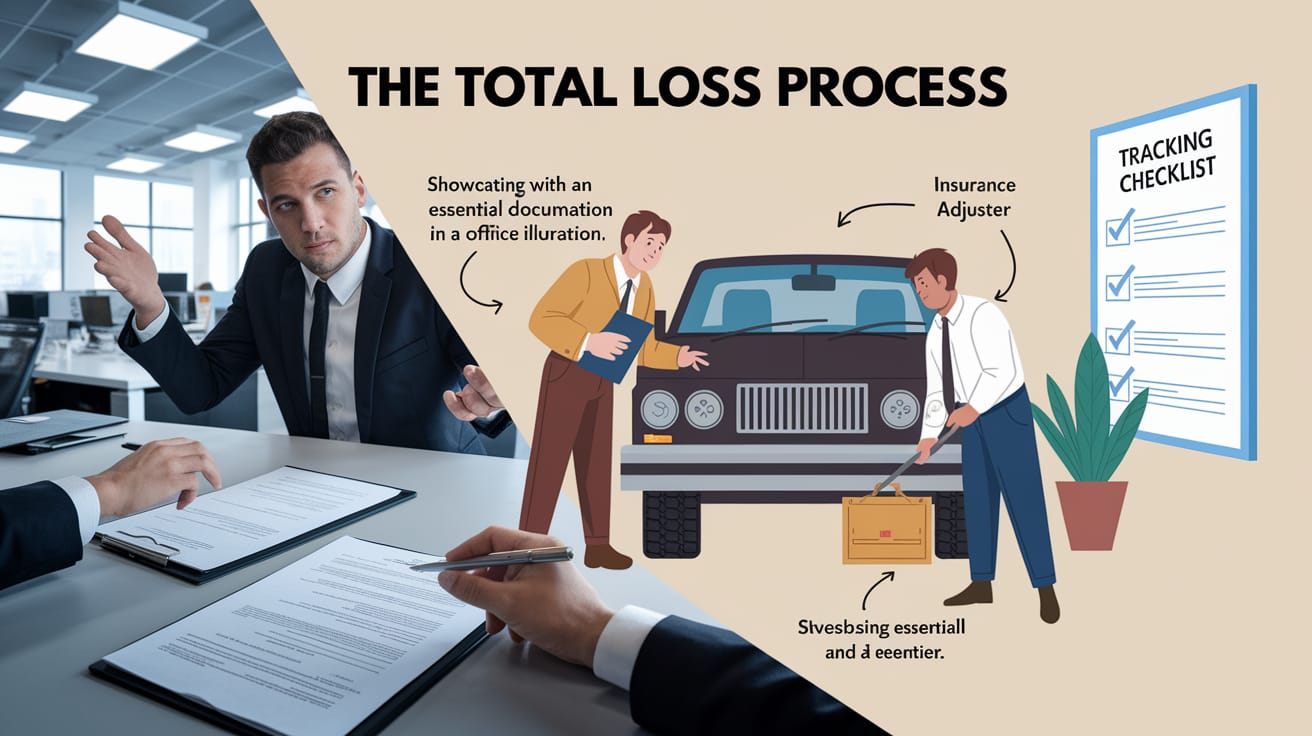
A total loss vehicle occurs when the insurer determines that repair costs exceed a certain percentage of the car’s actual cash value (ACV). States establish various cutoffs; Tennessee, for example, uses 75% of ACV. If you have full coverage insurance, collision or comprehensive coverage activates, minus your deductible, and the claim process unfolds in stages.
File a claim quickly and provide specific details and images.
Cooperate with the adjuster’s inspection and valuation.
For more background, Total Loss Knots, Total Loss Process, and Total Loss Triangle.
Compare the settlement to market information and negotiate if necessary.
Finalize title work, pay any lender(s) first, and monitor payout and rental days.
1. Initial Claim
Filing the crash or incident with your insurer immediately through the app, phone, or website is important. Most insurers time-stamp the initial notice of loss and begin benefits such as rental from that date.
Give specific details: time, location, weather, traffic, and any injuries. Enter the police report number, dashcam clips, and photos from different angles.
Include a list of gifts lost or damaged in the car, with receipts if you have them. Items such as a car seat or laptop might be insured under auto or homeowners, depending on the policy wording.
Maintain your claim number, your adjuster’s name, and a running log of calls and emails.
2. Vehicle Inspection
To be done at a tow yard, at home or a direct repair shop. If you’re the one reporting it, be sure the car is unlocked, the trunk open, and the keys or fob are there so they can check everything.
Wash out junk that masks damage. Leave destroyed bits where they lay. If the battery is dead, inform the adjuster so they bring a jump pack.
Collect service records, tire receipts and evidence of recent work. New tires, brakes or OEM glass can hold up a higher Actual Cash Value. Request a copy of the adjuster’s estimate and photos.
3. Loss Declaration
It’s the total loss process where the insurance company decides to declare it a total loss if repair cost plus salvage value crosses your state’s threshold. If you view 75% as the catalyst, that’s what’s typical in Tennessee.
Just read total loss with the line-by-line estimate. Search for your state’s rules on branded titles and thresholds. Request a new estimate if tangible damage was overlooked.
If it doesn’t feel right, get a manager review in writing.
4. Settlement Offer
The offer is Actual Cash Value minus your deductible and minus salvage if you keep the car. Look at Kelley Blue Book, NADA, and local listings within 50 miles for the same year, trim, miles, and options.
Provide proof of upgrades, dealer service, or new tires to back value. Push back on comps with higher miles or worse condition. You can haggle and make it data-led.
If it’s financed or leased, the lender is paid first. Gap insurance covers any shortfall. Without it, you pay the difference.
5. Final Payout
Approve the settlement figure and verify the pay-by date. Most carriers fund within 30 days. Rental days differ by policy and claim details. Hence, monitor the cap to prevent out-of-pocket expenses.
If the settlement is higher than the loan, you receive the balance. If it is lower and there is no gap, you owe the balance. Sign the title over to the insurer if you don’t keep salvage and verify the check sent with your lender.
Calculating Your Payout

Making total loss decisions is all about cost and value. Typically, insurers declare a total loss vehicle when repair costs reach a certain percentage of the car’s value, usually around 75% of ACV. However, state laws or your insurance policy can dictate this threshold. Your payout is based on ACV right before the crash, minus your deductible and occasionally salvage value if you retain the totaled car.
Actual Cash Value
To determine the actual cash value (ACV) of your vehicle, consider the following factors:
- Factory or premium audio systems
- Advanced safety tech (ADAS, blind-spot, adaptive cruise)
- Leather seats, upgraded wheels, moonroof
- Towing package or performance trims
- New tires, recent battery, rust-proofing
- OEM accessories, roof racks, bed liners
Request a line-item ACV report. It ought to itemize your data source, the comparable vehicles, the mileage and condition adjustments, options, taxes, and fees. If it’s a third-party valuation, ask to see the entire comp set and the specific adjustments.
When beginning to calculate your payout, look for Los Angeles–area comps within a close radius. Use major listing sites and dealer inventories in your ZIP to find the same trim, similar mileage, and option packages. See if prices include dealer fees. If your car had ADAS or a rare package, comps must match. This involves removing the outliers and averaging the balance.
The Role of Depreciation
Depreciation takes value away per annum and decreases the payout. The ACV accounts for age, miles, wear, accident history and demand.
Guess a price with guides for your make, model, and year. As a rough frame, new cars can lose 20 percent to 30 percent in year one, then about 10 percent to 15 percent per year, but high-demand models in Southern California may drop slower. Mileage penalties occur in 5,000 to 10,000-mile increments.
Newer cars lose value quickest up front. A 2-year-old EV or luxury SUV in LA traffic might exhibit sharp early depreciation, whereas a well-maintained hybrid with minimal mileage could retain value more effectively.
If you owe more than ACV, gap insurance rocks. Depreciation can leave you with a loan balance greater than the payout. Gap can cover that difference, not your deductible.
Negotiating the Offer
Collect proof: maintenance logs, recent service invoices, tire receipts, photos from before the crash, and multiple local comparable listings. Options, VINs, asking prices, and distances! Display recent repairs or improvements that increase value.
Fire back with a quick counteroffer of a number and a packet of comps. Describe discrepancies in the insurer’s comps and suggest appropriate ones. Request to waive salvage value deductions if you are not keeping the vehicle.
Highlight special attributes, one owner, OEM components or factory certified repairs. These can facilitate higher ACV adjustments.
Hang tough and be nice to the adjuster. You can review and dispute the valuation report. Escalate to a manager if necessary and keep records of all calls and correspondence.
The Financed Car Complication

When a financed car is totaled, the insurer calculates the vehicle’s actual cash value (ACV) on the day of the crash and issues an insurance payment that reflects that amount, minus your deductible. In many states, a vehicle is classified as a total loss when repair costs exceed 70 to 75 percent of its ACV. The settlement check is directed to your lender first to cover the outstanding loan, with any remaining funds going to you. If the total loss settlement is less than what you owe, you remain liable for the difference unless you have gap insurance. Loan payments continue regardless of the car’s status.
Notifying Your Lender
Here’s the financed car complication – contact your finance company as soon as your insurer totals your vehicle. Request the payoff amount good through a certain date and verify where the insurance company should issue the check and any loan or lien information necessary.
Give your claim number, adjuster contact, ACV estimate and the total-loss letter to the lender. Your adjuster might require the 10-day payoff statement, lienholder address, and any electronic title information.
Organize payout routing. The insurer will then send the check to the lienholder and you if there’s equity. Check whether the lender needs a signature or EFT to accelerate.
Once the lender gets its money, ask for it in writing that your account is closed and the lien has been released. If there is a balance remaining, obtain a payoff schedule and due date in writing.
GAP Insurance Explained
- Who needs it: low or no down payment, long loan terms of 60 to 84 months, fast-depreciating models, high interest rates, and heavy add-ons rolled into the loan.
- Where to get it: dealer F&I office, your auto insurer, or a credit union.
- What it covers: The difference between the insurance payout and your remaining loan often excludes your deductible.
- When to drop it: once your loan balance is safely below your car’s value.
Check your auto policy or loan contract to see if gap is already built in. Full coverage doesn’t imply gap either; it’s optional and added.
Do the numbers. Here’s the ‘gap’ issue: if your ACV is $22,000 and your loan payoff is $27,500, gap might cover that $5,500 difference and save you thousands out-of-pocket.
For new or heavily financed U.S. Cars, think gap early. It helps you avoid being upside down on a car you don’t own anymore.
The Negative Equity Trap
Negative equity is when your loan balance exceeds your car’s ACV. It is usual with small down payments or long terms.
No gap, intend to pay the remaining balance if the settlement doesn’t clear the loan. Discuss short payoff timelines and payment options with the lender.
Don’t roll a shortfall into a new loan. It bumps up your monthly payment and keeps you upside down longer, which multiplies risk.
Keep an eye on your loan to value ratio. Pay more on principal, truncate the term, or make a mid-loan lump sum payment to reduce exposure.
If Your Car Is Stolen
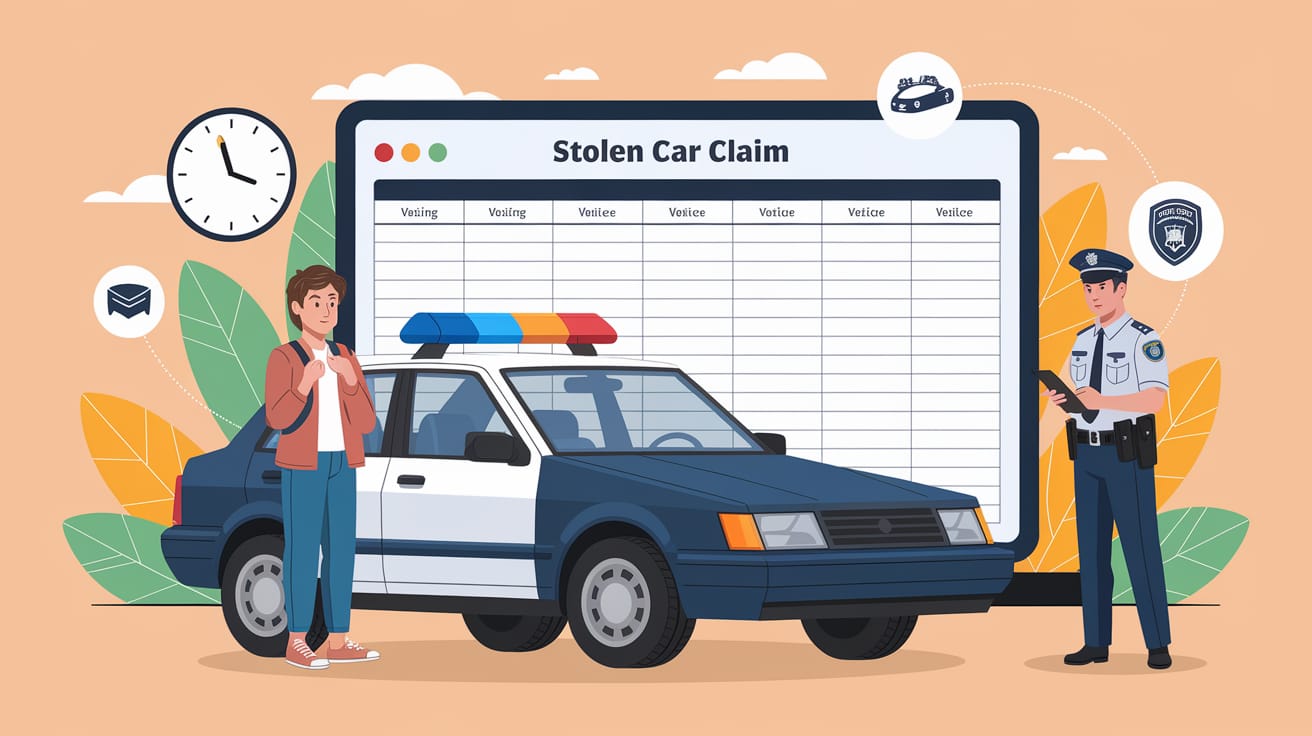
To receive reimbursement for a stolen vehicle, having comprehensive car insurance coverage is essential. Immediately file a police report and notify your insurance company. Be prepared for a waiting period before a settlement, as many stolen cars are often recovered within days, which differs from the total loss vehicle claims process.
Step | Theft Claim (Comprehensive) | Collision Total Loss |
|---|---|---|
1 | File police report; get case number | Report crash; provide photos and location |
2 | Notify insurer; theft statement | Notify insurer; collision statement |
3 | Waiting period 7–30 days for recovery | Immediate inspection/valuation |
4 | Valuation based on ACV minus deductible | Valuation based on ACV minus deductible |
5 | Lienholder paid first if financed/leased | Lienholder paid first if financed/leased |
6 | Title transfer if not recovered | Title transfer after settlement |
The Waiting Period
Most carriers wait 21 to 30 days before calling a stolen vehicle a total loss. Some employ a shorter seven-day minimum, whereas others keep longer if recovery chances are good in your region.
Take this opportunity to forward your keys, service records, and a catalogue of any additional equipment. Answer quickly to calls or emails from the adjuster and the assigned investigator. If police request security footage or GPS access, provide it.
That pause is there since a lot of the cars are recovered in the first couple of weeks. If the car comes back damaged, then it goes from total theft to repair or partial loss. If it comes back totaled, then the total loss cycle begins again.
About deadlines. Add calendar reminders at day 7, 14, and 21. Call your adjuster for status and inquire what triggers settlement on your policy.
A Different Total Loss
If it’s not found within the window, insurers consider it a total loss. The payout process mirrors collision: actual cash value at the time of loss minus your comprehensive deductible, often $250 to $1,000.
If you have a loan or lease, the lienholder gets priority and any remainder goes to you. Gap coverage, if on the policy or loan, might cover a loan balance that is greater than ACV. You can fight a low offer by submitting a fair market valuation or providing comparable similar trim, miles, and options.
After it is paid, the insurer takes care of title transfer. If the car later turns up, it usually belongs to the insurer.
Proving Your Claim
Show them proof of ownership, registration, loan or lease papers, both keys, some recent photos, and maintenance records.
List valuables stolen with the car. Some will reimburse them under comprehensive or renters/condo insurance, but limits apply, so document the brand, model, and estimated prices.
Maintain copies of all emails, letters, police reports, receipts, etc., in one folder.
Check your policy to be sure you’re covered. It assists with the financial loss and not with the loss of the vehicle, so prevention still counts.
After the Settlement

Verify the final payout, lender payoff, and title status first. Then determine if you’re holding on to the totaled vehicle or passing them off. Plan your next travel schedule and stack up your car insurance modifications. Following the Settlement1 crashes with damage over $1,000 in California to the DMV, there is a 3-year statute of limitations for property damage should you plan any insurance claim.
Keeping the Vehicle
You can retain a totaled vehicle if permitted by the insurer. Your compensation reduces by its salvage value and deductible. If the settlement is more than your loan, you receive the remainder. If it is short, you owe the difference unless gap insurance picks it up.
The car will have a salvage title. Most carriers only offer liability on salvage vehicles, and re-sale value is slim. Anticipate tighter underwriting and fewer choices for comprehensive and collision coverage.
To drive it again, get it repaired, collect receipts, and get through California’s inspections for a revived salvage title. You will require a brake and lamp inspection, a smog check if necessary, VIN verification, and DMV paperwork.
Budget for hidden costs includes towing, storage fees before release, higher financing rates, and tougher claims later. Parts sourcing and frame checks can add time and money.
Buying a New Car
Take the settlement as a down payment with the dealer. If the payoff is higher than the settlement, you cover the shortfall or have to hope you have gap insurance. If the settlement exceeds the payoff, the balance is paid to you.
Buy: So close in age, miles, and features to your old car’s ACV. Price Check: Compare prices throughout LA and surrounding counties to identify reasonable value and prevent flood or previous salvage units.
Look very carefully at financing terms. Negative equity from your previous loan can roll into the new one, pushing up the payment. Request out-the-door pricing, not simply monthly figures.
Call your insurer from the lot to bind coverage before you drive away. Verify liability limits and comprehensive, collision, rental, and roadside. Include gap insurance if your down payment is minimal.
Future Insurance Impact
Anticipate a rate increase after a full loss claim, particularly in cases where the accident was your fault. More than one total loss may impact your eligibility and rates.
Reveal salvage or total loss history when insuring future vehicles. Carriers crosscheck databases and nondisclosure can be a problem.
Review limits and deductibles, and think about gap insurance on financed vehicles. It can cover the difference when the settlement is less than the loan.
Know your loss line. Toward the Settlement, regulators set ways, and loads of carriers sum up when repairs bump to around 65 to 75 percent of Actual Cash Value. California lets owners keep salvaged cars in specific instances.
Conclusion
A car that’s been totaled under full coverage feels like a ton all at once. A definite plan assists. Full coverage can cushion the blow. It covers a loss from a crash, theft, or fire. The check links to your car’s real money value, not the sticker price. Include gap coverage if you owe more than the car is worth. That prevents you from paying the balance yourself.
To simplify life, document. Photos, service logs and titles accelerate the claim. Request the appraisal report. Look at taxes, fees and payoff. Know LA’s towing and storage regulations. Expenses accumulate quickly in the city.
Need a reality check on what to do next? Leave your key facts and I can assist in outlining the next step.
Frequently Asked Questions
What does “totaled” mean with full coverage in California?
When repair costs and salvage value exceed your totaled car’s actual cash value (ACV), your insurer declares it a total loss vehicle and pays the ACV minus your deductible. California insurance companies follow state laws, though limits may vary.
How does the total loss process work in Los Angeles?
When you file an insurance claim after a car accident, an adjuster will inspect the vehicle to calculate its Actual Cash Value (ACV). If your car is determined to be a totaled vehicle, you’ll need to sign title papers, retrieve your personal belongings, and the insurance company will issue a check to either you or your lender.
How is my payout calculated after a total loss?
After insurance companies determine the ACV of your totaled vehicle based on year, make, model, mileage, options, and local LA market comps, they deduct your deductible and any outstanding loan balance add-ons due to the crazy sales tax, title, and registration fees in California.
What if I still owe money on a financed car?
Your insurance company pays the lender first when dealing with a totaled vehicle. If the payout is less than your outstanding loan balance, you owe the difference unless you have GAP coverage to cover the shortfall.
Does full coverage pay if my car is stolen?
Yes, full coverage insurance pays the actual cash value minus your deductible if the car is recovered as a totaled vehicle. Report the theft to LAPD and your insurance company immediately, providing keys, police report number, and ownership.
Will a total loss claim raise my insurance rates in LA?
It can. Even at-fault or comprehensive claims, such as those involving a totaled car, may impact premiums at renewal. The effect varies based on fault, claims history, and your insurer. Shopper rates in the LA market post-accident can keep costs under control.
What should I do after I accept the settlement?
Check lien payoff, cancel or transfer insurance coverage, return plates if mandatory, and file some CA DMV paperwork. Save the settlement letter, payoff confirmation, and car insurance claim documents for your records. If purchasing another vehicle, obtain quotes prior to the purchase.