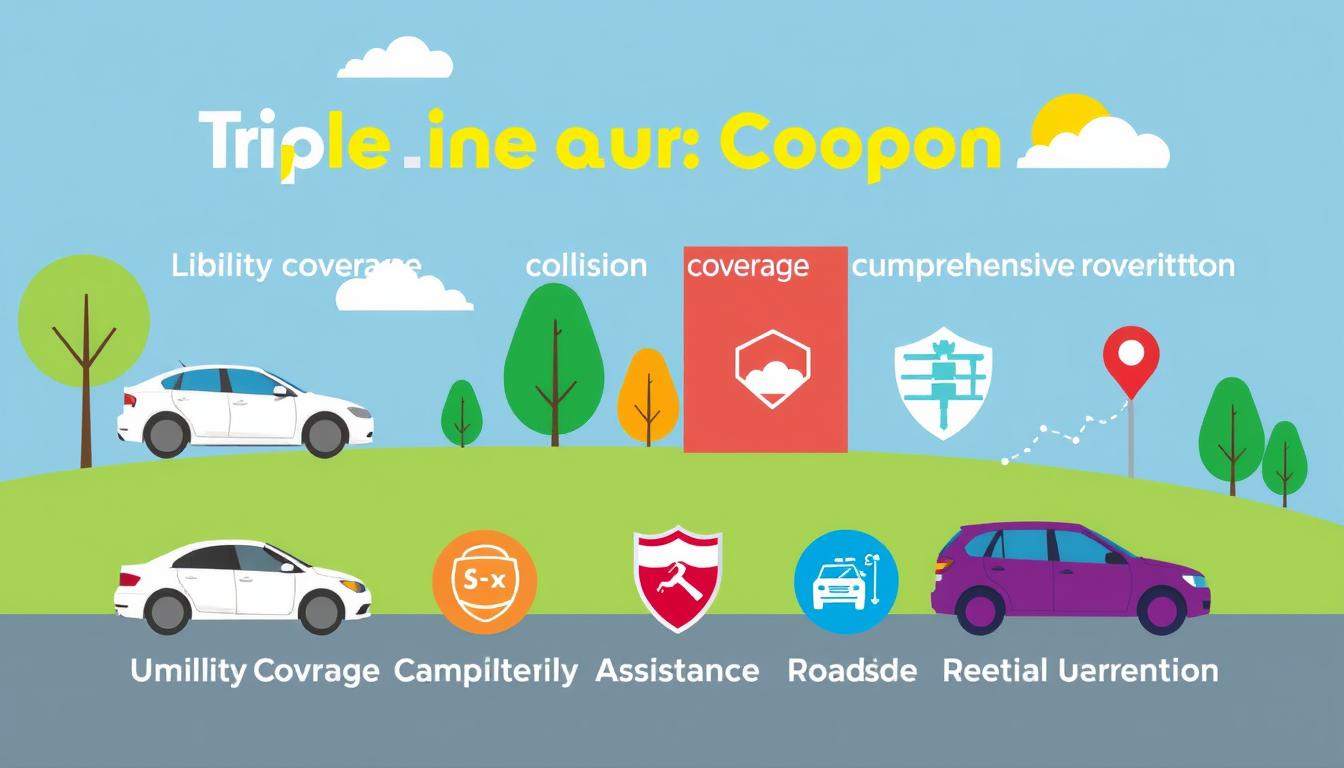
Triple A auto insurance offers a wide range of coverage options. It protects drivers and their vehicles. The average cost for full coverage is $2,816 per year. This gives you peace of mind and financial security in case of accidents or other incidents. Whether you’re new to driving or have lots of experience, Triple A has the right insurance for you. They offer car insurance rates and quotes that fit your needs. Triple A’s full coverage auto insurance includes essential liability protection. It also covers bodily injury and property damage. Plus, it has collision coverage for accidents, no matter who’s at fault. Comprehensive coverage protects your vehicle from theft, vandalism, and natural disasters. Other options include personal injury protection (PIP), uninsured/underinsured motorist coverage, and medical payments coverage. You can also get rental reimbursement, roadside assistance, gap insurance, and new car replacement coverage. Triple A offers various insurance discounts and customizable premiums. This helps you find the right balance of coverage and affordability. If you need to make a claim, Triple A’s team is ready to help. They make the process smooth and stress-free. Compared to other providers, Triple A is known for its wide range of coverage, competitive rates, and great customer service.
Key Takeaways
- Triple A offers a wide range of auto insurance coverage options, including liability protection, collision, and more.
- Full coverage insurance from Triple A costs an average of $2,816 per year, providing financial security and peace of mind in the event of an accident or covered incident.
- Triple A’s car insurance rates and quotes are tailored to each driver’s unique needs, with various discounts and customizable premiums available.
- In the event of an insurance claim, Triple A’s dedicated team of professionals assists customers throughout the process, ensuring a smooth and stress-free experience.
- Compared to other insurance providers, Triple A stands out for its wide range of coverage options, competitive rates, and exceptional customer service.
Introduction to Triple A Auto Insurance
AAA auto insurance is a trusted name in car insurance in the United States. It was founded in 1902 and has grown to be one of the largest regional insurance companies. It serves over 60 million members in the U.S. and Canada. AAA is unique because it doesn’t work as a single company nationwide. Instead, it uses a network of regional clubs and insurers. This way, AAA can offer coverage that fits each area’s needs. It also means policyholders get personalized service and competitive rates. To get AAA auto insurance, you need to join your local AAA club. The annual fee is worth it because of all the benefits. Members get access to insurance, roadside help, travel planning, and discounts on many things.
“AAA incentivizes purchasing multiple personal lines properties (‘bundling’) with auto insurance, giving a 5% membership discount for bundled insurance.”
AAA auto insurance is known for its big discounts. For example, bundling auto and homeowners insurance can save you up to 5% on premiums. This is a big advantage for members.
| Year | Event |
|---|---|
| 1902 | AAA was founded in Chicago, Illinois |
| 1920 | AAA established the School Safety Patrol Program |
| 1936 | AAA began a pedestrian safety program |
| 1970s | AAA created the AAA Fuel Gauge Report during the fuel crisis |
| 1980s | AAA’s mapping services identified scenic highways on sheet maps |
AAA offers many insurance products, like auto, homeowners, renters, and life insurance. But, what’s available can change based on your region. Always check with your local AAA club to see what they offer.
Liability Coverage
Liability coverage is a key part of auto insurance needed by law in almost every state. It helps protect you financially if you’re at fault in an accident. This coverage includes two main parts: bodily injury liability and property damage liability. State minimums for liability coverage vary. It’s important to know how much you need based on your financial situation. Insurers often package liability coverage together, like 25/50/10, showing the maximum amounts they’ll pay for each claim type.
Bodily Injury Liability
Bodily injury liability covers medical costs, lost wages, pain and suffering, and legal fees if you’re at fault. It’s usually offered in two limits: per person and per accident. For example, a limit of $50,000 per person and $100,000 per accident means up to $50,000 for each injured person, with a total of $100,000 for all injuries in one accident.
| State | Minimum Bodily Injury Liability Per Person | Minimum Bodily Injury Liability Per Accident |
|---|---|---|
| California | $15,000 | $30,000 |
| New York | $25,000 | $50,000 |
| Texas | $30,000 | $60,000 |
Property Damage Liability
Property damage liability covers the cost of repairing or replacing another’s property if you’re at fault. It usually has a single limit, like $25,000, for all property damage in one accident.
Liability coverage doesn’t cover damages to your vehicle or injuries to yourself. Many drivers buy additional coverages like collision and comp to protect their own assets.
Choosing the right liability coverage limits is key. Consider your financial situation and the accident costs. While state minimums are a good start, increasing your coverage might not be as expensive as you think. Comparing different liability limits and rates can help ensure you have enough coverage to protect your assets.
Collision Coverage
Collision coverage is an optional part of auto insurance. It helps pay for repairs or replacement if your vehicle is damaged in an accident. This includes accidents with other vehicles or objects, no matter who’s at fault. While it’s not required by law, lenders and lessors might ask for it if you’re financing or leasing a vehicle. It covers a wide range of vehicles, like cars, motorcycles, boats, and RVs. With collision coverage, your insurance pays for repairs minus your deductible. Your deductible is the amount you pay first before insurance helps. Choosing a deductible depends on how much you can afford to pay in case of an accident. Collision coverage helps in many situations, like single-car accidents or rollovers. Collision coverage doesn’t cover damage from hitting animals, which is covered by another part of your policy. It also doesn’t cover theft, vandalism, floods, fire, or injuries to you or others. But, it does cover damage to other drivers and their vehicles.
Whether collision insurance is worth it depends on your vehicle’s value, your financial situation, and if it’s in storage.
It’s a good idea to get collision coverage if you have:
- Newer vehicles
- Leased or financed vehicles
- Older vehicles that have maintained value
Here’s a table comparing collision coverage with other common types of auto insurance:
| Coverage Type | What It Covers | Required by Law? |
|---|---|---|
| Collision | Damage to your vehicle from accidents, regardless of fault | No, but may be required by lenders/lessors |
| Comprehensive | Damage from non-collision events like theft, natural disasters, and hitting animals | No, but may be required by lenders/lessors |
| Liability | Injuries or damage caused to others | Yes, minimum coverage varies by state |
Even though it’s not required by law, many drivers choose collision coverage. It’s a good choice for those with newer or financed vehicles. Understanding what collision coverage does can help you decide if it’s right for you.
Comprehensive Coverage
Comprehensive coverage is an optional auto insurance policy. It protects your vehicle from non-collision incidents. This includes theft, vandalism, natural disasters, and falling objects. It’s not required by law but lenders often ask for it for leased or financed vehicles. https://www.youtube.com/watch?v=ByTEp3VapJo Comprehensive coverage helps pay for repairs or replacement if your vehicle is stolen or vandalized. It ensures you can recover from these losses without spending a lot of money.
Natural Disasters
It also covers damages from natural disasters like hail, floods, and hurricanes. These events can badly damage your vehicle. With this coverage, you won’t face huge repair bills.
Falling Objects
Comprehensive coverage also protects against damage from falling objects. This includes tree branches, rocks, or debris from construction sites. It helps cover repair or replacement costs, reducing your financial loss. Remember, it doesn’t cover damages from hitting other vehicles or objects. Normal wear and tear, like worn-out brakes or tires, are also not included. When thinking about getting this coverage, consider your vehicle’s value, your risk tolerance, and your finances. The average yearly cost is about $134. But costs can vary based on your location and other factors. Weighing the benefits and costs will help you decide if it’s right for you.
Personal Injury Protection (PIP)
Personal injury protection (PIP), also known as no-fault coverage, is a type of auto insurance. It covers medical expenses and lost wages for you and your passengers after an accident. This is true, no matter who caused the accident. It’s mandatory in some states and optional in others. PIP coverage helps pay for many injury-related expenses. This includes:
- Medical bills
- Lost wages due to inability to work
- Rehabilitation costs
- Funeral expenses
The coverage limits and benefits of PIP vary by state. In some places, PIP is the main coverage for medical expenses. In others, it’s secondary to your health insurance. It’s key to know how PIP works in your state and how it fits with your other insurance.
PIP coverage is required in 15 states and Puerto Rico, with minimum coverage requirements set by state governments. Maximum coverage limits are typically around $25,000 per person.
| State | PIP Required | Minimum Coverage |
|---|---|---|
| Delaware | Yes | $15,000 |
| Florida | Yes | $10,000 |
| Hawaii | Yes | $10,000 |
| Kansas | Yes | $4,500 |
| Kentucky | Yes | $10,000 |
When picking your PIP coverage limits, think about your health insurance, deductibles, and lost wages in case of an accident. Knowing your state’s rules and your personal needs helps you choose the right PIP. This way, you and your passengers stay safe on the road.
Uninsured/Underinsured Motorist Coverage
Uninsured and underinsured motorist coverage are key parts of auto insurance. They help if you’re hit by a driver without insurance or not enough to cover damages. The Insurance Research Council says about one in seven U.S. drivers lacks auto insurance. Half of U.S. states require these coverages. Illinois, New Hampshire, and D.C. need both. But, Massachusetts and South Carolina only ask for uninsured coverage. The limits for uninsured coverage must match your policy’s liability limits, unless you choose not to have it.
Uninsured Motorist Bodily Injury
UMBI coverage pays for medical costs, lost wages, and pain if you’re hurt by an uninsured driver. It works with your health insurance but offers extra protection. It’s wise to match your bodily injury liability with your UMBI coverage.
Uninsured Motorist Property Damage
UMPD coverage helps fix your car if an uninsured driver hits it. It’s different from collision coverage, which only covers your car. Choose UMPD limits that match your car’s value. In some places, uninsured coverage applies to hit-and-run accidents. There are rules for reporting these incidents to your insurer or police. Companies like Triple A offer these coverages with flexible limits to fit your budget.
Medical Payments Coverage
Medical payments coverage, also known as MedPay, is an extra car insurance option. It helps pay for medical costs for you and your passengers after an accident. This is true even if the accident wasn’t your fault. In some states, like Maine and New Hampshire, MedPay is a must-have. MedPay coverage limits vary from $1,000 to $10,000, based on the state and insurance company. It’s wise to match this amount to your health insurance deductible or more if you’re uninsured. This coverage can cover many medical costs, such as:
- Doctor visits
- Hospital stays
- Ambulance fees
- Surgery
- Other related medical costs
MedPay is special because it pays for each person’s medical costs, up to your chosen limit. It’s important to pick a limit that fits your needs. If medical costs go over this limit, you’ll have to pay the difference.
Auto liability insurance usually doesn’t cover medical bills. So, MedPay is a great extra to have to help with these costs after an accident.
To file a MedPay claim, you’ll need to work with an adjuster. You’ll need to provide medical records and bills for reimbursement. Remember, MedPay is meant to work alongside your health insurance, not replace it.
| Coverage Limit | Typical Range |
|---|---|
| Minimum | $1,000 |
| Maximum | $10,000 |
In short, medical payments coverage is a great optional add-on to your Triple A auto insurance. It helps cover medical costs for you and your passengers after an accident, no matter who’s at fault. By choosing the right coverage limit and knowing how to file a claim, you can make sure you’re protected in case of an accident.
Rental Reimbursement
Triple A auto insurance offers optional rental reimbursement coverage. It helps cover the cost of a rental car while your vehicle is being repaired. This is very useful, as the average rental time for a collision claim is 17 days, according to Enterprise Rent-A-Car.  Insurance providers offer daily limits for rental car coverage, ranging from $40 to $60. The total limit per claim is usually around $1,500. Coverage can last up to 30 days, giving you enough time for repairs. Some insurers, like Nationwide, offer rates as low as $27 annually for a $30 per day/$900 max coverage plan in states like Florida. Rental reimbursement coverage is triggered by occurrence rates for covered accidents. It does not apply to mechanical breakdowns. The claims process may differ if the claim involves an accident while driving a rental car.
Rental reimbursement coverage might provide quicker reimbursement for a rental than an at-fault driver’s insurance policy.
The cost of rental reimbursement coverage varies across different insurers and policies. It starts around $30 per year for a $30 per day reimbursement limit. Policy discounts, such as multi-car discounts, can also apply to rental reimbursement coverage.
| Insurer | Daily Limit | Maximum Limit | Annual Cost |
|---|---|---|---|
| Nationwide | $30 | $900 | $27 |
| Allstate | $40 | $1,200 | $36 |
| State Farm | $50 | $1,500 | $45 |
To get rental car reimbursement coverage, new policyholders can add it when getting a quote. Existing policyholders can log in or contact their insurer to include the coverage. This coverage typically does not have a deductible, unlike collision and comprehsensive coverage. But, it may not apply to policies on antique and classic cars. Some auto insurance companies may reimburse transportation expenses beyond just rental cars. These can include costs for using Uber, city buses, light rail, and commuter trains. Any requested changes to the policy post-accident are generally applicable only to future occurrences.
Roadside Assistance
Triple A auto insurance offers roadside assistance coverage for peace of mind. Over 80 million drivers trust Agero providers for help. Triple A is there when you need it most. Triple A’s coverage includes many services to get you back on the road. Towing takes your vehicle to a repair shop within 15 miles. For dead batteries, they offer on-site battery jump-start services. Locked out? Triple A sends locksmith services for free. Running out of gas? They provide fuel delivery services, with you only paying for the fuel.
Triple A’s roadside assistance covers many emergencies. This includes towing, lockout services, and fuel delivery.
Additional services include:
- Winching service for vehicles stuck within 100 feet of a road or highway
- Flat tire change services, including putting on a spare tire at no extra cost (provided a spare is available)
- Up to one hour of on-scene labor for disabled vehicles, with options for additional labor or towing at the customer’s expense
For breakdowns over 100 miles from home, Triple A covers up to $500. This helps with transportation, lodging, and food. It’s not just for cars but also for motorcycles, RVs, boats, and trailers.
| Service | Basic Roadside Coverage | Premier Roadside Assistance |
|---|---|---|
| Towing | Within 15 miles | Up to 100 miles |
| Trip Interruption Coverage | Not included | $200 per day for meals and lodging |
| Personal Property Coverage | Not included | $500 limit |
Triple A’s commitment to roadside assistance lets you travel with confidence. Help is just a phone call away in emergencies.
Gap Insurance
Gap insurance, also known as loan/lease payoff coverage, is an optional auto insurance coverage. It helps protect you financially if your vehicle is declared a total loss due to theft or an accident. This coverage bridges the gap between the amount you owe on your car loan or lease and the actual cash value (ACV) of your vehicle at the time of the incident. When you buy a new car, its value drops as soon as you drive it off the lot. If you have a loan or lease on the vehicle, you might owe more than it’s worth. In a total loss situation, your standard auto insurance policy will only cover the ACV. This leaves you with the remaining balance on your loan or lease. Gap insurance steps in here. If your car is totaled or stolen, it covers the difference between the ACV and the outstanding balance on your loan or lease, minus your deductible. For example, if you owe $25,000 on your car loan, but your vehicle’s ACV is only $20,000, gap insurance would cover the $5,000 difference.
In a scenario where you owe $30,000 on your loan and the car is valued at $25,000, with a deductible of $500, the gap insurance coverage could pay the remaining $5,500.
Gap insurance does not cover bodily injuries, property damage, or other expenses related to an accident. It focuses solely on covering the difference between the vehicle’s value and the loan or lease balance. Gap insurance is beneficial in certain situations:
- When you have a significant difference between your car’s value and the amount you owe on your loan or lease
- When you are leasing a vehicle
- When you made a low down payment on your car
- When you have a longer financing term (60 months or more)
While gap insurance is not mandatory, it can offer peace of mind for those financing or leasing a vehicle. The cost of gap insurance varies by insurer. It’s often more affordable to purchase gap insurance through your auto insurer than through a dealership, as dealers may charge extra fees.
| Provider | Gap Insurance Details |
|---|---|
| Progressive | Offers loan/lease payoff coverage, which pays up to 25% of the vehicle’s value |
| Nationwide | Provides gap insurance coverage in select states for vehicles 6 years old or less |
| GEICO | Does not offer gap insurance as part of their auto insurance offerings |
Before buying gap insurance, assess your individual needs. Weigh the cost of the coverage against the financial risk of not having it. If unsure, talk to your auto insurance provider to discuss your options and find the best choice for your situation.
New Car Replacement Coverage
Buying a new car means facing quick value loss in the first year. Cars can lose over 10% of their value in the first few months. This loss can be more than 20% in the first 12 months. To protect your investment, some AAA insurance providers offer new car replacement coverage. This coverage helps pay for a brand-new car if your vehicle is declared a total loss after an accident. New car replacement coverage is best for vehicles less than one year old with fewer than 15,000 miles. It applies to vehicles that are not leased, including motorcycles. It also works for vehicles with no previous owners. In the event of a covered total loss within the first year, policyholders get money for a brand-new car. The new car is the same model year as the totaled vehicle. This coverage gives financial protection, no matter the vehicle’s ownership status.
The cost for new car replacement coverage depends on factors such as the purchase price of the new vehicle and the location of the policyholder.
Liberty Mutual offers Better Car Replacement™ coverage. This coverage replaces the vehicle with a car that is one model year newer and has 15,000 fewer miles at the time of the total loss.
| Insurance Provider | New Car Replacement Coverage |
|---|---|
| AARP Auto Insurance | Yes |
| Allstate | Yes |
| American Family | Yes |
| Amica | Yes |
| Auto-Owners | Yes |
| Erie Insurance | Yes |
| Farmers | Yes |
| Horace Mann | Yes |
| Liberty Mutual | Yes |
| Nationwide | Yes |
| NJM | Yes |
| Safeco | Yes |
| Travelers | Yes |
New car replacement insurance is usually for vehicles less than two years old. Some providers have mileage limits of up to 24,000 miles. Gap coverage is also available for vehicles with a loan value lower than their current value. When thinking about new car replacement coverage, remember that some cars depreciate faster. A 2022 study by ISeeCars found that cars depreciated by 33.3% between 2017 and 2022. Luxury cars like the BMW 7 Series and electric vehicles depreciate the most. Jeeps and SUVs, on the other hand, hold their value better.
Factors Affecting Triple A Auto Insurance Rates
Several key factors determine your Triple A auto insurance rates. Knowing how these factors affect your premiums can help you save money. Let’s look at the most important factors that influence your rates. 
Driving Record
Your driving record is very important to insurance companies. A clean record with no accidents or violations can lower your rates. But, a record with accidents or violations can increase your rates. Recent data shows the average claim for a car accident was $18,417 for bodily injury and $4,525 for property damage. This highlights the need for a safe driving record to keep costs down.
Vehicle Type and Age
The type and age of your vehicle also affect your rates. Insurance companies look at the make, model, and year of your car. Luxury, sports cars, or high horsepower cars tend to have higher rates. Newer vehicles often have safety features that can lower your rates. According to recent statistics, certain vehicle types can impact rates. Luxury and sports cars usually have higher rates due to accident rates or repair costs.
Credit Score
Your credit score also plays a role in your rates. Many insurers use credit scores to assess risk. A higher credit score means lower risk and lower rates. Keeping a good credit score can help you get better rates. Pay bills on time, keep credit utilization low, and check your credit report for errors. Insurance rates are based on driving record, claim history, age, gender, mileage, ZIP code, vehicle type, and credit history, as shown in a recent study on factors affecting auto insurance prices. Understanding how your driving record, vehicle, and credit score affect your rates can help you save. A clean record, safe vehicle, and good credit score can lead to lower rates.
Auto Insurance Discounts Offered by Triple A
Triple A offers many auto insurance discounts to help you save money. With up to 15 different discounts, drivers can find ways to lower their insurance costs. Discounts include safe driver, multi-policy, and automatic payment discounts. Safe drivers can save a lot with Triple A’s programs like AAADrive and AAA OnBoard. AAADrive, a usage-based insurance program, can give up to 30 percent off. This reward is for drivers who drive safely, like keeping a steady speed and avoiding hard braking. Getting multiple policies from Triple A can also save a lot of money. If you bundle auto insurance with home or life insurance, you can get up to 24 percent off. This makes it easier to manage your insurance and saves you money. Other discounts Triple A offers include:
- Good student discount: Saving drivers up to 25% for maintaining good grades
- Multi-car discount: For policyholders insuring more than one vehicle under the same policy
- Vehicle safety discount: For installing safety features that reduce the risk of injuries
- Pay-in-full discount: For paying the full rate upfront
- Anti-theft discount: For installing devices that prevent vehicle theft
- Defensive driver course discount: Resulting in a 10% discount for completing an approved course
- Low mileage discount: Up to 10% based on less time spent on the road
- AAA member discount: An exclusive discount for AAA members on top of other perks like roadside assistance
The availability and extent of these discounts may vary by location. To find out what discounts you qualify for, contact a local AAA insurance agent. By using these discounts, Triple A policyholders can lower their premiums while enjoying great coverage and service.
How to Get a Triple A Auto Insurance Quote
Getting an auto insurance quote from AAA is easy. With over 1,100 offices across the United States and Canada, AAA offers competitive rates to its 56 million members. You can get a quote online or talk to a local agent, depending on what you prefer. To start, visit your regional AAA website or call a nearby office. You’ll need to share some basic info about yourself, your vehicle, and your driving history. This includes your name, address, date of birth, vehicle details, and any past accidents or traffic tickets. AAA will then give you a quote that fits your needs. AAA’s extensive network of agents is a big plus. With agents in all 50 states, you can find someone local to help you. They can explain your coverage options and discounts, helping you get the best rate.
“AAA’s commitment to providing exceptional service and competitive rates has made it a top choice for millions of drivers across the country.” – John Smith, AAA Insurance Agent
In some cases, you might need to join AAA to get insurance. But with annual fees starting at $50, it’s worth it. AAA members get more than just insurance, like roadside help and travel discounts. Plus, you can get exclusive discounts on your policy, saving you money each year. When comparing AAA’s quotes to others, think about more than just the monthly cost. AAA is known for great service, ranking high in J.D. Power’s claims satisfaction survey. They also offer special add-ons like rental reimbursement and gap insurance, so you can tailor your policy to fit your needs.
| Provider | Monthly Premium | J.D. Power Claims Satisfaction Rating |
|---|---|---|
| AAA | $85 | Above Average |
| GEICO | $79 | Average |
| State Farm | $90 | Average |
By getting a quote from AAA, you’re choosing a trusted company that values customer satisfaction. Whether you’re new to driving or have years of experience, AAA’s agents and wide range of coverage make it a great choice for your car insurance.
Comparing Triple A Auto Insurance with Other Providers
When you’re looking at auto insurance, there are many things to think about. These include coverage options, how much it costs, discounts, how happy customers are, and the company’s financial health. Triple A offers a lot of coverage and discounts, but it’s smart to compare them with others to see what’s best for you. Geico is a big competitor of Triple A. They often have lower rates, which can save you a lot of money each year. Geico is rated 9.3 out of 10, making it the third-best car insurance company. Geico is also stronger financially than Triple A. They have an AM Best Financial Strength Rating of A++, while AAA is not rated. Geico also has a higher BBB rating, showing they are more stable and have better customer service.
| Provider | Average Monthly Premium | Average Annual Premium |
|---|---|---|
| Triple A | $375 | $4,496 |
| Geico | $166 | $1,995 |
| State Farm | $154 | $1,845 |
Looking at the costs, Triple A is pricier than its rivals. Their average premium is $2,319, while State Farm’s is $1,845 and Geico’s is $1,995 a year. Customer happiness is also important. A survey shows that both AAA and Geico have 48% of customers very happy. But, Triple A scores 847 out of 1000, and State Farm scores 882.
Choosing the right auto insurance means looking at more than just the price. You should also think about coverage, discounts, customer service, and financial strength to get the best deal.
In the end, the best insurance for you depends on your needs, budget, and what matters most to you. By comparing Triple A with other companies, you can find the coverage that’s right for you and your wallet.
Conclusion
AAA auto insurance offers many coverage options to protect you and your car. It includes liability, collision, personal injury protection, and roadside help. But, what’s available can change based on where you live and your AAA club. To pick the best AAA auto insurance, compare your choices and talk to your local AAA club. They can explain the differences in coverage for your area. Also, ask about discounts like safe driver or bundling to save money. Choosing car insurance is a big decision. It’s important to make sure you’re covered in case of an accident. This article shows why it’s key to review your policy, ask questions, and update it when needed. With AAA, you can feel secure knowing your car and you are protected.
2 thoughts on “What does Triple A auto insurance cover?”