Renting a car looks simple until the counter agent starts sliding a screen toward you with five different “protections” and a ticking clock. The confusing part is that some of what they offer is insurance, some is a contract waiver, and some overlaps with coverage you may already have through your personal auto policy or a credit card.
The goal is not to buy everything. The goal is to avoid the expensive gaps that show up after a crash, a theft, or even a flat tire in the wrong place.
The three kinds of risk you take on when you rent
Every rental car problem fits into one (or more) of these buckets:
- Damage to the rental car itself (collision, backing into a pole, hail, vandalism, theft).
- Damage or injuries you cause to other people (liability).
- Injuries to you and your passengers, plus your stuff (medical payments, personal effects, roadside costs).
Most renters get tripped up because credit cards mainly help with bucket #1, while rental company add-ons often try to sell you solutions for all three.
What the rental company is actually selling you
Rental companies typically offer a menu of add-ons. Names vary by brand, but the functions are consistent.
A key nuance: the “damage waiver” products are usually not insurance in the traditional sense. They are a contractual promise that the rental company will not pursue you for certain vehicle-related costs if you follow the rental agreement.
Here’s a practical translation of the common options.
| Counter option (common name) | What it typically helps with | What it typically does not solve | When it can be worth it |
|---|---|---|---|
| CDW/LDW (Collision/Loss Damage Waiver) | Damage to or theft of the rental car, sometimes towing and loss-of-use depending on contract | Liability to others, injuries, personal belongings, damage from prohibited use | You want fewer claim steps, you are unsure about your own collision coverage, or you are renting a vehicle your other coverage might exclude |
| SLI/LIS (Supplemental Liability) | Extra liability limits above the minimum the rental includes (if any) | Damage to the rental car itself | Your personal liability limits are low, you do not own a car, or you want higher limits for peace of mind |
| PAI (Personal Accident Insurance) | Medical and accidental death benefits for occupants | Liability to others, damage to the rental vehicle | You have weak medical coverage, no MedPay/PIP, or you are traveling with passengers who need backup coverage |
| PEC (Personal Effects Coverage) | Theft of certain personal belongings from the car | High-value items over sublimits, business equipment, cash | You are traveling with luggage and your homeowners or renters insurance is limited or has a high deductible |
| Roadside assistance plan | Lockout, flat tire service, jump starts, towing for certain non-mechanical issues | Collisions, reckless use, damage from continuing to drive on a flat | You want predictable costs for common mishaps (especially in unfamiliar areas) |
Two details matter more than the marketing:
- Exclusions can wipe out the waiver. Unauthorized drivers, off-road use, DUI, or other prohibited uses can void CDW/LDW and leave you fully responsible.
- “Responsible for damage” can mean more than the body shop bill. Rental companies may pursue related charges like administrative fees, towing, storage, and loss-of-use (the income they say they lose while the car is being repaired). Some waivers cover more of these than others, and some credit card benefits pay certain charges only with documentation.
What your personal auto policy may already cover
If you already own a car and have an auto policy, you may have more rental coverage than you think, but it depends on what you purchased.
Many U.S. personal auto policies extend to a rental car you drive for personal use, often with the same core coverages and limits:
- Liability (injury and property damage you cause to others)
- Collision and comprehensive (damage to the rental car), if you carry those coverages on your own vehicle
- MedPay or PIP (medical payments), depending on your state and your policy
Two common surprises:
First, your deductible usually still applies. If your collision deductible is $1,000, that is still your problem when the rental is damaged and your policy is the one paying.
Second, “rental reimbursement” on your policy is different from “coverage for a rental car.” Rental reimbursement pays for a temporary rental when your own car is in the shop. It does not automatically mean you have collision or comprehensive coverage that would protect a rental you are driving.
A quick call to your insurer can clear up the most important questions: does my policy extend to rentals, are there vehicle type exclusions, and what happens if the trip is business-related?
Credit card rental coverage: strong for the car, weak for everything else
Credit card rental benefits are popular because they can replace the rental company’s CDW/LDW cost. In many cases, they cover collision damage and theft of the rental vehicle, up to the car’s value or a stated limit, for rentals under a certain number of days (often around 30 or 31).
They also come with hard edges:
- Liability is usually excluded. If you injure someone or damage another car, the credit card benefit typically does not pay.
- Vehicle classes can be excluded. Exotic cars, certain luxury models, large vans, trucks, motorcycles, and RVs are common exclusions.
- The process is paperwork-heavy. You may need to pay charges first (or have a large hold placed on your card) and then seek reimbursement.
Before your trip, confirm whether your card benefit is primary or secondary. Primary means it can pay without involving your personal auto insurer. Secondary means it generally pays after other applicable coverage, and that can bring deductibles and claim reporting into play.
After you confirm your card has coverage, the next step is making sure you do not accidentally void it at the counter.
Here’s the activation checklist most programs expect you to follow:
- Pay in full: Charge the entire rental cost to the eligible card (watch out for split payments).
- Decline the damage waiver: Say no to the rental company’s CDW/LDW if your card requires that to trigger benefits.
- Match the driver list: Make sure every driver is authorized on the rental agreement.
- Stay within time limits: Keep the rental period within your card’s covered maximum.
- Use an eligible vehicle: Confirm the vehicle class is not on the excluded list.
If your card issuer has a benefits administrator phone number, save it before you travel. You do not want to search for it in a parking lot after a fender bender.
Picking the right mix at the counter (without panic-buying)
The counter decision gets easier if you separate “must have” from “nice to have.”
Damage to the rental car is the part most people can cover through one of three routes: personal auto collision/comprehensive, a credit card benefit, or the rental company’s CDW/LDW.
Liability is different. If you do not have solid liability coverage already, you are exposed in a way that can dwarf the cost of the rental.
A practical way to decide is to start with what you already have, then fill only the gaps.
If you want a quick filter, these situations often point toward buying something from the rental company:
- No personal auto policy
- Low liability limits on your personal policy
- International rental where your U.S. policy may not apply
- Renting a vehicle type your card benefit excludes
- You prefer a “hand the keys back and walk away” approach after damage
Then get specific about which product solves the gap. Buying CDW/LDW does not fix a liability gap, and buying SLI/LIS does not fix damage to the rental car.
The costs people do not notice until after the return receipt prints
Many disputes are not about whether the rental car was damaged. They are about everything attached to the damage.
Even a minor incident can trigger charges beyond repairs:
- Loss-of-use fees (the rental company’s claimed lost revenue)
- Administrative fees
- Towing and storage
- Diminished value claims (in some cases)
- Key replacement, lockout service, flat tire service, windshield chips
This is where the “what does it actually cover” question matters. A damage waiver might wipe out most of these. A credit card benefit might cover some, but only with specific documentation from the rental company (and sometimes only if the rental company can show the car was actually out of service and not just sitting on the lot).
If you are relying on a credit card benefit, read the benefit guide’s section on loss-of-use and administrative fees before your trip. If you are buying CDW/LDW, ask the agent one clear question: “Does this waive loss-of-use, admin fees, and towing?”
A simple pre-drive routine that prevents most rental insurance problems
Once you have chosen your coverage path, the best financial move is to reduce the chance of a dispute.
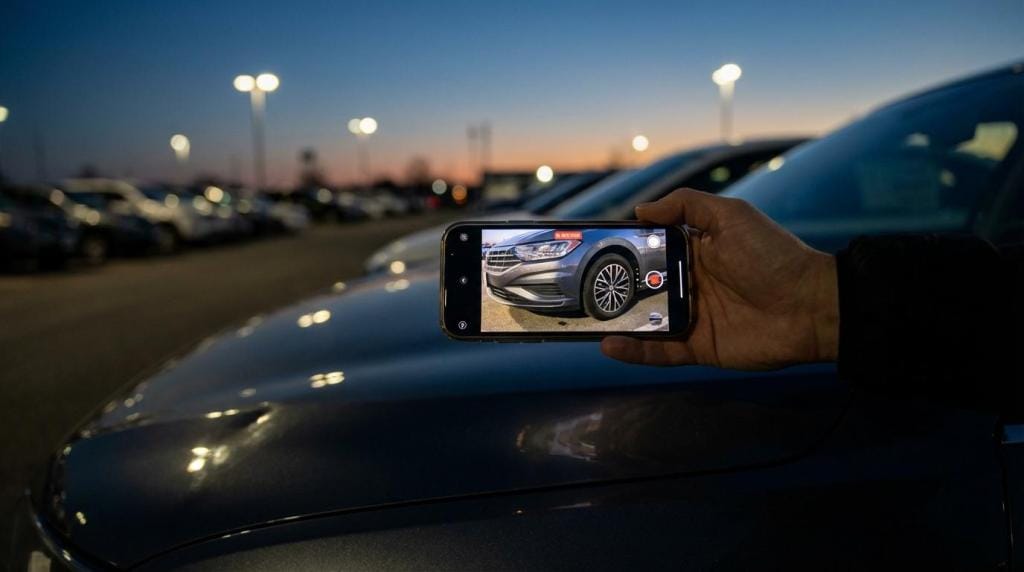
Take five minutes before leaving the lot and do it every time, even on a one-day rental. Photos are faster than arguing later.
- Walk-around video: Capture bumpers, wheels, windshield, roofline, and the interior.
- Close-ups: Scratches, dents, wheel rash, cracks, warning lights, fuel gauge.
- Timestamp and backup: Make sure your phone stores date and time, and upload if you can.
- Get it noted: If you see damage, ask the agent to record it on the agreement before you drive off.
Also confirm the boring contract details that regularly cause denied coverage: who is allowed to drive, where you are allowed to drive, and what to do after an accident.
If something happens: what to do so your coverage actually pays
Accidents and thefts are stressful, and that is exactly when people forget a step that later becomes a denial reason.
Start with safety and required reporting, then build your claim file while details are fresh. Keep copies of everything.
To keep it straightforward, gather the items that insurers and credit card administrators commonly request:
- Rental agreement: Including the full terms and the authorized driver list.
- Incident documentation: Police report or report number when required, plus photos of damage and the scene.
- Final billing: The itemized demand from the rental company, including repair estimate or final invoice.
- Proof of payment: Card statement or receipt showing the rental was paid with the eligible card.
If you used your personal auto policy, notify your insurer promptly and ask whether they need specific language from the rental company (repair invoices, loss-of-use documentation, towing receipts). If you are using a credit card benefit, file the claim as soon as the benefit guide requires, even if you are still waiting on one document from the rental company.
The best outcomes usually come from the same pattern: clear coverage choices before pickup, careful documentation at pickup and return, and fast, organized reporting if anything goes wrong.