
Table of Contents
- Best Home Insurance for Homeowners: Top Companies Compared
- What Does Standard Homeowners Insurance Cover?
- Factors That Influence Home Insurance Premiums
- Home Insurance Discounts for Homeowners
- How to Compare Home Insurance Quotes Effectively
- How Much Coverage Do You Actually Need?
- Post-Disaster Recovery: What the Best Home Insurance for Homeowners Should Provide
- Conclusion
Last Updated: June 11, 2026
Best Home Insurance for Homeowners: Top Companies Compared
Finding the best home insurance for homeowners is harder than it should be. Most comparison sites bury real differences under generic advice and lead-generation forms. At Covera, we break down exactly what separates a policy that protects you from one that leaves you exposed.
A homeowners insurance policy covers financial losses related to your home, personal property, and liability in exchange for an annual premium and deductible. Most guides rank companies primarily by price, but claims handling, AM Best financial strength ratings, and coverage limits matter far more when your roof is gone and you need answers fast.

| Company | Best For | Key Differentiator | Financial Strength |
|---|---|---|---|
| Amica Mutual | Customer satisfaction | Dividend policies | A+ (AM Best) |
| State Farm | Bundling, local agents | Largest U.S. home insurer | A++ (AM Best) |
| USAA | Military families | Military-specific coverage | A++ (AM Best) |
| Chubb | High-value homes | Extended replacement cost | A++ (AM Best) |
| Lemonade | Digital-first buyers | AI claims processing | A (AM Best) |
| Allstate | Customizable coverage | Wind-damage discounts | A+ (AM Best) |
| Farmers | Policy add-ons | Guaranteed replacement cost | A (AM Best) |
| Liberty Mutual | Discount seekers | Renovation discounts | A (AM Best) |
| Nationwide | Tiered coverage | Two clear coverage levels | A+ (AM Best) |
Amica Mutual: Best for Customer Satisfaction
Amica consistently earns top J.D. Power ratings, making it the strongest choice for homeowners who prioritize a smooth claims experience. Its dividend policies can return a portion of your annual premium, effectively lowering long-term cost. The catch: stricter underwriting requirements and limited regional availability. If you qualify, it is hard to beat.
Pros: Dividend policies, vetted contractor network, claims-free discounts
Cons: Not available in all states, stricter qualification criteria
State Farm: Best for Bundling and Local Agent Access
State Farm is the largest home insurer in the U.S., and its local agent network is genuinely useful. Every policyholder gets a dedicated agent who can explain endorsements and help bundle auto, life, and home for meaningful savings. Service quality does vary by agent office.
Pros: Thousands of local agents, strong bundling discounts, 24/7 claims support
Cons: Service quality varies by location
USAA: Best for Military Families
USAA is restricted to military members, veterans, and eligible family members, but offers some of the most competitive rates available alongside military-specific features including standard identity theft protection. If you qualify, check USAA first.
Pros: Competitive rates, military-specific benefits, claims-free discounts
Cons: Eligibility restricted to military community
Chubb: Best for High-Value Homes
Chubb’s extended replacement cost coverage goes beyond your policy limits if rebuild costs exceed them, exactly what owners of custom homes need. HomeScan technology detects hidden moisture or electrical problems before they become claims. Premiums are significantly higher than standard carriers, but the coverage depth justifies the cost for the right policyholder.
Pros: Extended replacement cost, white-glove claims service, HomeScan technology
Cons: Premium pricing, not suited for standard homes
Lemonade: Best for Digital-First Homeowners
Lemonade’s AI-powered claims processing can approve and pay simple claims in minutes. For a tech-forward homeowner who wants instant policy issuance and transparent pricing, it delivers. It is less suited for complex properties, high-value estates, or homeowners who want a human agent relationship.
Pros: Fastest quote and claims process, user-friendly app, social impact Giveback program
Cons: Limited suitability for complex or high-value properties

Allstate, Farmers, Liberty Mutual, and Nationwide: Honorable Mentions
These four carriers each serve distinct needs. Allstate offers wind-damage mitigation discounts and strong digital tools. Farmers provides guaranteed replacement cost coverage and discounts for smart home devices. Liberty Mutual rewards new roofs and renovations with premium reductions. Nationwide’s two-tier structure (Essentials and Enhanced) makes it easy to understand exactly what you are buying without decoding policy language.
What Does Standard Homeowners Insurance Cover?
Standard homeowners insurance covers your dwelling, other structures, personal property, liability, and loss of use under an HO-3 policy form. Understanding each coverage bucket prevents the worst surprise: filing a claim and discovering your policy does not cover what you assumed.
Dwelling Coverage and Other Structures
Dwelling coverage pays to repair or rebuild your home’s physical structure after a covered peril. The limit should reflect your home’s rebuild cost, not its market value, underinsuring rebuild cost is one of the most common and costly mistakes homeowners make. Other structures coverage extends to detached garages, fences, and sheds, typically set at a percentage of your dwelling limit; if you have added a large workshop since your last review, confirm that percentage still reflects actual replacement value.
Setting your dwelling coverage limit based on purchase price or market value rather than rebuild cost is a critical mistake. Rebuild costs include labor, materials, and debris removal, and often exceed market value significantly in areas with high construction costs.
Personal Property, Liability Protection, and Loss of Use
Personal property coverage protects furniture, electronics, clothing, and appliances. Most standard policies pay actual cash value, depreciation subtracted from your payout. Replacement cost coverage, available as an endorsement, pays what it costs to replace the item today and is worth the additional premium for most homeowners.
Liability protection covers injuries on your property or accidental damage to others’ property; an umbrella policy can extend thin limits at relatively low cost. Loss of use coverage pays hotel stays and other costs if your home becomes uninhabitable, a lengthy rebuild can exhaust a low limit faster than you expect.
Coverage Gaps: What a Standard HO-3 Policy Does Not Cover
- Flood damage: Requires a separate policy through the National Flood Insurance Program or a private carrier.
- Earthquake damage: Requires a separate endorsement or standalone policy.
- Sewer backup: Often excluded unless you add a specific endorsement.
- High-value items: Jewelry, art, and collectibles above standard sublimits need scheduled endorsements.
- Home business equipment: Standard personal property limits may not cover commercial equipment used at home.
Reviewing your coverage gaps annually is the single most effective risk management habit a homeowner can build.
Factors That Influence Home Insurance Premiums
Your premium prices the specific risk your property represents. Understanding those criteria gives you real leverage to lower your costs.
Climate-Specific Risk Assessment: How Your ZIP Code Shapes Your Rate
Your ZIP code is one of the most powerful variables in your premium. Insurers analyze historical loss data by geography to price wildfire exposure, hurricane frequency, hail severity, and flooding probability. Climate risk is not static, as weather patterns shift, some carriers have withdrawn from high-risk markets entirely. Working with an independent agent who accesses multiple carriers is the most effective way to find competitive pricing in these areas. According to the Insurance Information Institute’s homeowners insurance resource, location-based risk factors are among the top drivers of premium variation nationwide.
If your carrier has non-renewed your policy due to climate risk, contact your state’s department of insurance. Most states operate a FAIR Plan as a last-resort market for high-risk properties.
Home Characteristics, Rebuild Cost, and Underwriting Criteria
Insurers evaluate your home’s age, construction type, roof condition, electrical and plumbing systems, square footage, and proximity to a fire station. Rebuild cost, replacement cost value, is what your insurer uses to set your dwelling limit. If you believe the estimate is off, request a formal appraisal. Inflation guard endorsements automatically adjust your coverage limit annually to account for rising construction costs, a smart addition given recent material and labor cost increases.
Home Insurance Discounts for Homeowners
Many homeowners overpay simply because they never asked about discounts. Most major carriers offer reductions for bundling, claims-free history, new construction, security systems, impact-resistant roofing, and loyalty tenure. Asking your agent for a full discount audit at renewal takes ten minutes and can meaningfully reduce your annual premium.
How Smart Home Technology Can Lower Your Premium
Water leak detectors, smart smoke alarms, video doorbells, and monitored security systems all reduce the probability and severity of covered losses. Farmers Insurance, for example, offers specific discounts for smart home devices and leak detection systems. If you have already invested in smart home technology, make sure your carrier knows about it. According to the Consumer Technology Association’s smart home adoption data, insurers are responding to growing connected-device adoption with more structured discount programs as loss-reduction data accumulates.
How to Compare Home Insurance Quotes Effectively
Comparing quotes requires holding all variables constant across carriers. Decide on your deductible, coverage limits, and endorsements before requesting quotes, then apply those parameters consistently. Request quotes from at least three to five carriers, include one direct carrier, one regional carrier, and one independent agent who can shop multiple markets simultaneously.
Policy Language Translation: Reading the Fine Print
- “Open perils” vs. “named perils”: Open-perils covers all causes of loss except those explicitly excluded. Named-perils only covers listed causes. Open perils is broader and generally preferable.
- “Occurrence” vs. “claims-made”: Occurrence-based liability policies cover incidents during the policy period regardless of when the claim is filed.
- Sublimits: Many policies have lower limits for jewelry, firearms, or electronics, far below the total personal property limit.
- Inflation guard: An automatic annual adjustment to dwelling coverage for construction cost inflation. Not all policies include this by default.
The single most important question when reviewing a quote is: “What is excluded?” The exclusions section defines your actual coverage more precisely than the declarations page does.
How Much Coverage Do You Actually Need?
The right coverage amount is what it would cost to fully rebuild your home, replace all personal property at current prices, and cover living expenses for a worst-case rebuild, more than most homeowners carry.
A practical checklist for setting coverage levels:
- Get a rebuild cost estimate from your insurer or an independent appraiser
- Add an inflation guard endorsement to keep dwelling coverage current
- Inventory your personal property and calculate replacement cost value
- Upgrade personal property coverage from actual cash value to replacement cost
- Confirm your liability limit is at least $300,000; consider an umbrella policy for additional protection
- Check loss-of-use limits against realistic rebuild timelines in your area
- Schedule high-value items (jewelry, art, instruments) as separate endorsements
- Confirm flood and earthquake coverage status and add separate policies if needed
Review this checklist every time you make a significant home improvement, a renovated kitchen or new addition changes your rebuild cost and may require a coverage adjustment.
Post-Disaster Recovery: What the Best Home Insurance for Homeowners Should Provide
The best home insurance does not just pay claims, it actively supports recovery. There is a meaningful difference between a carrier that cuts a check and one that provides a vetted contractor network, a dedicated adjuster, and proactive communication throughout the rebuild.
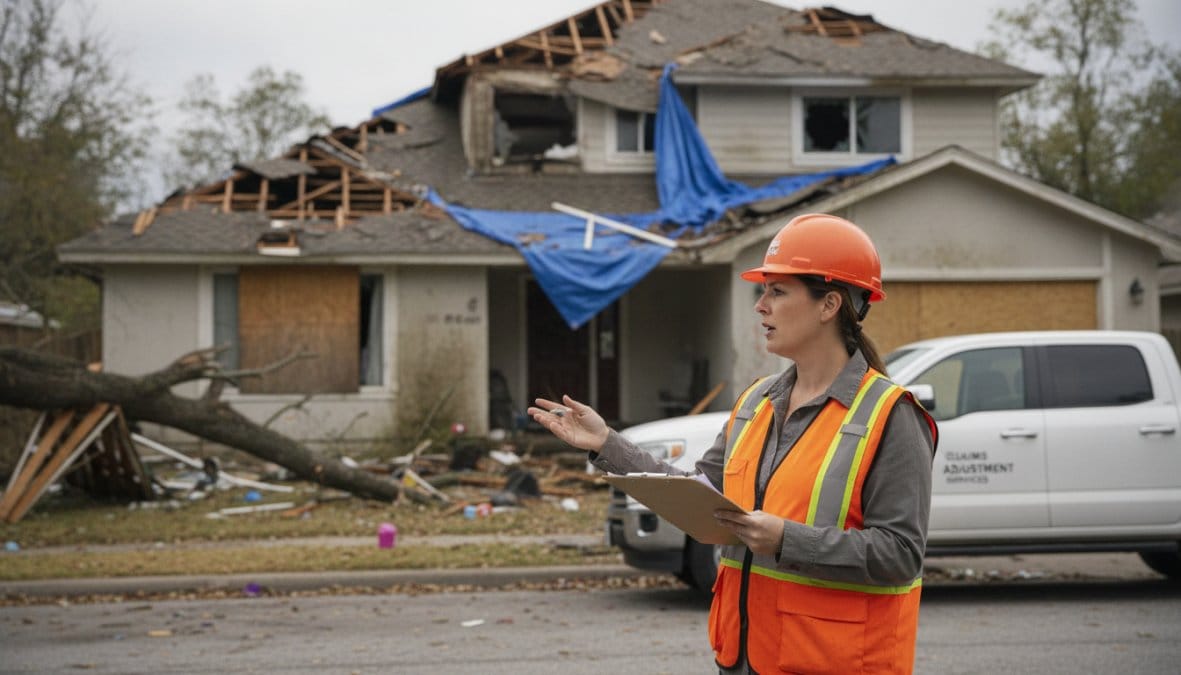
After a major loss, the recovery roadmap looks like this:
- Document everything immediately. Photograph all damage before any cleanup or temporary repairs.
- Prevent further damage. Most policies require reasonable steps to prevent additional loss. Keep receipts for all temporary repair costs.
- File your claim promptly. Delayed filing can complicate your claim.
- Request an itemized scope of loss. Review the adjuster’s estimate carefully and dispute line items you believe are undervalued.
- Understand your advance payment options. Many carriers offer advance payments for living expenses and contents to help you stabilize before full settlement.
- Track all additional living expenses. Loss-of-use coverage requires documentation. Save every receipt.
- Get independent contractor estimates. You are not required to use your insurer’s preferred contractors. Independent estimates give you leverage if the scope of loss feels low.
According to the National Association of Insurance Commissioners’ consumer guide to homeowners claims, policyholders who document damage thoroughly consistently achieve better outcomes than those who rely solely on the insurer’s initial assessment. Chubb’s white-glove claims service and Amica’s vetted contractor network are concrete examples of carriers that invest in the recovery experience, a distinction worth weighting heavily when comparing carriers for high-value homes or disaster-prone areas.
Conclusion
Choosing the right home insurance policy is genuinely complex, and the stakes are high. Covera provides comprehensive policy breakdowns, detailed coverage comparisons, and expert guidance across all major insurance types to help you make a decision grounded in your actual risk profile. Whether you need help understanding coverage gaps, comparing HO-3 policy terms, or assessing which carrier’s claims process fits your situation, Covera’s comparison resources give you the clarity to act with confidence. Get started with Covera and protect your most valuable asset with the coverage it actually deserves.
Frequently Asked Questions
What is the most reliable home insurance company?
Reliability depends on your priorities, but Amica Mutual consistently earns top marks for claims handling and customer satisfaction, including strong J.D. Power ratings. State Farm is the largest home insurer in the U.S. and offers broad availability. USAA leads among military families. When evaluating reliability, check each company’s AM Best financial strength rating and J.D. Power customer satisfaction score alongside your own quote comparison to find the best fit for your situation.
What factors affect the cost of homeowners insurance?
Several factors influence home insurance premiums, including your home’s location and ZIP code, its age and construction type, the rebuild cost, your chosen deductible, and your claims history. Climate-specific risks like hurricane, wildfire, or flood exposure can significantly raise rates. Insurers also weigh your credit score in most states, the coverage limits you select, and whether you bundle policies. Homes with updated roofs, modern electrical systems, or smart home security devices may qualify for lower premiums.
Does the cheapest home insurance provide good coverage?
Not always. A low premium often means higher deductibles, actual cash value payouts instead of replacement cost, or reduced coverage limits that leave you exposed after a major loss. The best home insurance for homeowners balances affordability with adequate dwelling coverage, personal property protection, and liability limits. Always compare what is included, and excluded, before choosing based on price alone. Endorsements for flood insurance or inflation guard may be worth the added cost.
How do I compare home insurance quotes effectively?
To compare home insurance quotes fairly, request identical coverage limits from each insurer: same dwelling coverage amount, personal property limits, liability protection, and deductible. Look beyond the premium, review each company’s AM Best rating, J.D. Power score, and claims handling reputation. An independent insurance agent can pull multiple quotes at once. Watch for coverage gaps, especially around flood insurance and replacement cost versus actual cash value, which can make a significant difference at claim time.
Is it worth getting extra home insurance coverage like endorsements or an umbrella policy?
For many homeowners, yes. Standard HO-3 policies exclude flood damage, earthquake damage, and may cap payouts on high-value items like jewelry or electronics. Endorsements can fill these gaps affordably. An umbrella policy extends your liability protection beyond standard limits, which is especially valuable if you have significant assets. If you live in a high-risk climate zone or own a high-value property, additional coverage is generally worth the added premium to avoid major out-of-pocket losses.
How often should I review my home insurance policy?
You should review your home insurance policy at least once a year, ideally at renewal. Reassess after major life changes such as a home renovation, significant purchase of personal property, or a change in your local risk environment. Renovation projects increase your home’s rebuild cost, which may require higher dwelling coverage limits. Enabling inflation guard on your policy helps coverage keep pace with rising construction costs automatically. Annual reviews ensure your coverage limits remain aligned with your home’s current value.