
Table of Contents
- How to Lower Home Insurance: Your Action Plan at a Glance
- Shop Around and Compare Insurance Quotes the Right Way
- Home Insurance Deductible vs. Premium: How Raising One Lowers the Other
- Home Insurance Discounts You May Not Know You Qualify For
- Does a New Roof Lower Home Insurance? What Upgrades Actually Help
- Your Credit-Based Insurance Score vs. Your Credit Score: Why the Difference Matters
- How Geography and Climate Change Are Driving Your Premium Higher
- How to Switch Home Insurance Providers Without a Coverage Gap
Last Updated: June 7, 2026
How to Lower Home Insurance: Your Action Plan at a Glance
Knowing how to lower home insurance costs is one of the most practical things a homeowner can do, yet most people set their policy once and forget it. At Covera, we’ve seen policyholders overpay by hundreds of dollars annually simply because they never revisited their coverage, asked about discounts, or compared quotes. The good news is that most savings strategies below require a single phone call or an afternoon of research.
Here’s what most guides get wrong: they treat premium reduction as a single action rather than a layered system. The real savings come from stacking multiple strategies, shopping around, adjusting deductibles, making home improvements, and optimizing your credit score.
Your quick-reference action plan:
- Get at least three insurance quotes from different carriers
- Ask your current insurer about every available discount
- Review your deductible and calculate the break-even point
- Bundle home and auto insurance for a multi-policy discount
- Check your credit-based insurance score before renewal
- Document any home improvements that reduce risk
- Review your CLUE report for accuracy
- Assess whether your dwelling coverage reflects current rebuilding costs
Work through this list systematically. Each item addresses a different lever in the underwriting process, and the combined effect is almost always greater than any single change.
Shop Around and Compare Insurance Quotes the Right Way
Most policyholders compare quotes once, when they first buy their home, and never again. Insurance carriers regularly reprice their books of business, meaning the carrier that offered the best rate three years ago may no longer be competitive. Getting fresh insurance quotes at every renewal is the single highest-return action on this list.

Comparing quotes on an apples-to-apples basis requires matching coverage limits, deductibles, liability amounts, and personal property limits across every quote. A policy that looks cheaper may simply offer less dwelling coverage or exclude certain perils. Always compare the declarations page, not just the premium number.
According to the Insurance Information Institute’s consumer guidance on homeowners insurance, shopping at least every two to three years is the standard recommendation, many professionals suggest doing it annually.
Captive Agent vs. Independent Insurance Agent: Who Gets You a Better Rate?
A captive agent represents a single carrier; an independent insurance agent works with multiple carriers and can run quotes across the market in one conversation. For most homeowners, an independent agent offers a structural advantage: they can access carriers that don’t advertise directly to consumers. That said, captive agents sometimes have loyalty discounts unavailable through independent channels. The practical answer is to use both: get quotes through an independent agent, then ask your current captive agent to match the best offer.
Step-by-Step Script for Calling an Agent to Negotiate Your Rate
Most policyholders never negotiate. That’s a mistake. Here’s a script that works:
- Open with your loyalty: “I’ve been a customer for [X] years and I’d like to review my policy before renewal.”
- Reference competitor quotes: “I’ve received quotes from other carriers at [lower premium]. Can you match or beat that?”
- Ask about specific discounts: “What discounts am I currently receiving? Are there any I’m not getting that I might qualify for?”
- Mention recent improvements: “I’ve made the following upgrades since my last renewal: [roof, security system, updated wiring]. Do these affect my rate?”
- Ask about your CLUE report: “Can you confirm that my claims history is accurately reflected in my current rate?”
- Request a loyalty review: “Is there a loyalty discount available for customers who haven’t filed claims in [X] years?”
This conversation takes about 15 minutes and frequently surfaces discounts that weren’t automatically applied.
Before calling your agent, pull your CLUE (Comprehensive Loss Underwriting Exchange) report. Errors in this report can inflate your premium. You’re entitled to a free copy annually, and disputing inaccuracies can directly lower your rate.
Home Insurance Deductible vs. Premium: How Raising One Lowers the Other
The relationship between your home insurance deductible and your premium is one of the most straightforward levers available. A higher deductible means you absorb more cost in a claim scenario, so the carrier charges you less. The math is simple; the decision requires a bit more thought.
The real question is whether the premium savings justify the increased out-of-pocket exposure. A useful framework:
Break-even calculation:
- Annual premium savings from higher deductible: [A]
- Increased deductible amount: [B]
- Break-even period: B ÷ A = years to recover the difference
Most homeowners file claims less frequently than the break-even period, so the analysis almost always favors a higher deductible, provided you have an emergency fund that can cover the higher out-of-pocket cost. Don’t raise your deductible higher than you can realistically afford to pay after a loss.
Some policies have separate, percentage-based deductibles for wind, hail, or hurricane damage, especially in coastal areas. These are calculated as a percentage of your dwelling coverage, not a flat dollar amount. Read your policy carefully before assuming your standard deductible applies to all perils.
Home Insurance Discounts You May Not Know You Qualify For
The biggest mistake homeowners make with discounts is assuming they’re already receiving all of them. Carriers don’t always apply every available discount automatically. You have to ask.
Bundle Home and Auto Insurance for a Multi-Policy Discount
Bundling home and auto insurance with the same carrier is one of the most consistently available ways to reduce your premium. The multi-policy discount typically applies to both policies. If you currently carry auto and home with different carriers, get a combined quote from each and compare the total cost against your current split arrangement.
Monitored Security System and Home Improvement Credits
A professionally monitored alarm covering burglary and fire can qualify you for a meaningful discount, the key word is “monitored,” as self-monitored systems typically earn a smaller credit.
Other home improvements that commonly qualify for premium credits:
- Deadbolt locks and reinforced entry doors: Reduce burglary risk
- Smoke detectors and fire suppression systems: Reduce fire damage risk
- Updated electrical panel: Reduces fire risk from outdated wiring
- Storm shutters or impact-resistant windows: Reduce wind damage risk
- Whole-home water shutoff systems: Reduce water damage claims
Document every improvement with receipts and photos and bring this documentation to your annual review. Many policyholders complete upgrades and never tell their carrier, leaving credits on the table.
The multi-policy discount and monitored security system credit are two of the most reliably available discounts across carriers. If you’re not currently receiving both, contact your agent before your next renewal.
Does a New Roof Lower Home Insurance? What Upgrades Actually Help
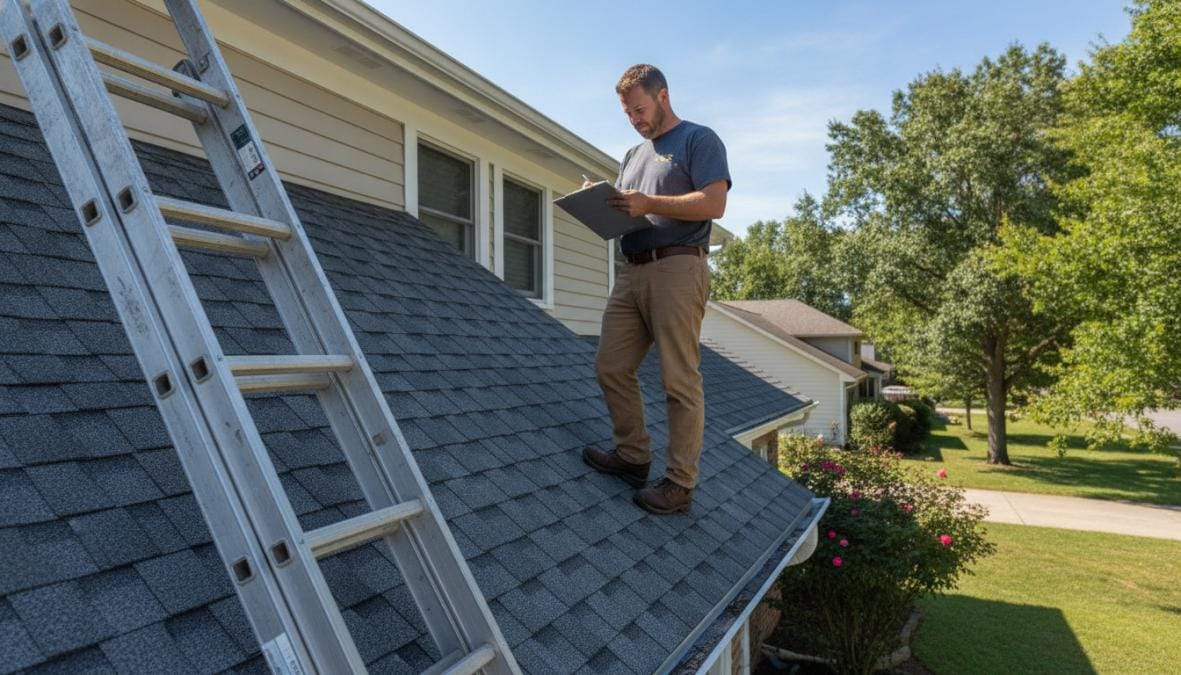
A new roof is one of the most impactful home improvements for reducing premiums. Roofing is the single largest source of property insurance claims, so carriers price roof age and condition heavily. The material matters as much as the age: impact-resistant roofing rated for hail and wind can qualify for additional credits beyond a standard new-roof discount, with some carriers offering specific discounts for Class 4 impact-resistant roofing.
(/how-much-home-insurance-do-i-need/)? What Upgrades Actually Help]
Beyond roofing, upgrades that genuinely move the needle include:
- Plumbing updates: Replacing polybutylene or galvanized pipes reduces water damage risk
- Electrical system upgrades: Replacing knob-and-tube or aluminum wiring reduces fire risk
- HVAC replacement: Newer systems reduce fire and water damage exposure
- Foundation reinforcement: Relevant in areas prone to shifting soils or seismic activity
Upgrades that don’t move the needle as much: cosmetic renovations, landscaping, and kitchen or bathroom remodels. These improve property value but don’t directly reduce the risk factors carriers price for. Focus your strategy on systems that affect fire, water, wind, and theft risk.
Your Credit-Based Insurance Score vs. Your Credit Score: Why the Difference Matters
Your credit score measures creditworthiness for lenders. Your credit-based insurance score is a separate calculation used by carriers during underwriting, it draws on similar data but weighs factors differently because the model is built to forecast insurance claims, not loan defaults.
The practical implication: you can have a strong credit score and still have a suboptimal credit-based insurance score. Common factors include payment history, outstanding balances, length of credit history, and credit mix. Hard inquiries and recent new accounts can weigh more heavily in insurance scoring models than in traditional credit scoring.
Improving your credit-based insurance score is a legitimate premium-reduction strategy. Paying down revolving balances, avoiding new credit applications before renewal, and maintaining a long, clean payment history are the most reliable levers.
According to the Federal Trade Commission’s consumer guidance on credit-based insurance scores, most states allow carriers to use credit-based insurance scores in pricing, though a small number restrict or prohibit the practice. Check your state’s regulations before assuming this factor applies.
How Geography and Climate Change Are Driving Your Premium Higher
For many homeowners, premiums are rising not because of anything they’ve done, but because of where they live. Carriers use risk models incorporating geographic data, historical loss patterns, and forward-looking climate projections. Homes in coastal flood zones, wildfire interface zones, and high-hail or tornado regions face structural premium increases that personal behavior changes can only partially offset.
As rebuilding costs rise and climate-related losses increase, carriers either raise premiums, restrict coverage, or exit markets. When major carriers leave a region, remaining carriers face less competitive pressure, meaning higher rates for everyone left.
What homeowners in high-risk areas can do:
- Harden the home against the specific regional risk: Storm shutters in hurricane zones, fire-resistant landscaping in wildfire areas, elevation improvements in flood zones
- Explore state-backed insurance programs: Many states maintain insurers of last resort for homeowners who can’t obtain private market coverage
- Separate flood coverage: Standard homeowners policies do not cover flood damage. Flood insurance through the National Flood Insurance Program is a separate policy many flood-prone homeowners need
- Review your inflation guard provision: As rebuilding costs rise, your dwelling coverage must keep pace. Verify your inflation guard adjustment rate is sufficient at each renewal
The honest take: if you’re in a high-risk geography, these strategies help but won’t fully counteract structural pricing pressure. The most effective long-term strategy may involve a harder conversation about whether your location’s risk profile aligns with your financial plan.
How to Switch Home Insurance Providers Without a Coverage Gap
Switching carriers is one of the most effective ways to lower home insurance costs, but sequencing the steps correctly is critical. A coverage gap can trigger a force-placed insurance requirement from your mortgage lender, which is almost always more expensive than standard market coverage.
The correct sequence for switching home insurance providers:
- Obtain and finalize your new policy first. Do not cancel your existing policy until the new one has a confirmed effective date and you have the documents in hand.
- Set the new policy start date to match or precede your current policy’s cancellation date. Overlap by one day if necessary, you’ll receive a pro-rated refund for any overlap.
- Notify your mortgage lender. Send the new declarations page directly to your lender’s insurance department.
- Cancel your existing policy in writing. Request written confirmation of cancellation and the effective date.
- Confirm your pro-rated refund. If you’ve prepaid your premium, you’re entitled to a refund for the unused portion.
If your premium is paid through escrow, notify your mortgage servicer of the carrier change well before the renewal date so they can redirect the payment correctly.
The switching process is also the right time to reassess whether your coverage limits reflect current rebuilding costs. Replacement cost coverage pays to rebuild at current labor and materials prices; actual cash value coverage pays the depreciated value. The difference can be substantial after a major loss, and many policyholders don’t realize which one they have until they file a claim.
As the Consumer Financial Protection Bureau’s homeowners insurance guidance notes, understanding the distinction between replacement cost and actual cash value is one of the most important decisions a homeowner makes when selecting a policy.
Homeowners insurance premiums are rising across most markets, and the gap between what informed policyholders pay and what passive ones pay is widening. Covera provides comprehensive policy breakdowns, comparison resources, and expert guidance across home, auto, and specialty insurance to help you make decisions based on actual coverage value rather than price alone. Start with the action checklist at the top of this guide, work through the strategies systematically, and review your policy with Covera’s resources before your next renewal.
Frequently Asked Questions
What is the fastest way to lower home insurance?
The fastest way to lower home insurance is to call your current insurance carrier and ask about available discounts you may not be using, such as bundling home and auto insurance, loyalty discounts, or a monitored security system credit. You can also raise your deductible immediately to reduce your premium. Shopping around for new quotes takes slightly longer but often yields the biggest savings, especially at policy renewal time.
Does raising my deductible actually lower my premium?
Yes. Your home insurance deductible and premium have an inverse relationship, the higher your deductible, the lower your premium. Increasing your deductible means you agree to pay more out of pocket before your insurance carrier steps in after a claim. Before adjusting, make sure you have enough savings to cover the higher deductible amount comfortably, so a future claim doesn’t create a financial hardship.
Does a new roof lower home insurance costs?
A new roof can meaningfully lower home insurance premiums because it reduces the risk of weather-related claims. Insurance carriers view a newer roof, especially one made of impact-resistant materials, as a significant reduction in underwriting risk. The discount varies by insurer and region, but homeowners in disaster-prone areas often see the largest savings. Always notify your insurance carrier after a roof replacement and ask specifically about available credits.
Does bundling home and auto insurance really save money?
Bundling home and auto insurance with the same insurance carrier typically earns a multi-policy discount that can reduce both premiums. The savings vary by carrier and policyholder profile, but it is one of the most consistently available home insurance discounts. Beyond the price reduction, bundling simplifies policy management by consolidating billing and renewal dates. Ask both your current carrier and competing carriers for bundled quotes before deciding.
Can I negotiate my home insurance rate?
You can negotiate your home insurance rate, though ‘negotiating’ in this context means presenting facts that justify a lower risk assessment. Call your agent and reference competing quotes, recent home improvements, your claims history, and your CLUE report. Ask directly what discounts you qualify for and whether your coverage limits still match your actual rebuilding costs. Carriers want to retain policyholders, so a polite, informed conversation often produces real results.
How do I switch home insurance providers without a coverage gap?
To switch home insurance providers safely, secure your new policy and confirm its start date before canceling the existing one. Overlap the start date by at least one day to avoid any coverage gap. Notify your mortgage lender of the change so they can update escrow records. Then formally cancel your old policy in writing and request a refund of any unused premium. Review the new policy’s dwelling coverage and liability coverage limits before finalizing.