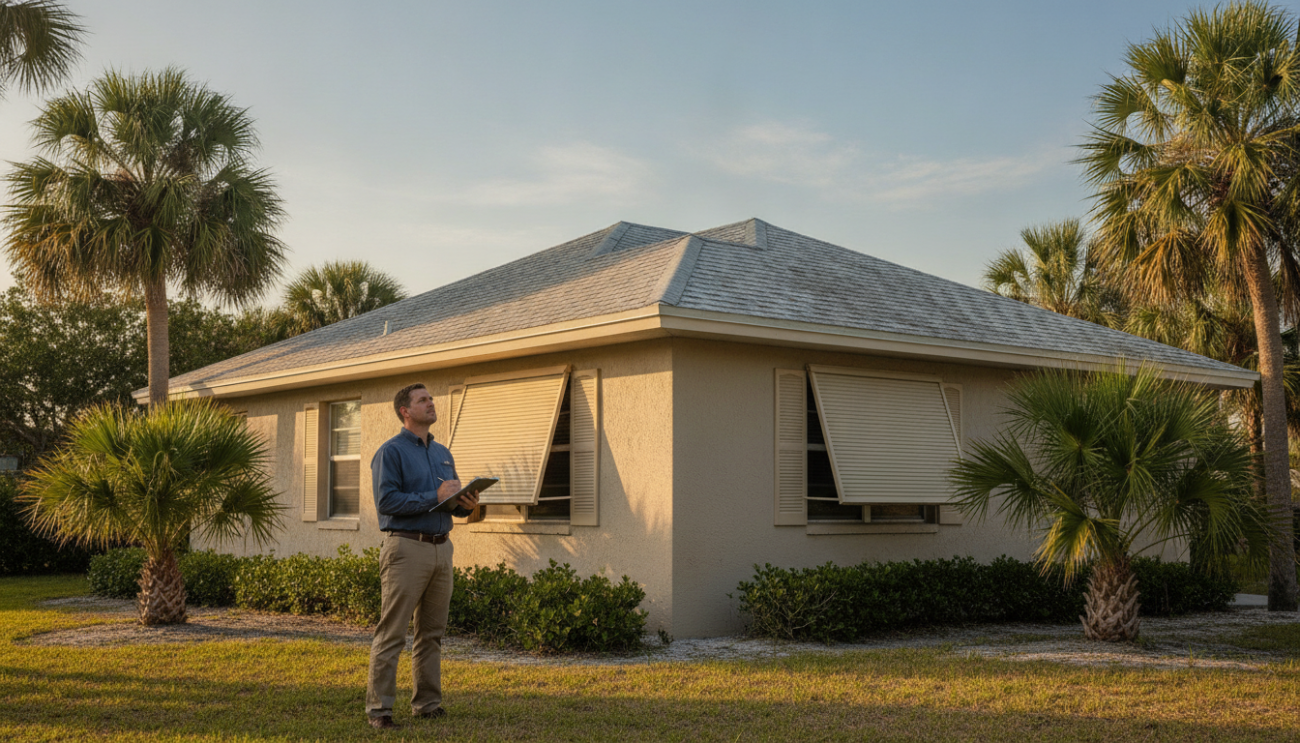
A new roof or a set of hurricane shutters might make your home safer, but your insurer may not know those features exist. A wind mitigation inspection turns construction details into documented evidence that may qualify for a lower windstorm premium. This guide explains what Florida inspectors check, what changed in 2026, and how to turn a report into a useful conversation about your bill.
What is a wind mitigation inspection?
A wind mitigation inspection is a documented review of features that help a home resist wind damage. In Florida, an authorized inspector records eligible roof, wall-connection, and opening-protection details on the state’s Uniform Mitigation Verification Inspection Form. The insurer uses verified features to determine applicable windstorm premium credits; an inspection does not guarantee a discount on the entire policy.
The goal is different from a routine home inspection. The inspector is not certifying that every system works or promising that a roof will survive a hurricane. They are documenting specific construction features and supporting them with the evidence the form requires.
Why the Florida wind mitigation inspection matters in 2026
Florida’s Office of Insurance Regulation (OIR) says its updated OIR-B1-1802 form became effective April 1, 2026. That makes it especially important to ask an inspector which version is accepted for an inspection scheduled now. The official OIR wind mitigation resources page also says the form is valid for up to five years if there are no material structural changes or inaccuracies.
Do not assume the form’s five-year validity means your premium stays fixed for five years. Rates, underwriting, coverage, and the carrier’s approved credit schedule can change at renewal. Ask the insurer to show the credit applied to the wind portion of your premium, not just a headline percentage.
For example, imagine a hypothetical $3,000 annual policy with $1,200 attributable to wind and a 10% applicable credit on that wind portion. The arithmetic is $120 a year, not $300. This is an illustration, not a quoted Florida rate or a promise of eligibility. Actual credits depend on the documented features, insurer, location, policy, and applicable rules.
What does the inspector look for?
A Florida wind mitigation inspection focuses on verifiable building features. The exact questions and evidence requirements should be checked against the form in effect on the date of inspection. Common topics include:
- Roof covering and age: What material is on the roof, when it was installed, and whether documentation supports the installation details.
- Roof deck attachment: How the sheathing is fastened to the framing beneath it. A finished ceiling does not reveal every fastener.
- Roof-to-wall connection: Whether the roof framing is attached to the walls with qualifying clips, straps, or other connections.
- Roof shape: The home’s roof geometry, including whether it meets the form’s definition of a hip roof.
- Secondary water resistance: Whether a qualifying barrier helps limit rain entry if the outer roof covering fails.
- Opening protection: Whether windows, doors, skylights, and garage doors have qualifying wind-rated protection where required.
One common mistake is to call any metal connector a qualifying hurricane strap. The connection type and how it is installed matter. A photo or contractor receipt can help an inspector verify a feature, but a receipt alone may not prove what is hidden behind finished walls.
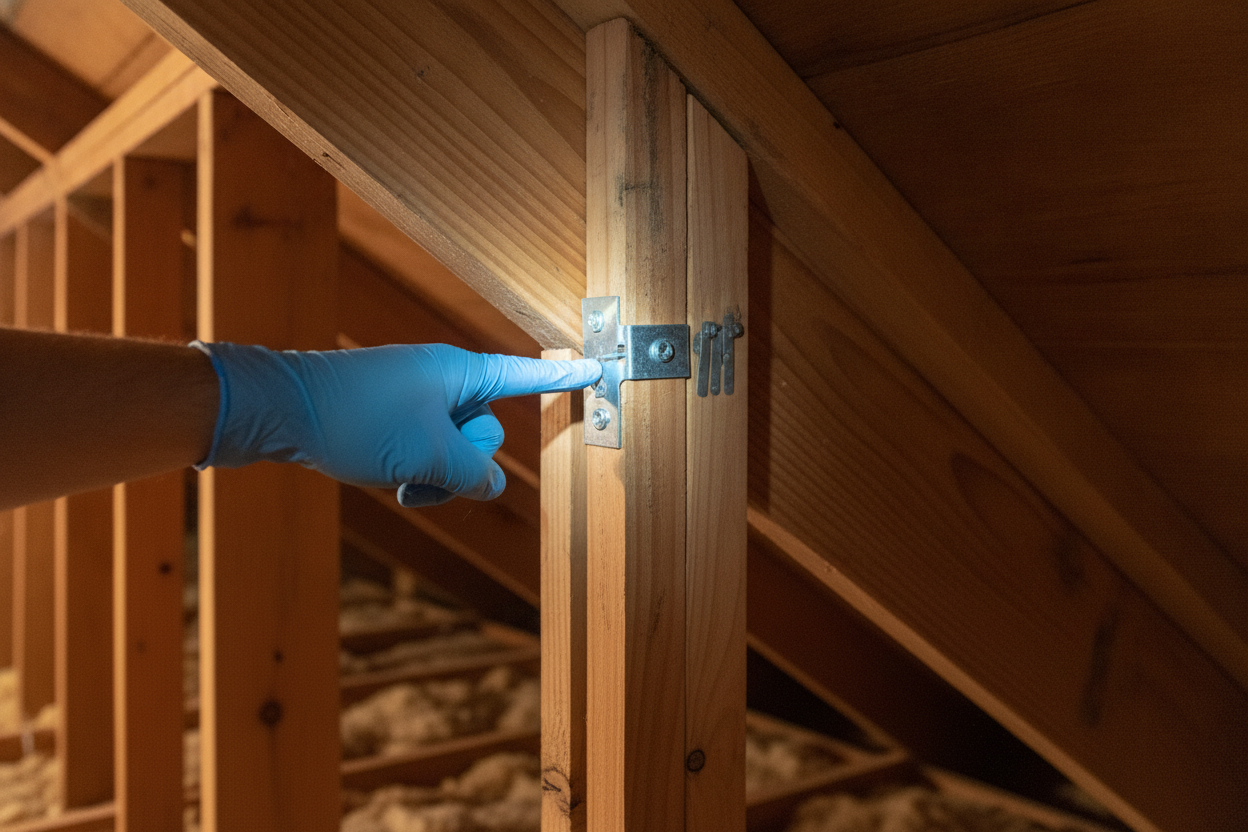
Roof-to-wall connection versus roof deck attachment
These sound similar but describe different links in the load path. Roof deck attachment connects sheathing to trusses or rafters. Roof-to-wall connection links those trusses or rafters to the walls below. A stronger rating for one feature does not automatically prove the other.
If your roof was recently replaced, gather the permit, contractor invoice, and any progress photos before the inspection. Ask the roofer whether photos show concealed fasteners or water barrier work. A fresh roof may also affect claim settlement terms, which is separate from an inspection credit. Our roof surface payment schedule guide explains how roof age can change a claim payment.
Opening protection is not just about windows
Inspectors may need to assess doors, garage doors, and skylights as well as windows. A home with shutters on most windows may not qualify for the same opening-protection classification as one where all required openings meet the applicable standard. Ask the inspector what evidence is needed for each opening rather than assuming that one product label covers the whole house.

How to get wind mitigation credits without guessing
- Check your policy first. Ask your agent or insurer for the current wind premium, existing mitigation credits, and the notice describing available discounts. You may already have some credits.
- Choose an authorized inspector. OIR advises consumers to verify that the inspector is authorized under Florida law. Ask which form version they will use and whether the fee includes photos and a copy of the finished report.
- Collect evidence. Have permits, roof invoices, product approvals, and prior reports ready. Do not ask an inspector to record a hidden feature without reliable proof.
- Review the report. Check your address, roof installation year, photographs, opening inventory, and any answers marked unknown or not observed. Request corrections from the inspector if factual errors appear.
- Submit and compare. Send the completed form to your insurer and ask for a written before-and-after premium breakdown showing each credit and its effective date.
The Florida Department of Financial Services says a qualified wind mitigation insurance inspection is needed to apply for credits or discounts. Its consumer mitigation guidance is a useful starting point for checking available programs and next steps.
Is the inspection worth the cost?
Do the break-even math with a real quote rather than an advertised savings claim. Divide your inspection cost by your insurer’s estimated annual premium reduction. If an inspection costs $150 and the insurer confirms $75 in annual savings, the simple payback is two years. This example ignores future rate changes and any costs of physical upgrades.
Even if a report finds no new credit, it can reveal which feature is missing or undocumented. Before spending money on shutters or roof work, ask your insurer how that particular upgrade would be classified and what evidence it requires. An improvement can reduce damage risk without qualifying for the discount you expected.
Also compare coverage quality, not only price. A lower premium does not make an unfavorable deductible or roof settlement clause disappear. Review our wind and hail deductible explanation to see how your share of a storm claim may be calculated, and our matching coverage endorsement guide for a separate roof and siding repair issue.
Common mistakes that delay a hurricane insurance discount
- Using an outdated or incomplete report: Confirm the currently accepted form and include required evidence.
- Confusing an inspection with an upgrade: The inspection documents existing features; it does not install protection.
- Assuming a credit applies to every dollar: Ask which premium component receives the discount.
- Ignoring the existing baseline: Compare the new quote against credits already on your policy to avoid counting them twice.
- Overlooking claim terms: A smaller premium is not the same as broader storm coverage or a smaller deductible.
After any roof replacement or opening upgrade, ask whether the change warrants a new inspection. Keep the revised report, permit, product documentation, and insurer’s written credit confirmation together. That file can make the next renewal easier and help resolve a dispute about what the carrier had on record.
Frequently asked questions
How long is a Florida wind mitigation inspection valid?
OIR states that its uniform verification form is valid for up to five years if no material structural changes are made and the form contains no inaccuracies. Ask your insurer whether it needs a newer report after roof or protection upgrades.
Does a wind mitigation inspection guarantee a discount?
No. The report documents features; your insurer determines which credits apply under its approved rules. Request a written premium breakdown so you can see whether the inspection changed your bill.
Is a wind mitigation inspection the same as a four-point inspection?
No. A four-point inspection generally reviews a home’s roof, electrical, plumbing, and HVAC systems for underwriting. Wind mitigation focuses on construction features related to wind resistance and potential windstorm credits. An insurer may request both.
Can a new roof increase my wind mitigation credit?
Possibly. The roof’s documented installation details, attachments, and water barrier may affect applicable classifications. A new roof alone is not proof of every hidden feature. Keep permits and progress photos and ask your insurer for the credit calculation.
Take the next step before renewal
Ask your insurer for your current wind premium and existing credits, then book an authorized inspector if a documented feature may be missing. Compare the completed report with a written revised quote before paying for upgrades solely to chase savings. If you have already received a report, share in the comments which line item was hardest to understand. For another coverage check, read our roof cosmetic damage exclusion guide before the next storm.