A $1,000 homeowners deductible looks manageable until a hailstorm tears through your roof and the claim paperwork shows a $10,000 deductible instead. The difference is often a separate wind and hail deductible, calculated from your home’s insured value rather than the repair bill. Here is how to read that number, estimate your share of a claim, and compare policies before the next storm.
What is a wind and hail deductible?
A wind and hail deductible is the amount you pay on a covered wind or hail claim before your homeowners insurer pays its share. It may be a fixed dollar amount or a percentage of your dwelling coverage limit. It can apply instead of your standard deductible, depending on the event and policy wording.
That quick answer matters because a 2% deductible is not 2% of a $12,000 roof repair. It is commonly 2% of the insured dwelling limit. A policy with $400,000 in Coverage A would therefore have an $8,000 deductible, even if the particular repair costs much less.
How a percentage wind deductible works
Look for Coverage A, dwelling on your declarations page. That is the policy limit for rebuilding the house, not necessarily its market value or the balance on your mortgage. Multiply the limit by the deductible percentage shown for wind or hail.
- 1% of $400,000: $4,000 out of pocket before the insurer’s share.
- 2% of $400,000: $8,000.
- 5% of $400,000: $20,000.
These figures illustrate the deductible, not a guaranteed payment. Covered damage, settlement method, exclusions, and any applicable limits still determine what the carrier owes. According to the Insurance Information Institute’s overview of hurricane and windstorm deductibles, percentage deductibles are used for certain storm risks, and their size and triggers vary by state and policy.
Say a hailstorm causes $18,000 in covered roof damage and your policy has a $400,000 dwelling limit with a 2% wind and hail deductible. If the claim settles for $18,000 on a replacement-cost basis before the deductible, the insurer’s gross payment is $10,000 and your deductible share is $8,000. A different roof valuation or excluded work can change those figures.

Does the deductible apply to the repair price or the home value?
For a percentage deductible, use the policy’s stated calculation base, often the Coverage A dwelling limit. Do not multiply by the contractor estimate or home resale price unless your policy expressly defines the base that way. A flat deductible, by contrast, is a set dollar figure, such as $1,000 or $2,500.
Check the declarations page and endorsement together. Renewal changes to your dwelling limit can increase the dollar amount of a percentage deductible even when the displayed percentage stays the same. For example, 2% rises from $8,000 to $9,000 if Coverage A rises from $400,000 to $450,000.
When does a separate storm deductible apply?
A standard homeowners deductible may apply to a covered fire or theft, while a separate deductible may apply to wind, hail, hurricanes, or named storms. The names are not interchangeable. A wind and hail deductible can apply to ordinary thunderstorms; a hurricane deductible may require a policy-defined hurricane trigger; a named-storm deductible may be tied to a storm officially named by a weather authority.
Exact rules depend on your state, insurer, forms, and the timing and location of the loss. Read the trigger language rather than assuming every gust counts as a hurricane event. Ask your insurer which deductible applies if hail and wind damage happen during the same storm, and whether the policy uses a per-occurrence or other basis.
Some coastal policies exclude wind entirely or require a separate windstorm policy. In that case, adding up one deductible on each policy without first confirming which coverage responds can be misleading. An independent agent or your insurer can explain how the policies coordinate.
Hail damage insurance claims: What the deductible does not tell you
Your deductible is only one part of the claim calculation. A roof might settle at replacement cost, which can reimburse eligible replacement work under policy conditions, or at actual cash value, which reflects depreciation. Some insurers use roof schedules that reduce payment as shingles age. Confirm your roof settlement terms before comparing a low premium with a high deductible.
Consider a $20,000 eligible roof replacement with an $8,000 wind and hail deductible. If the full $20,000 is payable under applicable replacement-cost terms, the deductible leaves a potential $12,000 insurer share. If the policy instead values the old roof at $13,000 after depreciation, the initial or final payout could be much lower, subject to the actual policy terms. These are illustrations, not claim estimates.
Our guide to matching coverage for roof and siding repairs explains a second gap: a carrier may pay to repair damaged sections without paying to replace undamaged materials that no longer match. Also review extended replacement cost coverage when rebuilding costs after a widespread storm could exceed your dwelling limit.
Can a small roof claim pay nothing?
Yes. If covered storm repairs cost $6,000 and your applicable deductible is $8,000, the insurer may pay nothing on that claim. It does not mean the damage is automatically uncovered; the loss may simply fall below the deductible. Check your policy and speak with the insurer before deciding whether to file, especially when hidden damage is possible.
For broader storm planning, ordinance or law coverage for code-required upgrades may matter if local building rules force changes during repairs. If storm-driven water rises from outside rather than entering through a damaged roof, read our inland flood coverage guide because a flood exclusion is a separate issue.
How to compare deductibles before renewal
Start with a side-by-side quote comparison using the same dwelling limit, roof settlement terms, liability limits, and major endorsements. A premium alone hides the risk you keep. Westfield’s consumer explanation of wind and hail deductibles also recommends locating the separate deductible in your policy documents and reviewing it before storms arrive.
- Calculate the real dollar amount. Multiply each percentage by Coverage A. Record the amount you would need in cash.
- Check the covered events. Ask whether the provision applies to wind, hail, named storms, or hurricanes, and when each trigger begins and ends.
- Compare roof payment terms. Ask whether the roof gets replacement-cost or actual-cash-value settlement and whether a roof schedule applies.
- Price multiple deductible options. Request quotes with a lower and higher storm deductible, if available. Compare annual savings with the extra cash at risk, not just the monthly bill.
- Keep an emergency reserve. If you cannot cover the storm deductible, a cheaper policy may be difficult to use after a loss.
For example, raising a storm deductible from 1% to 2% on a $400,000 dwelling increases your potential claim share by $4,000. If the premium falls by $240 per year, it would take about 16 years and eight months of that saving to equal the added $4,000 exposure, ignoring future premium changes and investment returns. That does not prove one option is always better; it gives you a useful break-even lens.
Do not cut dwelling coverage merely to shrink a percentage deductible. An underinsured home could create a much larger rebuilding problem. Instead, ask your agent whether the dwelling limit reflects current local labor, materials, and home features. If you recently upgraded your home, the inflation guard endorsement guide can help you understand how limits may change over time.
What to do after wind or hail damages your home
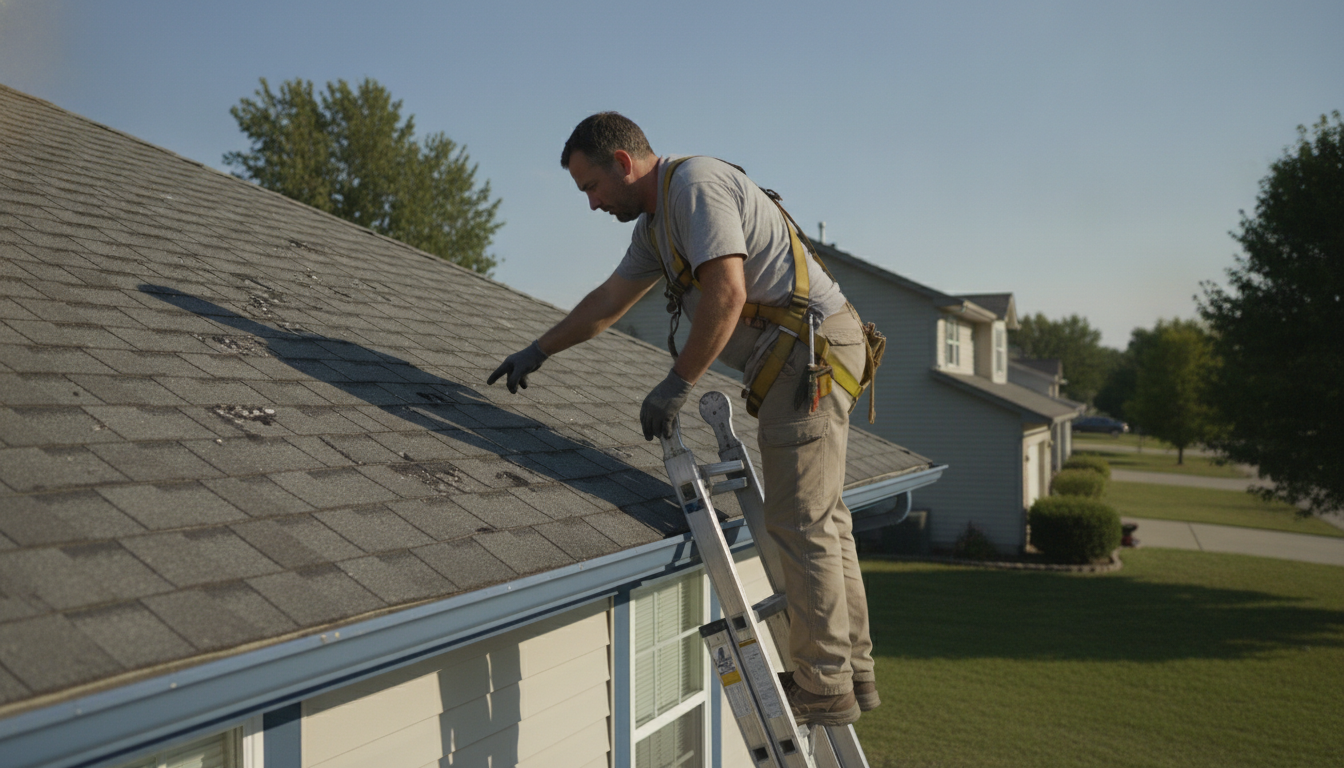
First, keep people away from unsafe roof areas and prevent further damage when safe to do so. Photograph damaged shingles, gutters, siding, and interior leaks; save repair receipts and note the storm date. Do not climb onto a wet or unstable roof just to collect evidence.
Next, locate the declarations page, storm-deductible endorsement, and roof settlement terms. Ask the insurer how the claim will be handled and get a written explanation of the deductible and covered repair estimate. Obtain a qualified contractor’s assessment, but avoid signing an assignment or repair contract you do not understand. If you disagree with a valuation, ask for the itemized estimate and the policy clause supporting it.
Frequently asked questions
Is a wind and hail deductible separate from my regular deductible?
Often, yes. It may replace the standard deductible for covered wind or hail losses, rather than being added to it. Your policy’s wording controls, so ask the insurer which provision applies to a specific event.
Is a 2% wind deductible 2% of the roof repair cost?
Usually not. A percentage storm deductible is commonly based on the insured dwelling limit. With $350,000 in Coverage A, 2% equals $7,000, regardless of whether the covered roof repair is $9,000 or $30,000.
Will my mortgage company pay the deductible?
Typically, the homeowner is responsible for the deductible. A lender may be named on a claim check and may control how repair funds are released, but that does not normally shift your share of the loss to the lender.
Can I lower my wind and hail deductible?
Sometimes. Ask your carrier or agent whether a lower deductible is offered at renewal and what it does to your premium. Options may be limited in high-risk areas, and changes generally cannot be made retroactively after a storm loss.
Next step: Pull out your declarations page today, turn every storm deductible percentage into a dollar figure, and ask your insurer about the roof settlement terms. If the potential bill would strain your savings, compare coverage options before renewal, not after a hailstorm.