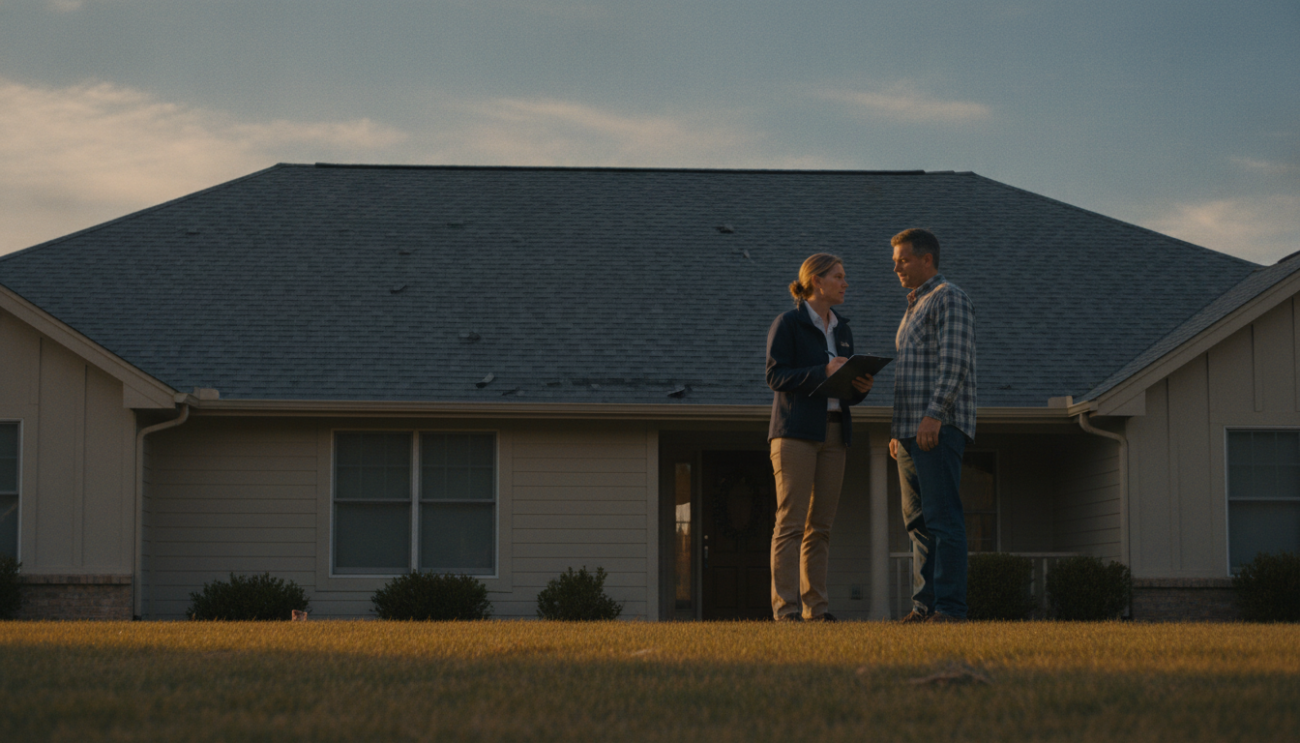
Your insurer’s estimate is in, but the contractor found wet insulation behind the ceiling and a roof section the adjuster never measured. You do not have to guess whether the first inspection is the last word. This guide explains when to request a home insurance claim reinspection, what evidence to send, and how to handle the next decision.
Quick answer: A home insurance claim reinspection is a second review of property damage after an initial adjuster visit. Ask your insurer in writing when you find missed damage or a clear error in the estimate. Send dated photos, a line-item contractor estimate, and the exact items in dispute. Keep emergency repairs moving, but document the damage first.
What is a home insurance claim reinspection?
A reinspection is another look at the loss, usually arranged through the insurer handling your existing claim. An adjuster may return in person, review new photos remotely, or ask a specialist to inspect a specific issue. The goal is to evaluate facts the first inspection missed or could not confirm, not to promise a higher payout.
It can make sense when a room was inaccessible, hidden damage appeared during demolition, or the insurer’s estimate lists the wrong materials or measurements. The California Department of Insurance’s residential claims guide notes that a brief initial scope may require a second visit to finish the inspection. It also urges homeowners to keep a log of calls and correspondence.
Reinspection, supplement, or appraisal?
These terms solve different problems. A reinspection asks someone to look again at damage or evidence. A supplement asks the insurer to consider added repair items or costs, often after a contractor finds more work. Read our guide to requesting an insurance claim supplement if the repair scope changes during the job.
Appraisal is a policy-based process for certain disputes over the amount of loss, not a blanket way to overturn a coverage denial. Check your policy before invoking it; our homeowners insurance appraisal clause guide explains the distinction. Start with the simplest evidence-based request when the real problem is a missed room or an incorrect estimate line.
When should you request a second insurance adjuster inspection?
Ask promptly after you identify a specific discrepancy. A vague statement that the offer feels low gives an adjuster little to investigate. A photo of stained drywall, a moisture report, and an estimate showing that drywall is missing from the insurer’s scope give them something concrete to review.
- Missed damage: The first visit did not include a damaged room, detached structure, or hidden material uncovered later.
- Wrong quantity: The estimate measures one wall, but photographs and contractor measurements show damage across two walls.
- Wrong material: The repair list assumes a basic finish where the damaged home had a different material. Document the original material.
- New evidence: A licensed contractor, mitigation company, or engineer provides findings that change the factual picture.
A price disagreement alone may call for a written estimate review rather than another site visit. If the insurer says an item is excluded, ask for the relevant policy language and a written explanation. An inspection can establish what was damaged; it cannot by itself create coverage your policy does not provide.

Build an evidence file before you ask
Put your insurer’s estimate beside a contractor’s itemized proposal. Mark each disputed line and write down what is missing, where it is, and how you know. Keep original photos with dates if possible, along with receipts for temporary work and any inspection reports. The National Association of Insurance Commissioners’ homeowner claim tips recommend listing damaged property and taking photos or videos.
Use a simple comparison sheet so the adjuster can follow your request:
| Location | Insurer’s scope | New evidence | Requested review |
|---|---|---|---|
| Living-room ceiling | Paint only | Photos of wet drywall; contractor’s removal estimate | Inspect drywall and insulation |
| Rear roof slope | Not measured | Safe ground-level photos; roofer’s diagram | Confirm damage and dimensions |
These rows are examples, not proof of coverage. The cause of loss, policy exclusions, limits, deductible, and actual condition still matter. Never climb an unsafe roof or tear out sound material solely to create a claim photo. If water is spreading, take reasonable steps to prevent further damage, preserve evidence where safe, and save receipts.
For formal claim documentation, check whether your insurer needs a signed statement and when it is due. Our proof of loss form checklist covers the records that often support a detailed claim. Policy and state deadlines vary, so do not wait for a second visit to ask about them.
How to request a home insurance claim reinspection
1. Contact the claim handler in writing
Use the claim portal or email so there is a record. Include the claim number, loss date, property address, and a short list of disputed items. Ask whether the insurer will send an adjuster, request more documents, or review the file without another visit. Do not assume silence means your request was accepted.
2. Attach evidence that maps to the estimate
Label photos by room and location, and send the contractor’s line-item estimate rather than only a total price. If hidden damage emerged during necessary repairs, show the before and after condition and the date it was discovered. Ask the insurer whether it needs to view exposed materials before they are removed.
3. Ask for a date and a written response
Request confirmation that your evidence was received, who will review it, and when you should expect an update. Keep a call log and follow verbal conversations with a short email. There is no universal national reinspection deadline; claim handling rules depend on the state and the policy.
Request template: “I am requesting a reinspection or written review of claim [number] for damage at [address]. The initial estimate appears to omit [specific location and item]. Attached are dated photographs and an itemized contractor estimate showing [specific difference]. Please confirm receipt, tell me whether another site visit is needed, and explain your decision in writing.”
What happens during the second inspection?
Walk the adjuster through the disputed locations and your evidence list, not the entire claim story from memory. Have the contractor available if their measurements or findings are central, but check scheduling with the insurer first. The adjuster may take measurements, photographs, or notes and may ask for additional records.
For example, imagine a windstorm damages roof shingles and rain enters a bedroom. The first estimate includes roof work and ceiling paint. During drying, the mitigation crew finds wet insulation and damaged drywall. The homeowner sends dated photos, the mitigation report, and a line-item estimate, then asks the adjuster to inspect the newly exposed area. The insurer still decides whether the cause and repair are covered, but the request now has a clear factual basis.
After the visit, ask for the revised estimate or a written explanation if no change is made. Compare scope lines, quantities, material grades, and depreciation, not just the bottom-line check. If replacement cost is withheld pending repairs, our explanation of recoverable depreciation in a home claim can help you separate that payment issue from a missing repair item.

What if the insurer declines or the new estimate is still too low?
First, ask for a written reason tied to each disputed item. If the issue is missing evidence, supply it; if it is an excluded cause of loss, ask which policy provision applies. Do not confuse a dispute over how much covered damage costs with a dispute over whether it is covered.
Next, ask a claims supervisor to review your evidence and prior correspondence. The California insurance department’s guide recommends contacting the claims manager when you disagree with an offer and providing supporting documents. If the dispute remains unresolved, your state insurance department may explain complaint options. A licensed public adjuster or attorney may help with a complex claim, but understand fees and scope of service before signing.
Keep an eye on any time limit for proof of loss, repair completion, depreciation recovery, or legal action in your policy and state. A reopened review is not a reason to ignore those dates. In California, the state guide says additional damage discovered later can often be raised after an initial payment, but you should notify the insurer promptly; rules elsewhere may differ.
Home insurance claim reinspection FAQs
Can I request a reinspection after receiving a claim check?
Often, yes, especially when you discover additional damage, but ask whether the payment was partial or a final settlement and whether you signed a release. Notify the insurer promptly, send new evidence, and check policy or state deadlines.
Does a second inspection guarantee a larger payout?
No. It gives the insurer another chance to assess the facts. The decision still depends on covered cause, documented damage, policy terms, limits, deductible, and the repair scope. Ask for the revised estimate or written decision.
Should my contractor attend the adjuster’s return visit?
A contractor can help explain measurements, materials, or newly uncovered work. Share the contractor’s findings in advance and confirm the visit time. You can also send written estimates if scheduling everyone together is difficult.
What if the adjuster will not return in person?
Ask whether the insurer will conduct a remote review or accept a specialist report, photographs, and a line-item estimate. Request a written explanation of what evidence it needs and how it will decide the disputed items.
Your next step: Open your estimate today and mark each missed location or questionable line. Build a small evidence packet, send a focused written request, and keep the response with your claim records. For repairs that reveal additional work, read our linked supplement guide before sending your next estimate.