
A storm damaged your roof, and the insurer has asked for a signed proof of loss. Is that just another claim form, or could missing it put your payment at risk? This guide explains what a proof of loss form does, how to find your real deadline, what evidence to attach, and how to submit it without guessing at the numbers.
Quick answer: A proof of loss form is a formal statement of the damage and the amount you claim under an insurance policy. It may need your signature under oath and supporting records. Check your policy and the insurer’s written request for the deadline, prepare an itemized estimate, submit the form through an accepted channel, and keep proof of delivery.
What is a proof of loss form?
A proof of loss form tells your insurer what happened, which property was damaged, and how much money you are requesting. It is often a sworn proof of loss, meaning you certify that the information is accurate. Requirements differ by policy and type of insurance, so use your carrier’s instructions rather than a generic form found online.
It is not the same as the first notice of a claim. A phone call or app report opens a claim; a proof of loss is a later, more detailed accounting. An adjuster’s inspection is also not necessarily a substitute for your own signed statement. The insurer can evaluate your claim while still asking you to complete a formal proof.
Do not sign an amount you know is incomplete simply because a contractor or adjuster wants the file to move quickly. Ask how to report disputed or still-unknown items, and get the response in writing. A proof of loss is a claim document, not a promise that the insurer accepts every amount you list.
When is the insurance proof of loss deadline?
There is no universal homeowners insurance deadline. Your policy’s conditions, an insurer’s written request, and any applicable state rules control the timing. The clock may run from the date of loss, from a written request, or from another event defined in the policy. Those are very different starting points.
For example, if a policy says the form is due within 60 days after the insurer asks for it, a loss on March 1 and a request received April 10 do not make March 1 the starting date. But if the policy instead says 60 days after the loss, waiting for the request could be costly. This example explains the wording, not a deadline that applies to every policy.
Read the Duties After Loss or Loss Conditions section and save the written request. Mark the date it arrived, the stated due date, and any delivery method. If the timeline is unclear or too short to gather records, request a written clarification or extension before it expires. Never assume a phone conversation changed the deadline.
Flood insurance may follow different rules from a standard homeowners policy. The National Flood Insurance Program has its own proof-of-loss requirements, and disaster-specific extensions may change a deadline. Check the current policy and any applicable official notice rather than importing a deadline from a web article.
What if you missed the deadline?
Submit what you can promptly and ask the insurer in writing whether it will accept a late or supplemented form. Explain the dates and keep a copy of the response. Do not assume a late filing is automatically forgiven or automatically fatal: policy language and state law matter. If a substantial claim is at stake, a licensed local insurance professional or attorney can help you assess your options.
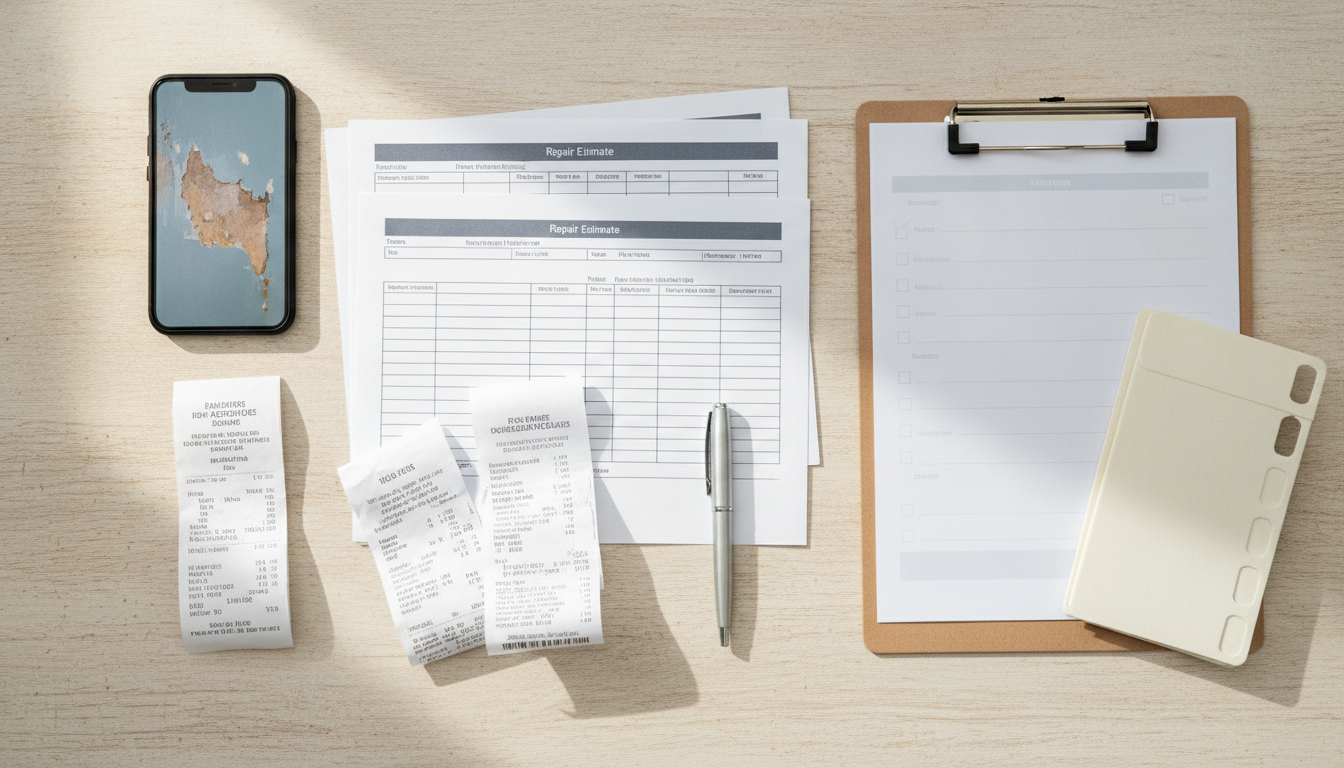
Proof of loss checklist: what to gather
Start with the claim number, policy number, insured names, property address, date of damage, and a short description of the cause. Then assemble the documents that support each dollar amount. The exact form may ask for other interests in the property, such as a mortgage lender, and for prior payments or other insurance.
- Photos and video: Capture wide views and close-ups before repairs when it is safe. Label each file with its location and date.
- Itemized repair estimates: Ask for quantities, materials, labor, and scope, not just one lump sum.
- Receipts and invoices: Keep emergency mitigation bills, completed repair invoices, and temporary expense records separate.
- Personal property inventory: List each damaged item, approximate age, original cost if known, and replacement evidence.
- Claim correspondence: Save the adjuster’s estimate, coverage letters, inspection notes, and requests for records.
- Ownership or value evidence: Receipts, serial numbers, bank records, or older photos can help support a missing item’s value.
As Allstate explains in its proof-of-ownership guidance, a home inventory can make it easier to show what was damaged or stolen. You can begin one after a loss using photos, order histories, and card statements, but mark uncertain details as estimates rather than inventing precision.
How to fill out a sworn proof of loss
1. Confirm the form and scope
Request the correct form from your insurer and compare it with the policy language. Confirm whether it covers the building, personal property, additional living expenses, or more than one claim category. If multiple policyholders must sign, make time for both signatures. Ask whether notarization is required instead of assuming every form needs it.
2. Reconcile the claimed amount with your evidence
Use a simple worksheet before entering the total. For example, suppose a covered roof repair estimate is $18,000, temporary roof protection costs $900, and the applicable deductible is $2,000. Your documented gross loss might be $18,900, while a rough net payment would be $16,900 if all charges are covered and no other adjustments apply. The form may ask for the gross amount, the net amount, or separate fields. Follow its labels; do not silently deduct twice.
The insurer’s estimate may use different quantities or prices. Put your contractor’s line items beside the adjuster’s lines, identify each difference, and attach support. If hidden damage appears after work begins, document it before covering it up and ask about an insurance claim supplement for additional repairs. A revised estimate is stronger than an unsupported round-number increase.
3. Disclose uncertainty and review before signing
Check the address, date, policy number, totals, deductible, and prior payments. Verify whether the form asks about other insurance, a mortgage company, or liens. If you cannot yet price a damaged room or an item is still being investigated, ask the adjuster how to note an incomplete amount or preserve the ability to supplement. Never knowingly certify a final total that conflicts with the records you hold.
Homeowners sometimes confuse an amount claimed with the cash they receive today. A replacement cost policy may initially withhold depreciation until repairs are complete. Our guide to recoverable depreciation and claim payment explains the second payment and its documentation requirements.

How to submit the form and prove it arrived
Send the signed form and attachments through a method the insurer accepts. If it provides a portal, save the submission confirmation and a copy of every uploaded file. For email, keep the sent message and ask for written receipt. For mail, use a trackable service and retain the delivery record. A draft sitting in your outbox is not proof of submission.
Name attachments clearly, such as roof-estimate.pdf and living-room-damage-photos.pdf. A brief cover note can identify the claim number, date of loss, attached documents, and any estimate still pending. Ask the adjuster to confirm whether the package is complete and what happens next. The NAIC post-disaster claims guide offers broader guidance on documenting damage and navigating the claim process.
Keep your original records, a copy of the signed form, and a dated log of every conversation. If the insurer sends a revised estimate or asks you to sign another proof, compare it against your earlier submission. A signed form does not replace the need to understand a settlement offer.
What to do if the insurer disputes your numbers
Ask for the insurer’s itemized estimate and a written explanation of the disputed line items. Is the difference about the price of materials, the quantity needed, whether the damage is covered, or the deductible? The answer determines your next step. Photos and a contractor’s measured scope help with factual differences; policy language matters for coverage differences.
If you agree the damage is covered but disagree on the cost to repair it, your policy may offer an appraisal process for claim-value disputes. Appraisal generally addresses the amount of loss, not whether a policy covers it. Ask about deadlines and costs before invoking it.
If the payment check names your lender, that is a separate release process, not proof that the form failed. See our guide to an insurance check made out to a mortgage company for practical next steps.
Proof of loss form FAQs
Is a proof of loss form required for every claim?
No. Some insurers handle small claims without requesting a formal sworn statement, while other policies or losses require one. Follow your policy and any written request for your specific claim. An adjuster’s visit alone does not answer the question.
Can I submit a proof of loss before repairs are finished?
Often, yes, if the insurer asks for a timely statement and you have a supported estimate. Ask how to identify unknown costs and submit later documentation. Do not wait until a deadline passes just because a contractor has not finished the job.
Does signing the form mean I accept the insurer’s offer?
Not necessarily. The form documents what you claim; a settlement agreement or release is a different document. Read any language about final payment or waiver carefully, and seek advice before signing wording you do not understand.
What if my contractor’s estimate is higher?
Submit the itemized contractor estimate with photos and explain specific differences from the insurer’s scope. Request a written response. A larger total without measurements or evidence is less persuasive than a documented line-by-line comparison.
Where do I get a blank proof of loss form?
Ask your insurer or adjuster for the form required under your policy. A downloaded generic form may omit required fields or use different wording. Confirm the due date and accepted submission method at the same time.
Your next step: Find your policy’s loss conditions today, put the deadline on your calendar, and request the insurer’s form in writing. Then build an itemized evidence folder before you sign. If this guide helped, share your claim-document question in the comments so other homeowners can learn from it.