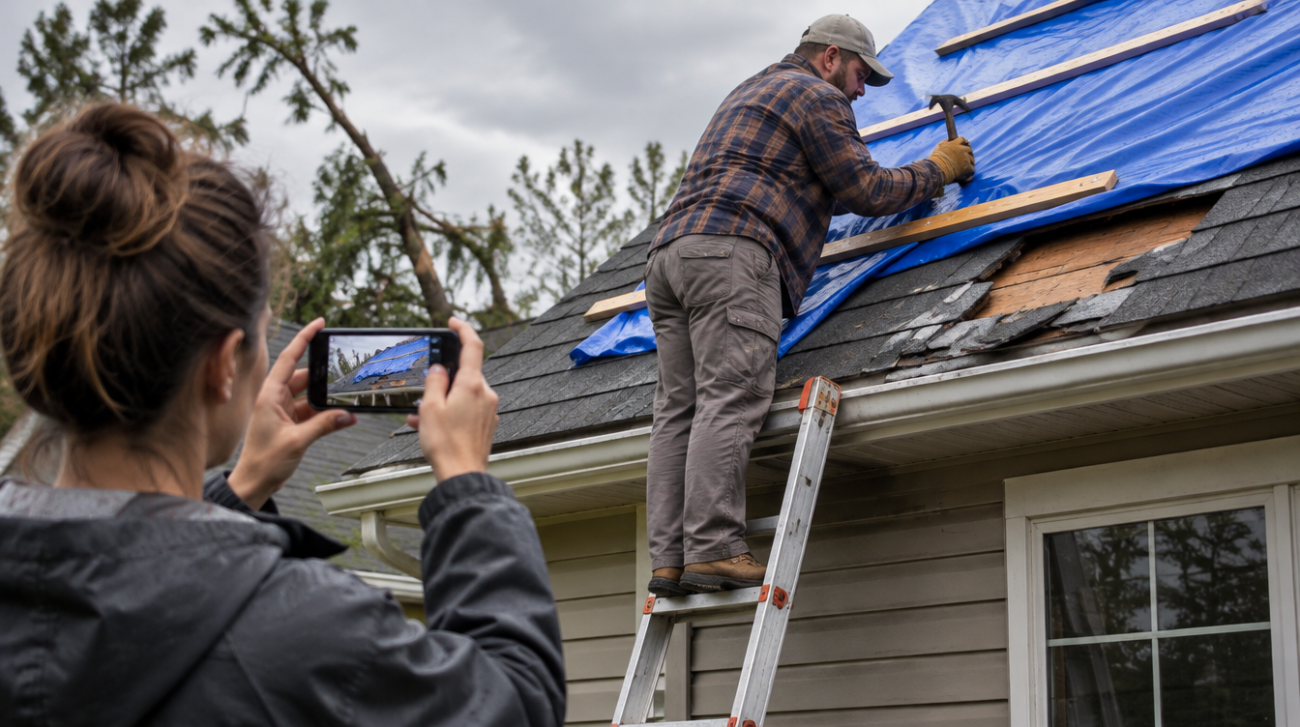
The storm is over, there is a hole in your roof, and the forecast says more rain tomorrow. The adjuster can’t come for a week. Do you wait, or do you start fixing things before anyone from the insurance company has seen the damage?
You act, carefully. Your homeowners policy expects you to protect the house from further damage, and reasonable temporary repairs are usually reimbursed as part of a covered claim. The trick is to document first, keep the repairs temporary, and save every receipt.
Your duty to protect the property
Most homeowners policies list “protect the property from further damage” among your duties after a loss. The standard ISO form says that if repairs are required, you must make reasonable and necessary repairs to protect the property and keep an accurate record of repair expenses (PropertyCasualty360). This is often called the duty to mitigate.
The consequences of skipping it can be real. The California Department of Insurance warns that homeowners policies may not cover ensuing damage if you haven’t taken reasonable steps to secure the property. Rain that pours through an untarped roof for two weeks can turn a covered roof claim into a fight over who pays for the ruined ceilings and floors.
There is some good news in newer policy forms. In the 2022 revision of the ISO homeowners form, the insurer has no duty to provide coverage when you fail to comply with these duties only if that failure is prejudicial to the insurer (PropertyCasualty360). Not every insurer uses that edition, so check your own policy.
Temporary vs. permanent repairs
The line that matters: temporary repairs stop the damage from getting worse. Permanent repairs fix it. State regulators are consistent on this. Texas says it is generally fine to make temporary repairs, but don’t make permanent repairs until you’ve talked to your insurance company (Texas Department of Insurance). Nebraska adds that you shouldn’t make permanent repairs until an adjuster inspects the damage (Nebraska Department of Insurance).
| Usually a reasonable temporary repair | Usually wait for the adjuster |
|---|---|
| Tarping a damaged roof | Replacing the roof |
| Boarding up broken windows and doors | Installing new windows |
| Shutting off water and fixing the broken line | Replacing kitchen cabinets and flooring |
| Removing standing water, drying with fans and dehumidifiers | Rebuilding walls |
| Removing soaked carpet and drywall to prevent mold | Choosing and installing new finishes |
| Removing a tree that is resting on the house | Landscaping and replanting |
Texas’s state wind insurer, TWIA, lists similar examples of temporary repairs and mitigation: covering openings with a tarp or plastic, removing trees that damaged an insured structure, boarding up windows and doors, drying wet areas with fans, interior water removal, and removing soiled carpet and sheetrock (TWIA).
Step by step: what to do in the first 48 hours
- Stay safe. Don’t climb a wet roof, enter a flooded room with live electricity, or move heavy debris alone. Hire help for anything risky.
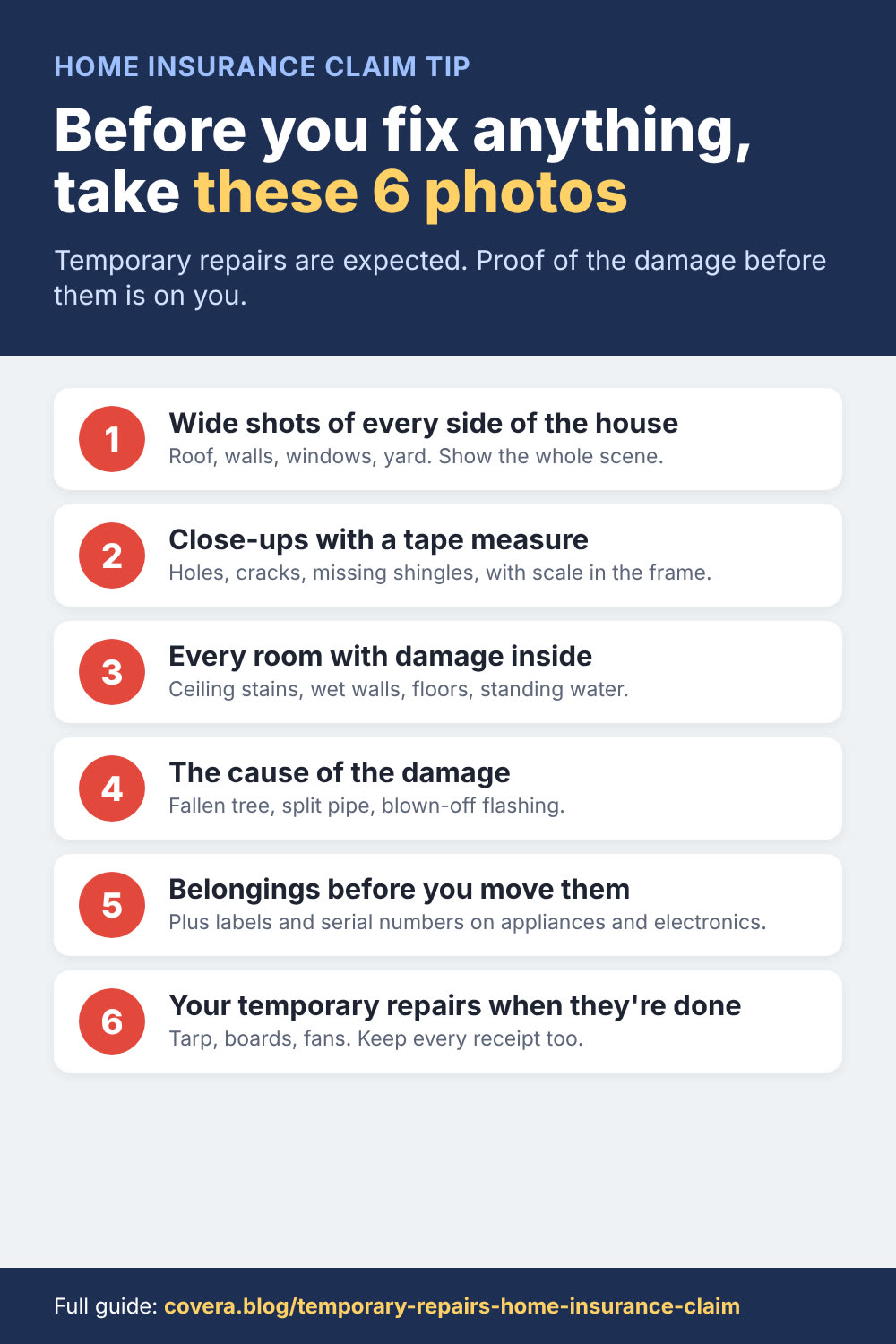
- Photograph and video everything first. Take pictures of the damage before doing any work, as the Texas Department of Insurance advises. Include wide shots and close-ups, inside and out.
- Report the claim. Call your insurer or agent and ask whether there is anything they want you to do or avoid.
- Stop the damage. Tarp, board up, shut off water, extract water and start drying.
- Keep damaged materials. Don’t throw away removed drywall, carpet or shingles until the insurer says you can, or at least photograph them with a tape measure for scale.
- Save every receipt. Materials, tools you had to buy, contractor invoices, equipment rental. The NAIC’s disaster claims guide says to keep all receipts for emergency repairs, because the insurer will need them to reimburse you.
- Write down your own labor. If you did the work yourself, note the hours and what you did. Some insurers reimburse reasonable labor.
What your insurer usually pays
If the loss is covered, insurers generally reimburse reasonable costs to prevent further damage. USAA, for example, tells customers that if the damage is covered, it will also cover reasonable expenses to prevent more damage (USAA). The NAIC says insurance will typically reimburse the cost of these repairs as part of your claim if your policy covers the loss.
Four details shape what you actually get:
- It is part of the same claim. California’s regulator notes that payments for temporary repairs are part of the total loss settlement. The standard form pays these costs on top of the direct loss, but only to the extent the total doesn’t exceed your limit (PropertyCasualty360).
- Your deductible still applies. USAA notes temporary repairs may count toward your deductible on a covered loss.
- Some policies have a separate limit. One policy form discussed by the Property Insurance Coverage Law Blog pays reasonable emergency measures up to the greater of $3,000 or 1% of the dwelling limit. Look for an “emergency measures” or “reasonable repairs” provision in your policy.
- No coverage, no reimbursement. If the loss turns out not to be covered, the insurer may have no obligation to reimburse the temporary repairs (Property Insurance Coverage Law Blog). That is one more reason to keep temporary repairs modest until coverage is confirmed.
Mistakes that cause disputes
- Fixing before photographing. Once the hole is patched, it is your word against the adjuster’s.
- Going permanent too fast. A new roof installed before the adjuster’s inspection can leave you arguing about what was damaged and what it cost.
- Overpaying for emergency work. The California Department of Insurance warns about contractors who encourage homeowners to spend a lot on temporary repairs. Get a second quote when you can, and ask the insurer about typical rates.
- Signing away your claim. Some emergency contractors ask for an assignment of benefits. The NAIC urges homeowners to be careful not to sign over their benefits after a storm.
- Waiting too long. A slow leak left alone can grow into mold, which many policies limit or exclude. See does home insurance cover mold.
- Losing receipts. Snap a photo of every receipt the day you get it.
Paying for emergency work while you wait
Tarps, water extraction and board-up crews cost money before any claim check arrives. Ask your insurer for an advance payment. If the house isn’t livable, your additional living expenses coverage can pay for a hotel and extra meals.
When the adjuster comes, walk them through the temporary repairs and hand over your photos and receipts. If something is left out of the estimate, ask for it in writing, or use a claim supplement. Our guide to reading the adjuster’s estimate shows where mitigation and drying usually appear.
Frequently asked questions
Can I make repairs before the insurance adjuster comes?
Yes, temporary repairs to prevent further damage are usually expected. Photograph the damage first, keep receipts, and hold off on permanent repairs until you’ve talked to the insurer or the adjuster has inspected.
Will insurance pay for a tarp on my roof?
Usually, if the roof damage is from a covered cause. Reasonable costs to protect the property are generally reimbursed as part of the claim, subject to your deductible and policy limits.
What is the duty to mitigate in homeowners insurance?
It is your obligation after a loss to take reasonable steps to keep the damage from getting worse, such as tarping, boarding up or drying out the house, and to keep records of what you spent.
What happens if I don’t make temporary repairs?
Your insurer may refuse to pay for damage that happened because the property wasn’t protected, such as extra water damage from an untarped roof. Some newer policy forms require the insurer to show your failure actually hurt its position.
Does insurance pay me for my own labor on temporary repairs?
Some insurers reimburse reasonable labor, especially for work a contractor would otherwise charge for. Write down your hours and what you did, and ask the adjuster how your company handles it.