Travel Guard Basic, IMG Patriot and Allianz OneTrip Emergency Medical are the top short term medical plans for U.S. Citizens traveling abroad.
Plans pay up to $1 million for hospital, doctor and evacuation costs and start at $1.20 a day.
Choose one customized to your trip duration, activities and visa requirements so you remain protected from takeoff until landing.
Why Your Domestic Plan Fails Abroad
Open your insurer’s app and find a hospital in Rome. The map whited out. Most U.S. Plans contract with doctors within state lines, and for international travel, the network stops. Blue Cross, Aetna, and Cigna have the same story. You are “out of area,” so each bill is out-of-pocket until you return home and plead for some sort of partial reimbursement. This is where travel health insurance becomes crucial for global travelers.
Turn to the back of your Summary of Benefits. The line “coverage outside the United States” reads: “emergency only, balance due at time of service, no guarantee of payment.” ACA plans, Medicare, and the big employer PPOs are using that clause. A scooter mishap in Bangkok costs $2,800 for the emergency room bill. You make the claim, but the letter back says, “foreign charges excluded.” The debt sits on your card at 22% APR, highlighting the importance of a comprehensive travel insurance policy.
Price gaps sting more than rejection letters. A $5,000 broken ankle in a major U.S. City costs $15,000 in Geneva and $11,000 in Toronto. Air ambulances from rural France to Chicago begin at $65,000. Your domestic plan pays none of that, and the foreign hospital wants cash upfront, emphasizing the need for medical travel insurance that covers unexpected medical expenses.
Border agents and admission desks are now asking for evidence you’re able to pay. Canada stamps a note in passports: “show insurance card or deposit.” A clinic in Cabo is going to swipe your credit card for $10,000 before they wheel you in. A short-term travel plan sends a letter saying, “we promise to pay.” Without it, you just flash your plastic and battle the tab later, underscoring the necessity of trip protection for international travelers.
In short, home insurance ends at the shoreline, and travel insurance begins. Having a solid insurance plan can save you from significant financial burdens while traveling abroad.
Core Components of Short Term Medical Insurance
Short-term medical insurance closes the gap when your U.S. Plan drops off at the border. It covers unexpected sickness or injury and those scary add-ons, such as a $150k helicopter flight off a Swiss ridge, without having to bind you into a long policy.
Three parts matter most:
- Minimum medical limit: $100,000 for Europe, $250,000 for Asia or islands
- Deductible less than $500 means a clinic run in Bangkok doesn’t eat your hotel budget.
- Printable visa letter — consulates in Madrid, Rome, and Paris request it at check-in.
1. Emergency Medical
Choose at least $100k so a Paris ICU stint doesn’t end up on your Amex. Direct-pay is key. WorldTrips’ Atlas Travel wires funds to Hospital de la Pitie, so you skip the $20k hold.
COVID still lurks. Make sure the fine print has you covered as “basic” plans often don’t. A complimentary IMG telehealth call can save $200 compared to walking into a Berlin clinic with a sore throat.
2. Evacuation & Repatriation
One med-evac from the Alps runs $150k, so secure $500k. Even the best plans have their limits. Good policies add a “bedside relay” nurse who flies with you if you’re knocked out.
Repatriation of remains should have its own bucket. $50k saves your family from paying a $20k freight bill on a Lima-to-Miami flight. Save the 24-hour hotline in airplane mode. Satellite phones in Patagonia only call pre-programmed numbers.
3. Pre-existing Conditions
Purchase within 14 to 21 days of your initial hotel deposit or the waiver disappears. Providers need evidence your asthma remained silent, such as Travel Insured’s 60-day look back or IMG’s 180-day look back.
Flash doctor notes saying no medication change; hidden blood-pressure pills can bust the whole policy. Disclose it all, even that new allergy spray.
4. Adventure Sports
Read the no list before you leap. Zip-lines and reef plunges under 30 ft typically go but bungee hardly ever does. A $50 rider on Trawick’s plan increases medical coverage to $500k for skiing in Chamonix or biking Moab trails.
Search-and-rescue is clutch; helicopter scoop-offs in Nepal average $25k. Snap pics of rented skis. Certain plans send you a $1k check for busted gear.
5. Ancillary Benefits
Stack the small stuff: $150 daily for delay, $2,500 if Iberia loses your bag, $500 for a missed hop from Lisbon to Porto. File on the app, submit pharmacy bills in Madrid and receive ATM fees within 48 hours.
Pet folks adore Trawick’s additional $1,000 vet cover when Fido chows down on mystery berries in Cornwall. Free mental health calls beat paying $200 an hour to talk to a stranger in Tokyo.
Distinguishing Policy Types
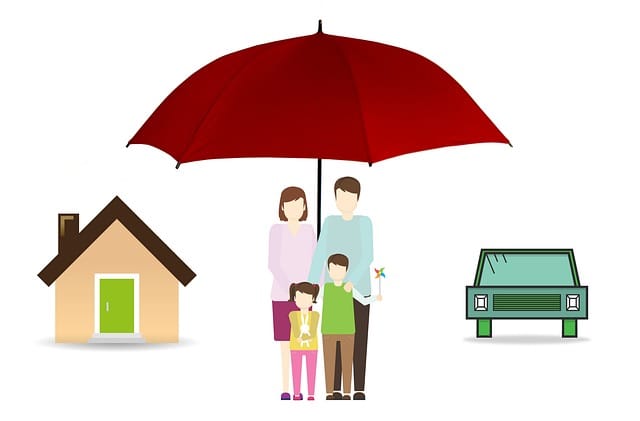
Identify the policy type first. Travel Medical” means hospital bills only. Trip Protection gives you cash back for canceled flights, lost bags, and hotels. The first one is lean and cheap, the second one costs as it pays for headaches you have before you even leave home.
Look at the top of the certificate—if the title omits the word “Travel,” chances are it omits baggage coverage.
Inquire if the insurance plan is primary or secondary. Primary dispatches the check direct to the ER in Madrid. You never ring your U.S. Insurer. Secondary forces you to submit back home initially, then it idles to find out what was refused.
A single phone call to the broker clears this up and saves you weeks of forms down the road.
Medical vs. Trip
Medical-only plans include doctor’s visits, ambulance rides, and medications abroad. If your Delta ticket and Barcelona hostel are fully refundable, you can bypass trip insurance and reduce the premium by approximately 60%.
A $25,000 medical-only plan for two weeks in Portugal costs approximately $28 to $40 for a healthy 30-year-old.
Trip insurance combines medical with cancellation, delay, and baggage. Pull it out when prepaid tours, safaris, or cruise cabins exceed $2,000. A $3,500 Kenyan safari that gets canceled for jury duty will repay 100 under trip protection.
Without it, the outfitter retains 75 percent post day 30.
Policy Type | Average Price (14 days, age 35) | Primary Advantage | When It’s Sensible |
|---|---|---|---|
Medical-only | $30–$45 | Up to $50k hospital bill pay | Refundable airfare, low pre-pays |
Trip Insurance | $110–$160 | Medical plus $10k trip refund, nonrefundable tour greater than $2k |
|
Hybrid hack: Swipe the trip with a premium travel card that already covers cancellation, then add a stand-alone medical plan for $30. You maintain the same safety net and pay half the bundled price.
Single vs. Multi-Trip
Single-trip plans begin at takeoff and end at landing. Multi-trip annual plans cover the calendar year and allow you to fly as many times as you wish.
- Single-trip: buy once, covers one exit-entry; valid for 1 to 180 days overseas
- Multi-trip: yearly fee, every trip included. Each trip capped at 30 to 70 days.
- Cost: single $40 for two weeks, multi $250 to $400 for all year
- Claim file: single means one set of forms. Multi means a new claim every time you travel.
Jetting business travelers who hop London-New York-Tokyo can pile airline status privileges, such as lounge access and rebooking, on top of a multi-trip medical plan so nothing disrupts the flow.
Gap year students fare better with a one-time policy with a renewable extension. Purchasing four individual ones shatters the budget after the second border crossing.
Who Truly Needs Coverage?
If a single night in a Paris hospital runs $3,800 and the same stay in your hometown costs $1,200, the math is blunt: once foreign care tops triple the U.S. Price, short-term medical stops being optional. Schengen, Cuba, UAE and Russia all require verification of coverage at the gate – no card, no entry!
Travelers over 60 get emergency bills four times higher than twenty-somethings, so their ‘maybe’ becomes ‘must’ fairly quickly. One quick gut-check: if losing a $5,000 prepaid trip would sting, pay the $80 premium and move on.
The Digital Nomad
Who really needs coverage? A 364-day renewable plan from WorldTrips, IMG, or SafetyWing keeps you legal without forcing a mid-year return.
Read the fine print: some policies freeze the moment you land back in L.A., so pick one that works in both countries. Need a cyber-theft rider? Twelve dollars more insures a stolen MacBook Air up to one thousand dollars, useful when the Bali co-working space locker gets jimmied.
Save the PDF policy to Google Drive; embassy staff in Berlin or Bangkok will want to see it again when you renew the twelve-month visa.
The Travel Nurse
Agency plans often die at 11:59 p.m. On contract end day. A 7-day tail policy plugs that hole for less than $40 and keeps you covered driving from Tucson to your next gig in Denver.
Some short-term plans will even refund a $500 license fee if a cancelled contract postpones your initiation. Choose a multi-state PPO so that an ER visit on a work trip in Texas does not penalize you with out-of-network fines when your most recent assignment was in Oregon.
The Vacationer
Match coverage to the trip shape: a week-long Carnival cruise needs less evacuation lift than a three-week Kenyan game trek where the nearest Level-1 trauma center is in Nairobi.
Family plans combine one $500 deductible across spouse and children rather than piling three separate ones on top of each other. Pre-print receipts for that $120 snorkel charter; some airlines compensate weather cancellations without a doctor note.
Travel Guard still has those “kids free” promos. One policy covers every child under 17 when two adults pay.
The Student
Forget that $1,900 campus plan. A 6-month short-term medical policy costs around $900 and satisfies most school waivers.
J-1s require $100,000 medical and $25,000 repatriation. F-1 rules vary by college, so check before you buy. Include a maternity rider if necessary.
Lots of student plans act like pregnancy just doesn’t exist. Keep your domestic ACA plan alive, let the short-term be your primary during you’re in Florence, then flip back when you’re home for Christmas.
Beyond the Brochure: Hidden Realities
AM Best data reveals certain discount carriers refuse 18% of foreign urgent invoices. Reddit threads log hour-long hold times that incinerate entire travel days. A Madrid clinic once charged a buddy 9,800 bucks. The insurer balked as the deductible means paid in full.
WhatsApp is how Lima and Bangkok hospitals now ping insurers — no app, no reply.
Claims Process
File within 48 hours to avoid being overwhelmed with excess paperwork and weeks of procrastination. It’s crucial to submit detailed invoices, as summary receipts from overseas hospitals are often denied. Keep your boarding pass handy; it verifies your presence in-country and prevents the outdated excuse of being ‘out of coverage’ for your travel insurance.
If your medical expenses exceed $5,000, consider requesting a cash advance, as many insurance providers wire the funds within 24 hours of reviewing the OR schedule. Be aware that some medical insurance plans may impose a secondary deadline: you only have five days to submit translations after leaving the hospital. A traveler in Ho Chi Minh faced a week’s delay, as the form returned in Vietnamese, causing the claim to linger for another month.
Always have a PDF scanner app on your phone; it’s far more convenient than relying on airport copy shops that charge exorbitant rates per page. This preparation can save you time and stress during your trip, ensuring you have the right trip protection choice in place.
Service Quality
Call the hotline at 2 a.m. Prior to flying. If a live nurse answers in less than 60 seconds, you’re golden. GEOS and UnitedHealthcare Global staff over 40 languages. Others connect you to a U.S. Call center that opens at 9 a.m. EST.
Watch the fine print for “collect calls accepted.” A Buenos Aires pay phone can run $45 if the underwriter refuses to cover the charge. Scroll the app store; anything below four stars usually means photo uploads crash and you’ll mail paper later.
Fine Print
‘Reasonable and customary’ allows the carrier to reduce foreign doc fees by 30%. One beer before a scooter spill nullifies the entire charge under alcohol exclusion. If the State Dept labels your destination level-3, some policies print ‘terrorism waiver’ and turn heel.
An MRI or a private room often requires pre-authorization, absent which you get to eat the entire scan price, which goes for $1,200 in Singapore. Watch for sub-limits within the same clause.
A broken leg can pay as much as $10,000, but prosthetics are limited to $2,000. A different scheme includes emergency dental at $500 all in, which is scarcely enough for one crown in Prague.
Read the stable-condition rule: any tweak of blood-pressure meds in the last 60 days can tag the issue “pre-existing,” albeit if you feel fine on the plane.
Future of Travel Medical Coverage
Parametric travel plans are already live in the US. Last month, for example, a Boston-area firm paid $100 to a traveler stranded for three hours in Newark. The plane took off late, the data feed stated, no forms. Anticipate this for quick jaunts to Mexico or even Canada. A $5 add-on can activate $500 for a missed port day on a Caribbean cruise. No doctor’s note, no pile of receipts is needed for this trip protection choice.
COVID showed insurers that regulations can switch at the drop of a hat. New policies now sneak in a ‘quarantine by default’ language. If France locks down again, the comprehensive travel insurance policy pays for the hotel for a ten-day stay, food included, provided you purchased within 21 days of the initial trip payment. A 35-year-old flying to Spain can check that box for around $18 on top of a $200 base plan.
Blockchain claims are still tiny, but pilot runs show speed. In Texas trials, a smart contract paid $3,800 to a Cancun hospital six minutes after the ward posted the bill. The code read the ICD codes, matched the policy, and wired USD. There was no fax chase and no weeks of ‘we need more information.’ Travelers simply scan a QR code when checking in and the policy nestles on-chain, ensuring that they have the necessary medical insurance plan at their fingertips.
Climate surcharges are appearing on quotes for FL, CA and Gulf beaches. A seven-day policy that was $68 last year is now $74 if Miami is on the itinerary. Tahoe wildfire exposure adds $9. Nassau hurricane season adds $12. It is flat, not a percent, so a family of four experiences the same $5 to $15 increase each, highlighting the importance of comprehensive coverage in today’s unpredictable climate.
High-limit plans, $500,000 or even $1 million, are now selected by nearly 50% of purchasers on aggregator sites. They are only some 20% more expensive than barebones $100,000 plans, but they eliminate anxiety over ICU bills in Singapore or Swiss air ambulances. Flex build-your-own menus drop dental, keep evacuation, and save $30. Pre-existing condition waivers are common; buy within three weeks and your blood pressure medications stay covered under your medical insurance policy.
Tele-med apps bundled with coverage provide 24-hour US-licensed doctors by video in 13 languages. A hiker in Peru had antibiotics called in to a Lima pharmacy at 2 a.m. The claim initiated directly within the same app and was reimbursed $42 prior to her returning flight home. With much shorter wait times, some plans begin coverage after a six-hour wait, and these gaps are bridged more quickly, showcasing the value of travel health insurance plans.
Rates still depend on age, trip duration and zip code. A 28-year-old from Ohio bound for Thailand for 10 days pays $38 for $250,000 medical and zero-deductible evacuation. Throw in “cancel for any reason” and it hits $92. Wellness perks shave off 5% if you hit 8,000 steps a day in the insurer’s app, making it clear that understanding your travel needs is crucial when selecting an insurance plan.
Conclusion
Choose a plan that pays doctors directly and covers at least $100K. Print the card and save the 24-hour call line in your phone before you roll. A safe trip begins with just a click. Go snag a quote now!
Frequently Asked Questions
Does my California Kaiser or Anthem plan pay a hospital in Paris or Tokyo?
No U.S. Networks end at the border, making travel health insurance essential. You pay out of pocket overseas, then plead for partial repayment at a later date.
How short is “short-term” travel medical insurance?
You can purchase a travel insurance plan for as few as 5 days and up to 364 days, then renew once if you are still traveling.
Will a $50,000 policy cover a med-evac from Thailand to LAX?
Barely. One air ambulance seat costs between $150,000 and $220,000, highlighting the importance of travel insurance for medical emergencies. Choose at minimum $500,000 in evacuation benefits for comprehensive travel insurance.
Is COVID treated like any other illness now?
Yes. Most 2024 travel insurance plans cover testing, treatment, and quarantine lodging just as they would for flu or a broken leg.
Do digital-nomad plans cost more than vacation plans?
A 30-year-old pays around $1.20 a day for a travel insurance plan covering $100k while working remotely abroad.