Condo landlord insurance premiums are what owners pay to insure a rented condo unit on a monthly or annual basis. Rates depend on location, building age, claim history, liability limits, and loss of rent or unit upgrade coverage.
In places like Los Angeles, premiums can increase with rising replacement costs, wildfire exposure, and HOA master policy gaps. To untangle what fuels cost and what coverage suits a rental unit, the following segments unpack every variable with clear sample scenarios and price ranges.
Key Factors Driving Your Premium
Premiums reflect real risk: what you insure, where it sits, who manages it, and how much landlord insurance coverage you pick. For condos, include the association’s master policy and rules, considering the average cost of property insurance costs.
1. The Property
Older condos, particularly pre-1980s, frequently are more expensive to insure because of dated plumbing, knob-and-tube wiring, cast-iron drain lines or brittle supply hoses. Insurers view larger loss probabilities and longer rebuild durations.
Recent renovations, such as electrical panels, copper or PEX supply lines, roof membranes and impact-rated windows, can cushion premiums. Materials count. Concrete-and-steel mid-rises tend to rate better for fire resistance, with wood-frame walk-ups likely to be higher.
Amenities change the equation: pools, hot tubs, or trampolines can push liability premiums up by 10 to 15 percent. Upscale finishes increase replacement cost; luxury units go up in value. HVAC age and type contribute to loss from leaks and mold.
Specialty siding or imported tile makes repair bills outlandish. Replacement cost value drives your core rate. Underinsure it and you risk coinsurance penalties. Clean maintenance records minimize unexpected claims, whereas deferred problems such as slow leaks or broken caulk rings increase risk.
Short-term rentals can increase rates by 25 to 40 percent, and vacation rental usage might require additional coverage at $1,500 to $3,500 annually.
2. The Landlord
Claims change price immediately. Previous water loss or liability claims can push rates higher and reduce discount potential. Experience goes a long way.
Certifications, landlord associations, or group programs can generate small discounts. Multiple units can yield schedule credits, but overall premium continues to scale with exposure. Your deductible indicates risk share, with higher deductibles typically ranging from $500 to over $1,000, reducing premiums but increasing your out-of-pocket.
3. The Location
Neighborhood crime rates relate to theft, vandalism and package-room loss. Proximity to a manned fire station and hydrants improves fire response and can cut rates.
Homes close to brush areas, shores or rivers have increased property rates due to wildfire, wind or flood risks. Regional perils dictate conditions. Hurricane coasts get wind deductibles and flood requires its own policy.
Zip code loss data and local building codes inform average costs and necessary upgrades. Rapid-growth rental markets can experience sharper annual increases than more stable neighborhoods.
4. The Coverage
Basic policies include coverage for the condo unit, liability, and named perils. Broader types provide open-peril dwelling, increased sublimits, and improved loss-settlement conditions.
Adjust dwelling and liability limits to actual replacement cost and your renter flow. More visitors require more liability. Add-ons, including loss of rental income, ordinance or law, water backup, equipment breakdown, and umbrella, bump price but plug gaps.
Exclusions such as flood, quake, or wear and tear need separate covers.
5. The Association
Check the master policy: bare walls, single-entity, or all-in coverage shifts what you must insure inside your unit. Higher association deductibles can push you to add loss assessment coverage.
The HOA’s finances and claims history affect carrier appetite and your pricing. Strong building maintenance standards reduce loss frequency and may allow tighter limits or lower rates.
Your Condo Association’s Impact

Your condo association dictates what your landlord insurance policy has to cover, including the liability coverage you have and the insurance costs you pay. Master policy limits, maintenance, and financial strength all affect your premium in very concrete, quantifiable ways.
Master Policy Gaps
Most master policies exclude unit interiors beyond bare walls: flooring, built-ins, fixtures, cabinetry, and improvements you or a prior owner added. Personal property, tenant-caused damage, loss of rent, and short-term rental exposure are typically excluded. Responsibility within the unit is typically yours, not the association’s. Understanding landlord insurance coverage is crucial for protecting your investment.
Loss assessment coverage matters when the association faces a large claim such as hail roof damage, a pipe burst in common areas, or a lawsuit from a guest injury, spreading the bill across owners. Without enough loss assessment on your policy, a special assessment can hit cash flow and push you to raise limits midterm. It’s important to evaluate the landlord insurance costs to ensure you have adequate coverage.
If the master policy is underinsured, for example, if the building’s replacement cost is set too low, any partial payout shifts repair costs to owners. Your carrier prices that risk into your premium. Ask for the declaration page, limits, deductibles for wind, hail, water, and quake if relevant, and “all-in,” “walls-in,” or “bare walls” terms.
Compare that to your unit’s finishes and rent stream to size dwelling, liability, loss of rents, and assessment limits while considering your overall rental property insurance strategy.
Building Maintenance
Maintaining it consistently reduces loss frequency, which can push premiums down. Clean roofs and gutters reduce water intrusion. A yearly HVAC service prevents leaks.
Your condo association, keeping that in mind, proactive plumbing work and slab-to-slab firestopping and sealed penetrations really do curb major claims.
Neglect sends risk. Deferred elevator service, old risers, spalling concrete, or stained ceilings are all hints of future water or liability claims that your insurer will incorporate into rates.
Modern life-safety aids. Sprinklers, monitored alarms, self-closing fire doors, seismic retrofits where needed, and hardwired detectors can all earn discounts and better underwriting tiers.
Review the repair log and capital plan. Recent re-pipe, roof, façade work, and electrical upgrades are positives. A pattern of small leaks or repeated slip-and-falls is a red flag.
Financial Health
Solid financials reduce surprise special assessments that can trigger loss assessment claims and push premiums up. Review budgets, delinquency rates and audited statements to gauge stability.
Healthy reserves in line with the building’s age and component study. Robust reserves assist in mitigating deductibles and emergency repairs, so you don’t end up pursuing increased limits just to make up for association deficits.
Regular association loss runs—water, wind, liability—increase the master policy premium. Personal landlord insurers tend to react by restricting coverages or increasing rates. Follow five-year loss runs if available.
Check the association’s insurer quality and longevity. Stable carriers with top ratings usually handle that volatility better, which can help support even steadier premiums for all connected to the property.
How Coverage Choices Affect Cost
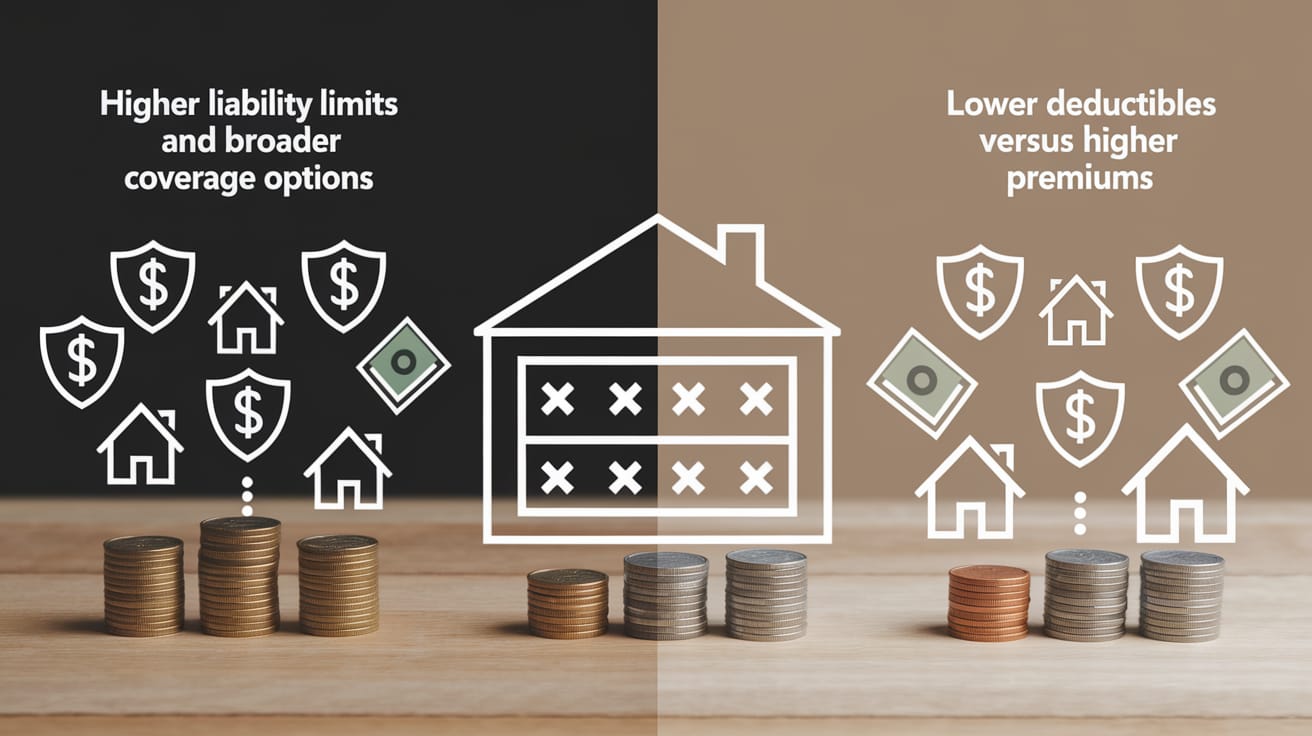
Coverage selections impact landlord insurance costs more than any other single variable. Landlord condo insurance policies typically come in roughly 15 to 25 percent higher than a comparable homeowners insurance policy, with a national average close to $1,426 annually on a $200,000 residence. Replacement cost coverage usually incurs higher insurance costs, as it pays today’s retail price, not a depreciated value.
Liability Limits
Increasing your limits will increase your premium, not always by much. Most carriers indicate that doubling a base limit can add a mere $50 to $100 per year, which is modest compared to the downside of a severe injury claim.
To most condo landlords, $250,000 to $500,000 makes sense as a floor, given defense costs and hospital bills after a guest slip-and-fall. Limit out with local risk in mind. If your HOA has rigid premises standards or you lease in a building with a lively pool or gym, upgrade limits.
Certain cities and lenders require evidence of a minimum landlord liability prior to leasing units. Umbrella insurance can fill the gap inexpensively. A one to two million dollar umbrella typically runs a few hundred dollars a year and sits above your base policy if you have short-term tenants or high net worth.
Deductible Levels
A high deductible trims the monthly statement. Jumping from $500 to $1,000 is frequent and can reduce yearly price, though the amount differs among providers and records.
How coverage selections impact price. If you can’t write a $1,000 check after a kitchen leak, savings on premium may not be worth it. Higher deductibles can help reduce small claims, which can assist your long-term rates.
They pass more out-of-pocket risk to you with common loss, such as repeated water damage in older stacks.
Policy Endorsements
Endorsements help calibrate cost. Include water backup, equipment breakdown, or short-term rental coverage if the unit is listed on a platform part-time. Loss of rent can maintain cash flow during repairs after a covered loss.
Flood and earthquake are separate in many states and priced by building risk. Coastal or high-risk quake zones see higher add-ons. Loss assessment coverage protects you from HOA special assessments after a shared loss, which can be costly in dense buildings.
Delete riders you don’t utilize. About how coverage decisions impact price. If the HOA pays for some building components, bypass repeated endorsements.
On some carriers, they discount when you bundle several riders, so get a packaged price before you start trimming.
Coverage Choice | Typical Effect on Cost |
|---|---|
Higher liability limits | Small increase; often $50–$100 to double base |
Replacement cost vs. ACV | Higher cost; better payouts at today’s prices |
Deductible $500 → $1,000 | Lower premium; higher out-of-pocket |
Loss of rent endorsement | Moderate add; can stabilize cash flow |
Water backup/flood/quake | Varies by building risk; can be significant |
Loss assessment | Adds cost; protects against HOA assessments |
The Underwriter’s Hidden Scorecard

Underwriters use data you seldom see to price condo landlord insurance in the U.S. This ‘hidden scorecard’ mixes your claims history, credit-based insurance score, tenant risk, and property signals such as location, condition, and market value. It can unearth discounts or nudge rates up, and it informs renewal terms as much as initial pricing.
Some say it’s too broad or biased, but it’s the default tool insurers use to benchmark risk, set terms, and keep pricing consistent across lots of policies.
Your Claims History
Multiple claims can significantly increase your landlord insurance costs and may lead to higher deductibles or restrictions on water or theft coverage. For example, two small water losses within 24 months on a LA condo can be more costly than a single major wind loss in a low-loss area. It’s important to note that water losses tend to recur.
A clean record, usually spanning three to five years, may qualify you for claim-free or loyalty credits. Many insurance companies tie their best rates to having no losses during this look-back period.
Underwriter’s secret scorecard. Prior fire or plumbing damage might trigger inspections, policy conditions or sub-limits, although if it has been repaired. Record all claims by date, cause, amount paid, and repair performed.
Document upgrades that cut future loss odds include new supply lines, seismic strapping for water heaters, leak sensors, or HOA mitigation work. Post invoices and photos since underwriters price proof, not promises.
Tenant Risk Profile
Tenant selection shows up in pricing. Solid credit, stable income, and clean rental history all indicate lower loss probability and lower churn, which can aid rates.
High-risk tenants, such as those with previous evictions, income gaps, or property damage history, can drive premiums higher since they are tied to risk and wear. Short-term guests contribute to foot traffic and slip-and-fall liability.
Require renters insurance with $100,000 liability and name you as additional interest. When a kitchen fire breaks out in a rented unit, the renter’s policy responds first, which keeps your claims record nice and clean.
Match coverage to tenant type. For 30-day furnished stays, verify your policy permits short-term rentals, endorse business liability if required, and review higher premises medical. For long-term leases, focus loss of rents coverage on local rebuild times.
Credit-Based Score
Credit-based insurance scores predict claim odds, not loan default. Higher scores often secure lower rates and more favorable deductible choices.
Pull your credit reports, dispute errors, pay on time, and lower utilization to drive better pricing over the next renewal cycle.
About: The Underwriter’s Secret Scorecard Carriers weight credit differently. Obtain quotes from at least three carriers. One might neutralize a mid-tier score with favorable property or tenant factors.
The underwriter’s secret scorecard Some find bias risks, others recognize necessary fairness for risk-based pricing across portfolios. Keep records: lease files, inspection reports, income proof, and repair receipts help an underwriter justify credits.
Modern Risks Reshaping Premiums
Condo landlord insurance is evolving as weather, technology, and rental habits reshape risk, with landlord insurance costs now reflecting climate exposure, data quality, and daily occupancy rates.
Climate Change
Premiums are rising the fastest in areas prone to storms, heat, and hail. In 2024, landlord insurance costs per unit were significantly more expensive in Florida and the coasts of Louisiana and Texas than in most other regions of the US, with these areas experiencing the largest increases. Insurers factor in higher loss costs from hurricanes, wildfire smoke, and severe convective storms, which drive up reinsurance and carrier costs. Resilient-certified upgrades can assist in managing these insurance costs, such as impact-rated windows, Class A roofs, flood vents, and strapping that can reduce probable loss.
A few carriers acknowledge FORTIFIED or similar upgrades with credits that can help counterbalance rate increases over time. Flood and earthquake insurance often require stand-alone policies. Coastal condos benefit from NFIP or private flood insurance to meet lender and HOA needs, which is crucial for maintaining adequate landlord insurance coverage.
A few carriers acknowledge FORTIFIED or similar with credits that can counterbalance rate increases over time. Flood and quake often need stand-alone policies. Coastal condos benefit from NFIP or private flood to meet lender and HOA needs.
Underinsurance is rampant among rental properties. Many households have limits that are far too low to rebuild after a disaster, skewing loss results and influencing future rates. Keeping track of carrier filings and renewal notices is essential to anticipate climate-driven cost changes in the rental market.
To effectively manage rental property insurance costs, landlords must remain vigilant about changes in the market and explore options that enhance their coverage while mitigating risks associated with climate change.
Smart Technology
Smart leak sensors, shutoff valves, monitored alarms and camera access control can reduce claim risk and even generate premium discounts. A fifty-dollar leak puck in every wet room can stop five-figure losses from a burst line.
Leverage sensors to identify minor problems early. Vibration alerts on pumps, laundry room humidity spikes, and temperature drops near riser pipes prevent freeze or mold claims. Typically, carriers award protective device credits for UL-listed central station alarms and maintained sprinkler systems.
Installing new panels and tamper valves goes a long way in underwriting’s eyes. Share device reports with your insurer. Well-defined, timestamped data demonstrates less risk and can underpin improved pricing.
Be mindful that crime scores used for rating can rely on flawed or incomplete data, so provide on-site security evidence to counter broad-brush metrics.
Rental Trends
Short term rentals alter risk. Increased guest turnover increases slip and fall, theft, and liability exposure, and certain insurers now mandate specific endorsements for vacation rental activity. High occupancy and stronger yields can drive up premiums due to there’s more wear, more keys out there and more claims frequency.
Rising property insurance costs can strain multifamily housing, causing rents to spike or repairs to be postponed. A 10 percent increase in real insurance costs is associated with a 0.14 percent hike in revenues.
Watch the rent levels and vacancy. These include updating business income and loss of rents limits to local averages, with peak season rates in tourist areas. Home sharing and mixed use setups require clarity in policy wording.
Verify coverage for host liability, damage caused by guests, and HOA fines. Reevaluate limits annually as rental habits evolve.
Strategies to Save on Insurance

Concentrate on measures that reduce landlord insurance costs without trimming necessary coverage. The little upgrades, smarter rental property insurance policies, and routine reviews tend to move the needle fastest.
Fortify Your Unit
Upgrades that ‘harden’ the unit can receive quantifiable discounts. Across numerous cities in the U.S., insurers acknowledge hurricane-hardened assets such as impact-rated windows, reinforced doors, and roofing upgrades that mitigate wind and water damage. In coastal or storm-prone areas, these updates minimize loss exposure and can cut premiums.
Install monitored burglar and fire alarms, and if the property permits, interior sprinklers or water-leak sensors. Most carriers provide proactive protective device credits when systems are central-station monitored. Stay on top of maintenance, including new caulk around tubs, GFCI outlets, dryer vent cleaning, and fast repairs to minor leaks.
Fewer small damage claims can prevent rate increases and non-renewals. Record it all. Store receipts, licenses, equipment tags and images. Forward them to your agent to re-rate your policy. Inquire if trading from ACV to replacement cost for major pieces shifts the discount calculus.
ACV may appear less expensive initially, but it frequently does not meet current rebuild expenses.
Bundle Your Policies
Multi-policy discounts can be significant when you put landlord, auto, umbrella, or even life with one carrier, and they simplify billing and service. Bundle quotes against at least three carriers. Your best bundle price may not be your current auto company.
Confirm coverage still fits: adequate liability limits for rentals, correct named insureds, and an umbrella that sits properly over all homes and vehicles. Mind timing. Keep renewal dates in mind and try to get them to coincide over a couple of cycles so discounts apply nicely and you avoid lapses.
Increase Your Deductible
Increasing your deductible is an obvious method for slashing the monthly bill as maintaining fundamental coverage against significant occurrences. Model the out-of-pocket hit at a few different levels: $1,000, $2,500, or $5,000 and choose what you can pay without strain if a claim comes.
Before you go up to $1,000, consider talking with your agent to tailor the deductible to your risk tolerance and claim history. Then bolster your emergency fund to at least your deductible of choice so cash is available.
Review Annually
Conduct an annual policy review. Refresh coverage, limits, and endorsements as building rules, tenant mix, or local risk changes. Request new discounts for device loss-free periods or mitigation you added.
Review your insured value. Reconstruction costs shift, so a new valuation guarantees you buy enough and do not fall short. Save your claims for big losses. Just one minor claim can lead to a surcharge and possibly nonrenewal. New quotes each year keep rates competitive.
Conclusion
In short, condo landlord insurance in the U.S. Operates on transparent drivers. Unit age, claim history, and build type drive the base rate. The HOA master policy establishes gaps you must cover. Your limits, loss of rent, and liability round out the remainder. Underwriters review credit, claims history, and local fire scores. Emerging risks such as water leaks, climate swings, and short-term rentals increase the pressure.
Real-world fixes count. Trade in old hoses. Add water leak sensors. Make renter’s insurance a necessity. Bundle with auto. Increase a savvy deductible. Shop quotes every year. In Los Angeles, explore wildfire zones, brush clearing requirements, and ZIP code water-loss trends.
Here’s a short cut if you want a fast victory. Grab your HOA docs, identify coverage gaps, and compare three quotes now.
Frequently Asked Questions
What drives condo landlord insurance premiums in Los Angeles?
Location risk, building age, construction type, claims history, and tenant profile all influence landlord insurance costs. In L.A., wildfire exposure, earthquake proximity, and crime rates by ZIP code are all significant. Insurers factor in liability coverage, loss of rent coverage, and your deductible.
How does my HOA’s master policy affect my cost?
Your HOA’s master policy limits and deductibles dictate what you need to insure. If it’s “bare walls,” you’ll need more dwelling coverage, which may impact your landlord insurance costs. High HOA deductibles can shift property insurance costs to you. Ask for the latest certificate and compare forms: bare walls, single-entity, or all-in.
Which coverage choices raise or lower my premium?
Raising the liability limits, loss of rent, water backup, and equipment breakdown all add to the landlord insurance costs. A higher deductible, good security, and right-sizing personal property can help reduce the insurance cost. Replacement cost is more expensive than actual cash value and is superior for claims.
What do underwriters look at that I don’t see?
They rate building systems (roof, plumbing, electrical), protective devices (sprinklers, alarms), claims frequency, tenant type, and credit-based insurance scores. Additionally, they assess rental property insurance costs using mapping for wildfire and crime data by neighborhood. Clean risks receive cleaner rates.
How are modern risks changing premiums in Southern California?
Wildfires, water damage from aging pipes, non-weather outages, and short-term rental liability push landlord insurance costs up. Earthquake risk is excluded and priced separately, while insurers account for increasing construction costs and extended repair periods in L.A.
How can I lower my condo landlord insurance premium today?
To reduce landlord insurance costs, consider increasing your deductible and installing monitored smoke and water sensors, deadbolts, and maintaining plumbing. Avoid short-term rentals and package your landlord insurance policy with auto or umbrella coverage. Demonstrating updates and tenant screening can help you find the best rental property insurance.
Do I need loss of rent coverage for my L.A. condo rental?
Yes. It substitutes rental income if a covered loss renders the unit uninhabitable. In L.A.’s hot market and expensive repairs, even a minor claim can stall rent for months, making landlord insurance coverage crucial. Select limits equivalent to at least six to twelve months of rent.