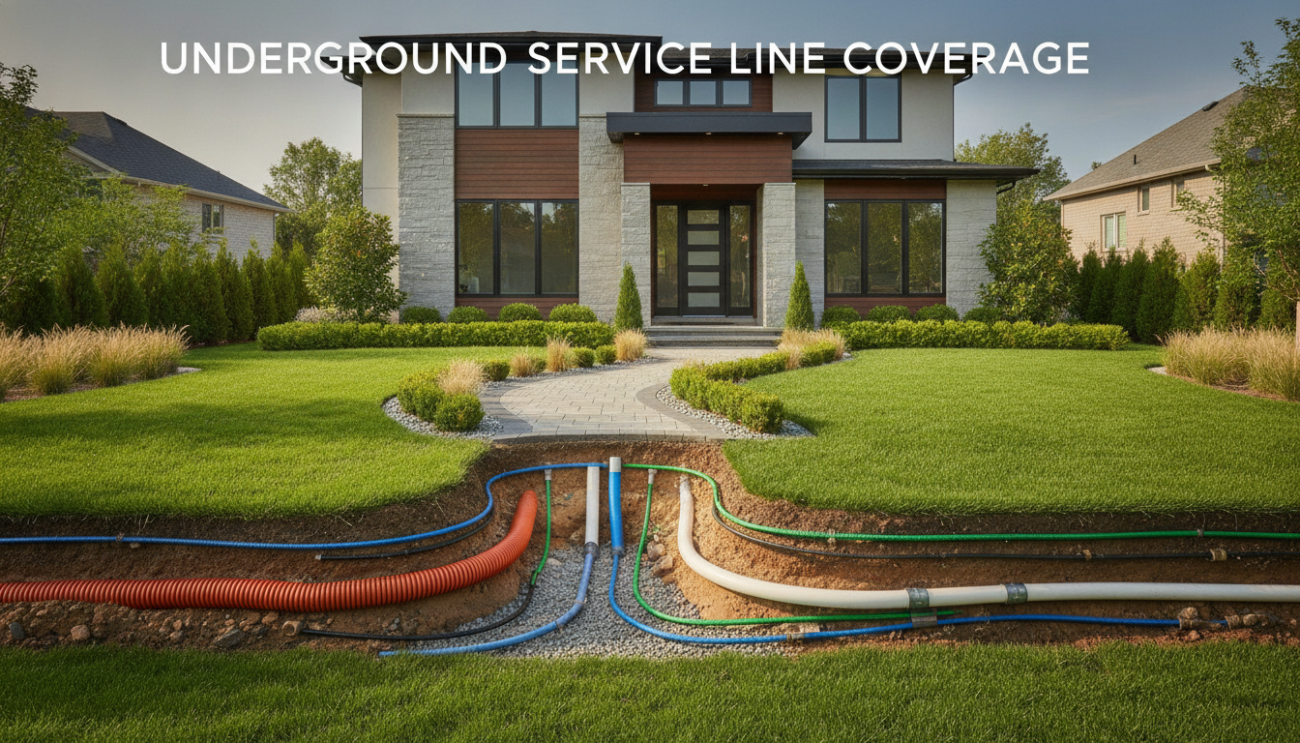
Few home emergencies are more disruptive or financially shocking than an underground pipe collapse in your front yard. If a water service pipe splits or a sewer line cracks beneath your lawn, thousands of gallons of water or raw sewage can flood your property within hours. Many property owners assume municipal utilities or standard homeowners policies handle subterranean pipes, only to discover too late that private owners bear full responsibility. In this guide, you will learn how service line coverage works, what it costs, which hazards it protects against, and how to decide if this endorsement belongs on your policy.
Quick Answer: What Is Service Line Coverage?
Service line coverage is an optional homeowners insurance endorsement that pays to repair or replace damaged underground utility lines running across your property. It covers water, sewer, electrical, and gas lines damaged by wear, rust, root intrusion, or ground freezing, with typical limits of $10,000 to $25,000 after a $500 deductible.
The Property Line Trap: Who Owns Buried Utility Lines?
Most residential utility customers assume monthly bills cover all infrastructure connecting their home to the public grid. While the city maintains the main pipes beneath public streets, property lines mark a strict boundary. The moment a utility line crosses onto private property, legal and financial liability transfer entirely to the homeowner.
If a subterranean conduit collapses between the street curb and your foundation, the utility company will disconnect service for safety. However, they will not dig up your lawn or pay for the fix. A baseline standard homeowners insurance policy protects against fire, wind, and interior leaks, but standard policies explicitly exclude underground piping from wear, tear, and ground movement.
Underground utility line insurance bridges this gap by covering essential buried lines that keep your household functioning:
- Water service piping: Fresh drinking water pipes running from the municipal meter to the home.
- Sewer laterals: Waste drainage conduits running to municipal sewer mains or septic tanks.
- Underground electrical wiring: Buried primary power lines and exterior electrical conduits.
- Natural gas lines: Supply pipes fueling furnaces, water heaters, and backup generators.
- Telecommunication conduits: Underground fiber optic cables and high-speed data lines.
What Does Service Line Coverage Pay For?
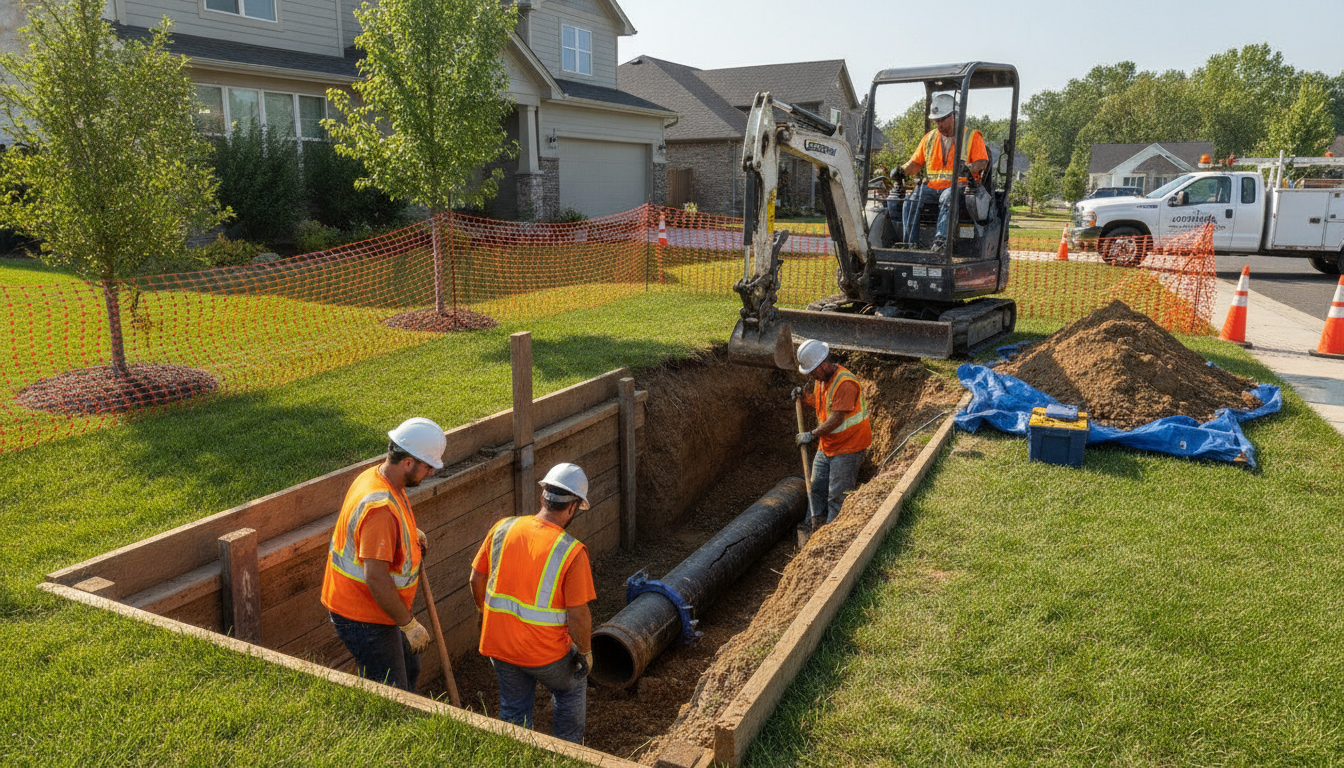
Fixing buried utilities involves far more than simply replacing pipe. Because utility lines sit four to eight feet beneath soil, concrete driveways, and landscaping, excavation labor often exceeds the cost of the pipe itself. An approved service line endorsement claim covers several key expense categories:
- Excavation and trenching: Contractor labor and heavy machinery rental required to safely expose broken pipes.
- Line repair and replacement: New materials that meet municipal building codes, including durable PVC, PEX, or shielded copper.
- Property and landscape restoration: Costs to backfill trenches, replace sod, repair paved driveways, and fix damaged walkways.
- Loss of use and temporary living: Hotel accommodation and meals if damaged water or sewer lines make your home temporarily uninhabitable.
- Environmental upgrades: Additional funds to upgrade old lead or galvanized lines to modern eco-friendly materials.
Covered Perils vs. Excluded Perils
Service line coverage targets specific hazards that standard homeowners policies routinely exclude. Understanding these boundaries ensures realistic claim expectations.
Perils typically covered include:
- Wear, tear, and rust: Natural deterioration, corrosion, and rust over decades of underground moisture exposure.
- Tree root intrusion: Tree root networks penetrating joints, causing blockages and pipe fractures.
- Freezing and frost heaves: Soil freezing that compresses or ruptures buried water lines.
- Mechanical collapse: Sudden pressure failures or structural collapses from soil compaction.
- Vehicle weight: Surface pressure from delivery trucks or equipment that damages lines below.
Perils typically excluded include:
- Earthquakes and landslides: Earth movement requires a dedicated standalone earthquake policy.
- Flooding: Rising water damage is governed through flood insurance policies.
- Indoor heating and cooling equipment: Interior mechanical components fall under equipment breakdown coverage rather than service line riders.
According to consumer guidance from the Insurance Information Institute (III), adding targeted endorsements to basic property policies prevents costly surprises during unexpected infrastructure breakdowns.
Average Repair Costs vs. Endorsement Premiums
Comparing potential repair bills against annual endorsement premiums reveals why this coverage is so popular. Underground line repairs rank among the most expensive home maintenance events.
| Utility Line Type | Common Causes of Failure | Average Out-of-Pocket Cost | Endorsement Protection |
|---|---|---|---|
| Sewer Lateral Line | Root invasion, pipe collapse, bellied lines | $4,500 – $12,000 | Covered up to $10,000 – $25,000 limit |
| Main Water Service Pipe | Corrosion, freeze burst, water pressure fractures | $3,000 – $7,500 | Covered up to $10,000 – $25,000 limit |
| Underground Electric Line | Ground settling, insulation failure, rodents | $2,000 – $5,000 | Covered up to $10,000 – $25,000 limit |
| Yard & Driveway Restoration | Trenching, re-paving asphalt, replanting sod | $1,500 – $4,500 | Included in total claim allowance |
Adding a service line endorsement to your homeowners policy costs roughly $25 to $50 per year, paired with a standard $500 deductible. When evaluated against an unexpected $7,000 sewer repair bill, this coverage offers an exceptional financial safeguard.
Endorsement vs. Third-Party Utility Warranty Plans
Many homeowners receive frequent mailers from third-party warranty companies offering utility protection plans. While these warranty programs are legitimate, comparing them to an insurance endorsement reveals clear differences in cost and scope:
- Annual cost: Standalone warranties charge $10 to $20 monthly per line, quickly totaling $250 to $400 annually. An insurance endorsement protects all lines together for $30 to $50 per year.
- Coverage scope: Warranty plans usually protect only one specific line, such as water or sewer. An insurance endorsement protects water, sewer, electric, gas, and data lines simultaneously.
- Contractor choice: Warranty providers often require using their pre-selected network. Insurance endorsements generally allow you to hire any licensed local contractor.
- Restoration caps: Warranty plans frequently place strict sub-limits on driveway and lawn restoration, while insurance endorsements cover site remediation under your main limit.
Advisory publications from the National Association of Insurance Commissioners (NAIC) emphasize that reviewing endorsements through your primary insurer offers superior protection at lower overall costs.
Who Needs Service Line Coverage Most?
While every property with underground lines carries risk, several property profiles face heightened vulnerability:
- Homes built before 1990: Vintage plumbing often utilizes clay or cast iron pipes that degrade over time.
- Yards with mature trees: Large root systems actively seek moisture and penetrate pipe joints.
- Northern regions with deep freezes: Repeated freeze-thaw cycles shift soil and fracture buried pipes.
- Properties with long setbacks: Long driveways mean dozens of additional feet of vulnerable subterranean piping.
Homeowners seeking overall policy savings can pair this endorsement with proven home insurance discount strategies to offset the modest premium increase.
How to Handle an Underground Line Emergency
If you suspect an underground line break, follow these five essential steps to protect your property and streamline your claim:
- Shut off the main supply: For water breaks, turn off the interior main valve. For suspected gas leaks, evacuate immediately and call 911 from outside.
- Notify your insurance carrier: Inform your insurer prior to digging so an adjuster can inspect damage and approve estimates.
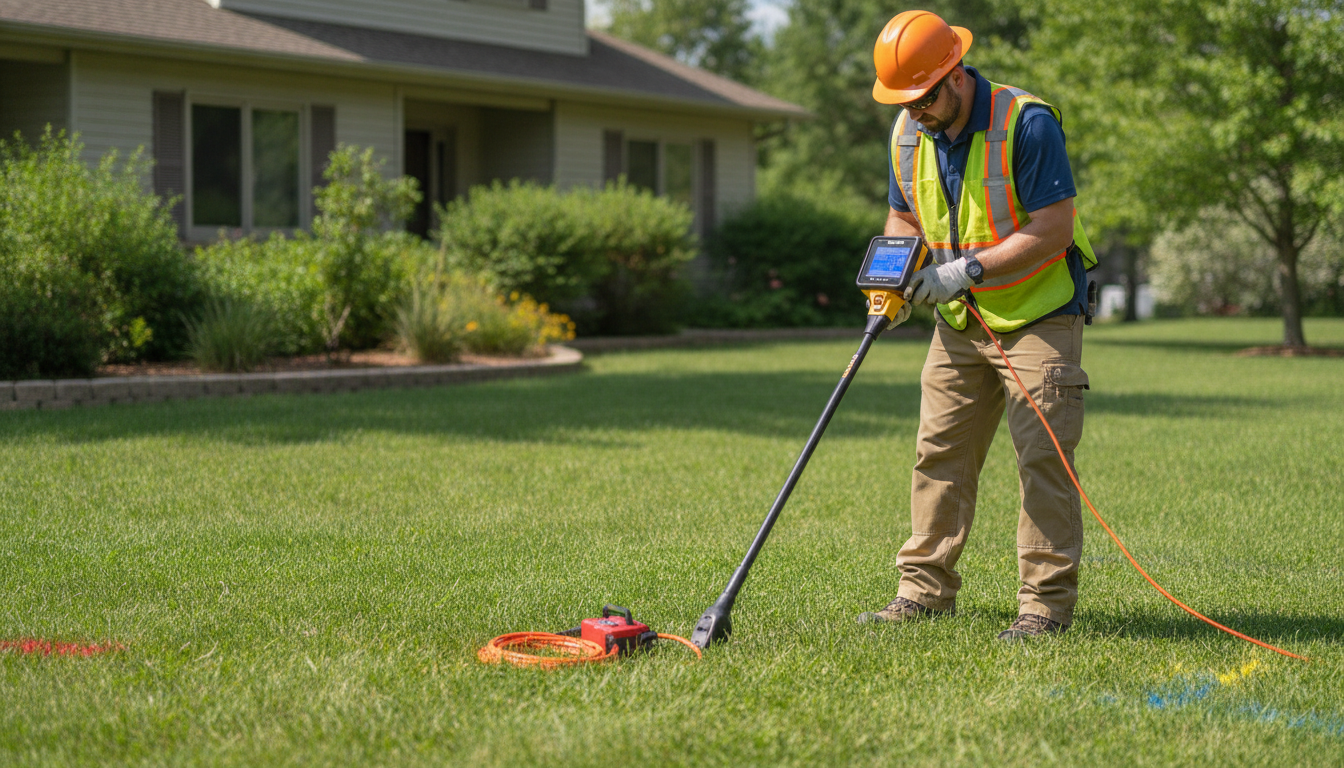
- Call 811 before digging: Free utility marking prevents dangerous utility strikes during excavation.
- Document damage: Take photos of waterlogged yards and request a digital sewer camera inspection from your plumber.
- Save itemized receipts: Ensure contractor invoices separate equipment rental, piping, and landscaping restoration.
For complete protection across property and liability risks, maintaining adequate personal umbrella insurance provides additional financial peace of mind.
Frequently Asked Questions About Service Line Coverage
Does regular homeowners insurance cover service lines?
No, standard homeowners policies (HO-3 and HO-5) exclude wear, tear, ground movement, and root damage to underground pipes. A service line endorsement is required to protect these lines.
How much does a service line endorsement cost?
An endorsement typically costs between $25 and $50 annually when bundled onto an existing homeowners policy, providing $10,000 to $25,000 in coverage with a $500 deductible.
Are septic and well lines included?
Yes, most endorsements cover underground pipes connecting your home to private well pumps or septic tanks located on your residential lot.
Will filing a service line claim raise my rates?
Service line claims are classified as property claims. Because insurers recognize that underground lines naturally age, a single claim generally has minimal premium impact compared to major interior water claims.
Final Verdict: Is Service Line Protection Worth It?
Service line coverage is one of the most cost-effective endorsements available to homeowners today. A sudden sewer lateral or water line collapse can easily cost $5,000 to $10,000 in excavation and pipe replacement fees. For less than $5 per month, an endorsement eliminates this unexpected financial risk.
Review your policy declarations page or consult your insurance agent today to confirm whether service line protection is in place. Adding this coverage ensures your subterranean infrastructure is protected against costly surprises.