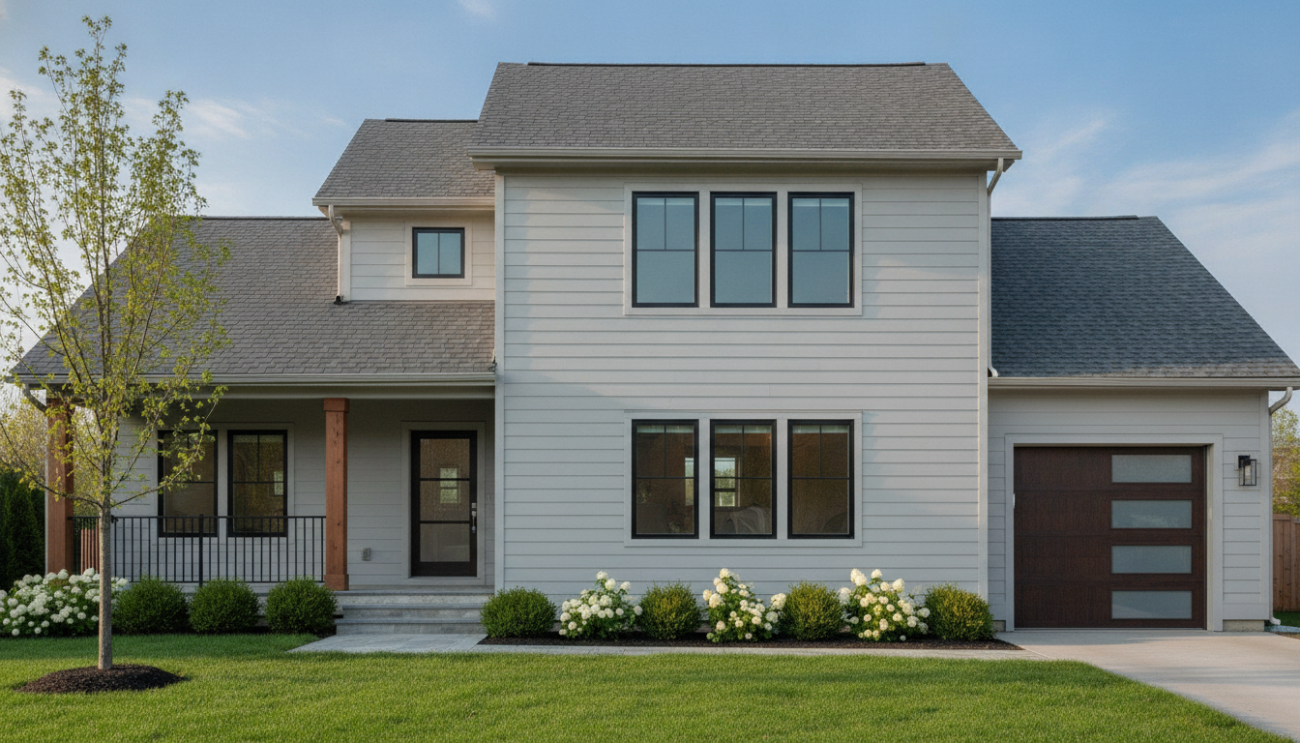
When severe hail or high winds strike your neighborhood, your home exterior often takes the brunt of the impact. While standard homeowners insurance pays for direct physical damage, policyholders frequently encounter an unpleasant surprise during repairs: insurers only agree to fix damaged panels or shingles. If your original materials are discontinued or weathered, your house can end up with mismatched patches. In this 2026 guide, you will discover how a matching coverage endorsement works, typical limits and costs, state matching rules, and steps to secure seamless exterior repairs.
Quick Answer: What Is a Matching Coverage Endorsement?
A matching coverage endorsement is an optional homeowners insurance rider that pays to replace undamaged siding, roofing, or flooring when matching materials are discontinued or unavailable following a covered loss. It prevents unsightly mismatched repairs by funding uniform replacement across entire slopes or exterior elevations.
What Is a Matching Coverage Endorsement and How Does It Work?
A standard homeowners insurance policy (such as an HO-3 or HO-5 policy) is built around the legal principle of direct physical loss. Under this framework, an insurer is only required to repair or replace property that sustained direct physical harm from a covered peril.
When high winds tear away twenty siding panels on one side of your house, the insurer calculates claim payouts based solely on replacing those specific pieces. However, building material manufacturers regularly update color palettes, profile contours, and locking mechanisms. Even when the original product line remains active, years of ultraviolet sunlight exposure and seasonal weathering naturally alter the shade of existing exterior surfaces.
A matching coverage endorsement (often called a matching of undamaged property endorsement or roof and siding matching coverage) alters your standard policy terms. If matching replacement materials cannot be reasonably obtained in color, texture, size, or profile, the carrier covers the replacement of continuous undamaged surfaces up to your designated endorsement limit.
The Patchwork Problem: Why Standard Home Insurance Denies Matching
Understanding why insurers deny matching claims requires looking at traditional policy language. According to data from the Insurance Information Institute, wind and hail damage represent roughly forty percent of all insured property claims annually. Despite this volume, baseline policies state that insurers do not cover cosmetic color differences between old and new materials.
Direct Physical Loss vs. Aesthetic Uniformity
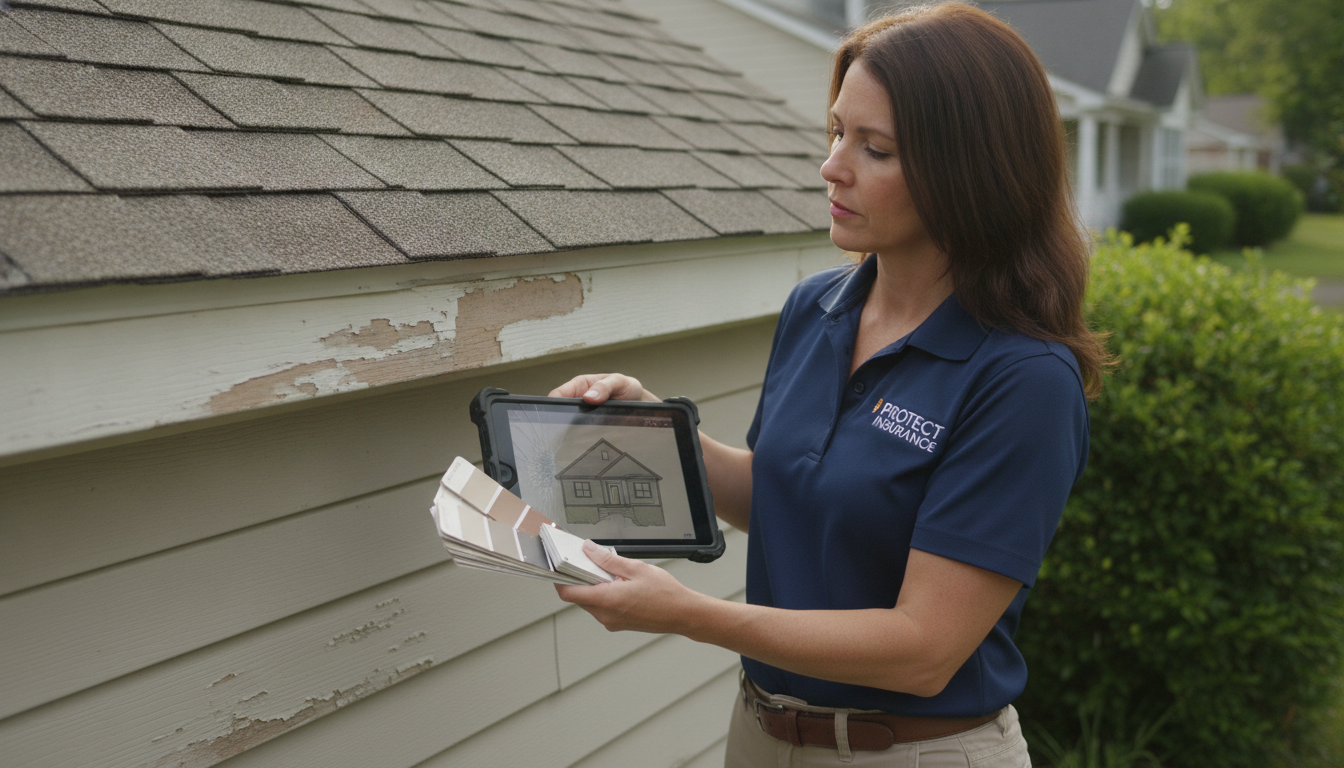
Without an endorsement, adjusters separate damaged areas from undamaged areas. If a hailstorm damages shingles on your front roof slope while leaving the rear slope untouched, the carrier pays only for the front slope. If that shingle color was retired years ago, a contractor must install the nearest match. The contrast between fresh, darker shingles and weathered shingles creates an awkward patchwork that can diminish curb appeal and home resale value.
Common Causes of Replacement Material Mismatches
- Discontinued product lines: Manufacturers regularly retire styles, colors, and dimensions to introduce newer product lines.
- Batch and dye lot drift: Paint formulations and vinyl dyes vary slightly between manufacturing runs produced years apart.
- Sun and weather exposure: Sunlight and moisture fade exterior surfaces unevenly across shaded and exposed walls.
- Profile and locking differences: Updated vinyl panels and shingles often feature subtle locking changes that prevent clean integration with older materials.
Roof and Siding Matching Coverage Limits and Costs (2026)
Because replacing undamaged siding or roofing can turn a modest repair into an extensive project, insurers structure matching endorsements with specific sub-limits. Reviewing these options helps you select adequate protection for your property.
| Endorsement Level | Coverage Sub-Limit | Estimated Annual Cost | Best Suited For |
|---|---|---|---|
| Basic Matching | $10,000 per claim | $30 to $55 / year | Smaller single-story homes, ranches, or partial vinyl sections |
| Standard Matching | $20,000 per claim | $60 to $95 / year | Typical two-story suburban homes with full exterior siding |
| Comprehensive Matching | $35,000 to $50,000 | $110 to $180 / year | Custom homes, complex roof designs, fiber cement, or cedar shake |
| Full Replacement Option | Full dwelling limit | $190 to $320 / year | Historic residences and premium architectural properties |
How Much Does a Matching Endorsement Cost?
The cost of matching coverage endorsement policies is modest when weighed against possible out-of-pocket restoration expenses. For most homes, adding a twenty thousand dollar matching rider costs between five and eight dollars per month.
Most insurers do not impose an extra deductible for the matching rider. Your standard policy deductible applies to the primary loss, and the matching coverage applies automatically once the storm claim is approved.
State Matching Laws: Does Your State Protect You?
State insurance regulations influence how matching disputes are resolved. As noted by the National Association of Insurance Commissioners (NAIC), state insurance departments supervise claim settlement practices and consumer protection rules.
Line of Sight Rules vs. Strict Physical Loss
Across the country, state regulations generally fall into three categories:
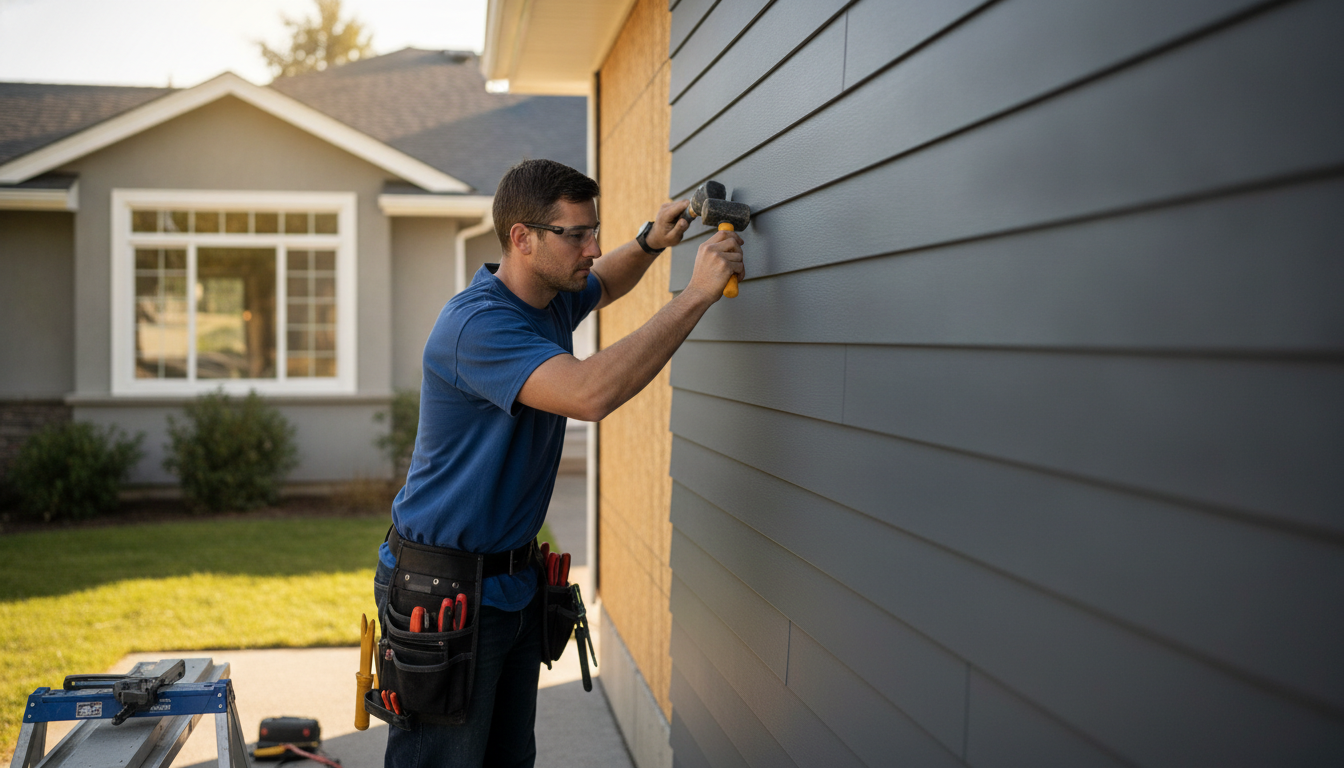
- Explicit Line of Sight States: In states like Florida, Ohio, Kentucky, Minnesota, and Wisconsin, administrative rules require a reasonably uniform exterior appearance. If damaged siding cannot be matched, insurers must replace undamaged materials within the same continuous line of sight.
- Reasonable Expectations States: In states such as Pennsylvania and Tennessee, courts often apply the reasonable expectations doctrine. Homeowners who buy replacement cost coverage expect a uniform appearance, prompting insurers to replace adjacent undamaged materials.
- Strict Physical Damage States: In states such as Texas, North Carolina, and Indiana, statutory language favors insurers. Without an endorsement, carriers are permitted to replace only physically damaged elements, regardless of visible color differences.
Because state regulations can change, carrying a matching endorsement gives you clear contractual protection regardless of where you reside.
Real-World Claims Example: Storm Damage to Vinyl Siding
Consider a practical scenario involving Mark and Sarah, who own a two-story home with olive green vinyl siding. A severe spring hailstorm damaged siding across the western wall, while other walls remained untouched.
Claim Comparison: With vs. Without Matching Rider
Scenario A: Without Matching Endorsement
- The contractor discovers the original siding shade was discontinued four years ago.
- The insurer pays $5,800 to replace only the western wall with the closest modern shade.
- The replacement siding clashes with the sun-faded walls nearby.
- To re-side the remaining three elevations uniformly, Mark and Sarah must pay $16,500 out of pocket.
Scenario B: With a $20,000 Matching Endorsement
- The contractor confirms with testing that an identical match is unavailable.
- The $20,000 matching endorsement takes effect immediately.
- The carrier pays $5,800 for the damaged wall, plus $16,500 under the endorsement to re-side the undamaged walls.
- Mark and Sarah pay only their standard $1,000 policy deductible.
How to Handle a Disputed Matching Siding Insurance Claim
If storm damage leaves you facing unmatched exterior materials, take these proactive steps:
- Request an ITEL material analysis: ITEL Laboratories tests physical samples of siding or shingles to confirm whether an exact commercial match exists.
- Obtain supplier verification letters: Ask your material supplier for written confirmation that your product or color has been retired.
- Photograph materials in natural daylight: Take clear photos of existing panels beside suggested replacements to show visible differences.
- Review policy endorsements carefully: Check your policy schedule to confirm your matching coverage limits and terms.
How Matching Endorsements Pair With Other Essential Property Riders
A matching coverage endorsement works best alongside other key property protections:
- Extended Replacement Cost: An extended replacement cost coverage endorsement provides an extra 25% to 50% cushion above dwelling limits if regional rebuilding costs surge.
- Ordinance or Law Coverage: Upgrading exterior walls often triggers current building codes. Securing ordinance or law coverage pays for mandatory code upgrades.
- Water Backup Protection: Storms often bring heavy rains that overwhelm sewer systems. A dedicated water backup coverage rider protects basements from drain overflows.
- Service Line Coverage: Heavy storms can also stress underground infrastructure. Adding service line coverage protects private exterior pipes and wiring.
Frequently Asked Questions About Matching Coverage Endorsements
Does standard homeowners insurance pay for matching siding?
Standard homeowners insurance policies generally do not pay to replace undamaged siding for cosmetic consistency. Unless your policy includes a matching endorsement or state rules mandate line-of-sight matching, carriers are only required to repair directly damaged sections.
What is the difference between line of sight and full replacement matching?
Line of sight matching requires insurers to replace materials on visible, continuous surfaces so a single elevation looks uniform from one viewpoint. Full replacement matching covers all exterior sides of the home, providing complete visual consistency.
Can I add a matching endorsement after a storm occurs?
No. Insurance riders cannot be added retroactively to cover damage that has already occurred. To protect against future storm losses, you must add the endorsement before an incident happens.
Does matching coverage apply to interior finishes?
Many matching endorsements cover continuous interior materials, such as hardwood flooring and custom cabinetry, when matching items are unavailable after a loss. Always check your policy wording for specific interior coverage.
Final Verdict: Is a Matching Endorsement Worth It for Your Home?
Your home is a major investment. Allowing an insurer to install clashing materials can reduce property curb appeal and market value. At an average cost of five to ten dollars per month, a matching coverage endorsement offers valuable peace of mind.
Review your policy declarations page before storm season arrives. Contact your insurance agent to request a quote for roof and siding matching coverage, ensuring your home stays uniform after any storm.