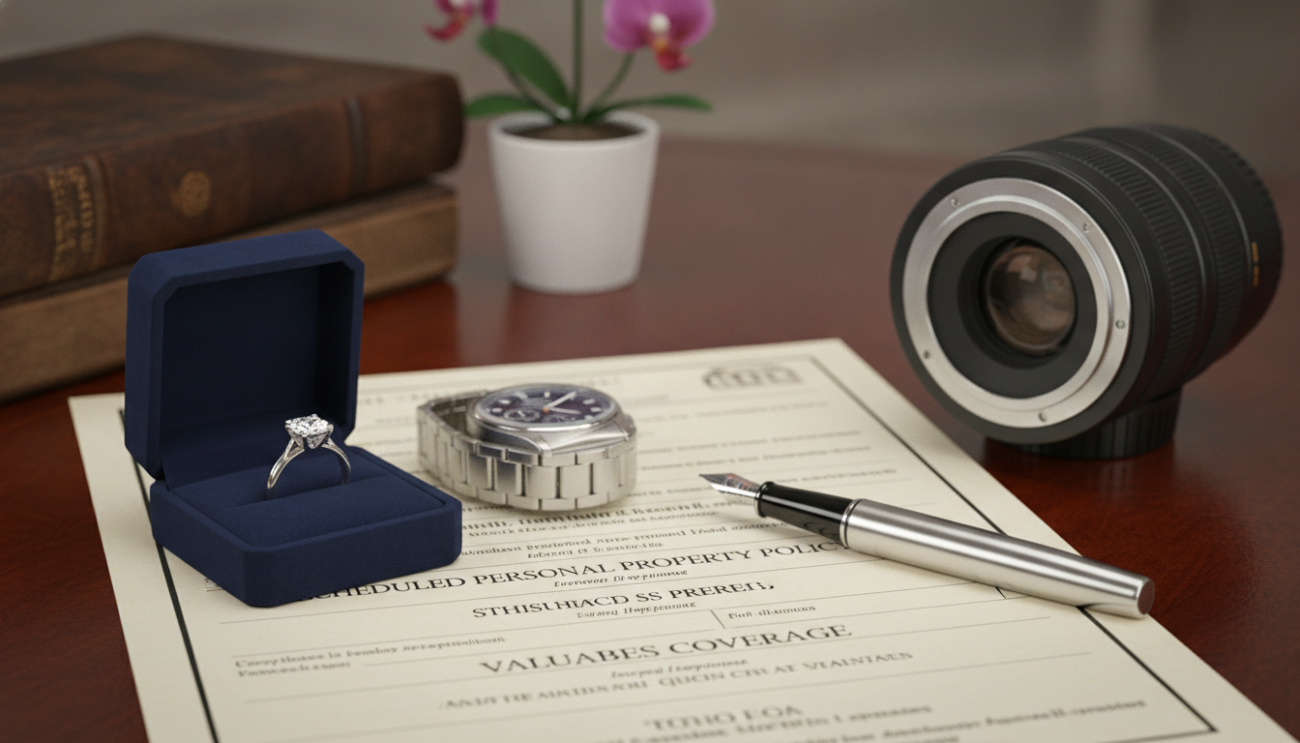
Most homeowners assume their standard insurance policy replaces everything they own after a theft, house fire, or severe storm. However, when an expensive engagement ring, luxury watch, or rare painting disappears, policyholders often discover strict sub-limits capping payouts at a fraction of their value. In this comprehensive guide, you will learn how scheduled personal property works, what it costs in 2026, which items require extra protection, and how to file a successful claim.
Quick Answer: What Is Scheduled Personal Property Coverage?
Scheduled personal property is an optional insurance endorsement (also called a personal articles floater) that covers specific high-value items individually. Unlike standard personal property coverage, which enforces strict dollar sub-limits and standard deductibles, scheduled coverage provides agreed-value or replacement-cost protection with broader perils and typically zero deductible.
What Is Scheduled Personal Property and How Does It Work?
A standard homeowners insurance policy (HO-3 or HO-5) includes personal property coverage (Coverage C), which generally equals 50% to 70% of your dwelling limit. While that blanket sum sounds generous, standard policies place strict internal limits on specific categories of high-value items.
These category caps, known as personal property sub-limits, restrict payouts for stolen jewelry, watches, gems, and furs to $1,500 or $2,500 for the entire claim. If a burglar steals an $8,000 diamond ring and a $6,000 watch, your standard insurer will only pay up to that sub-limit, minus your standard deductible.
To eliminate this vulnerability, insurers provide a scheduled personal property endorsement. When you schedule an item, you list each possession separately alongside a professional appraisal or detailed purchase receipt. Each item receives dedicated coverage based on verified value, ensuring full compensation if a loss occurs.
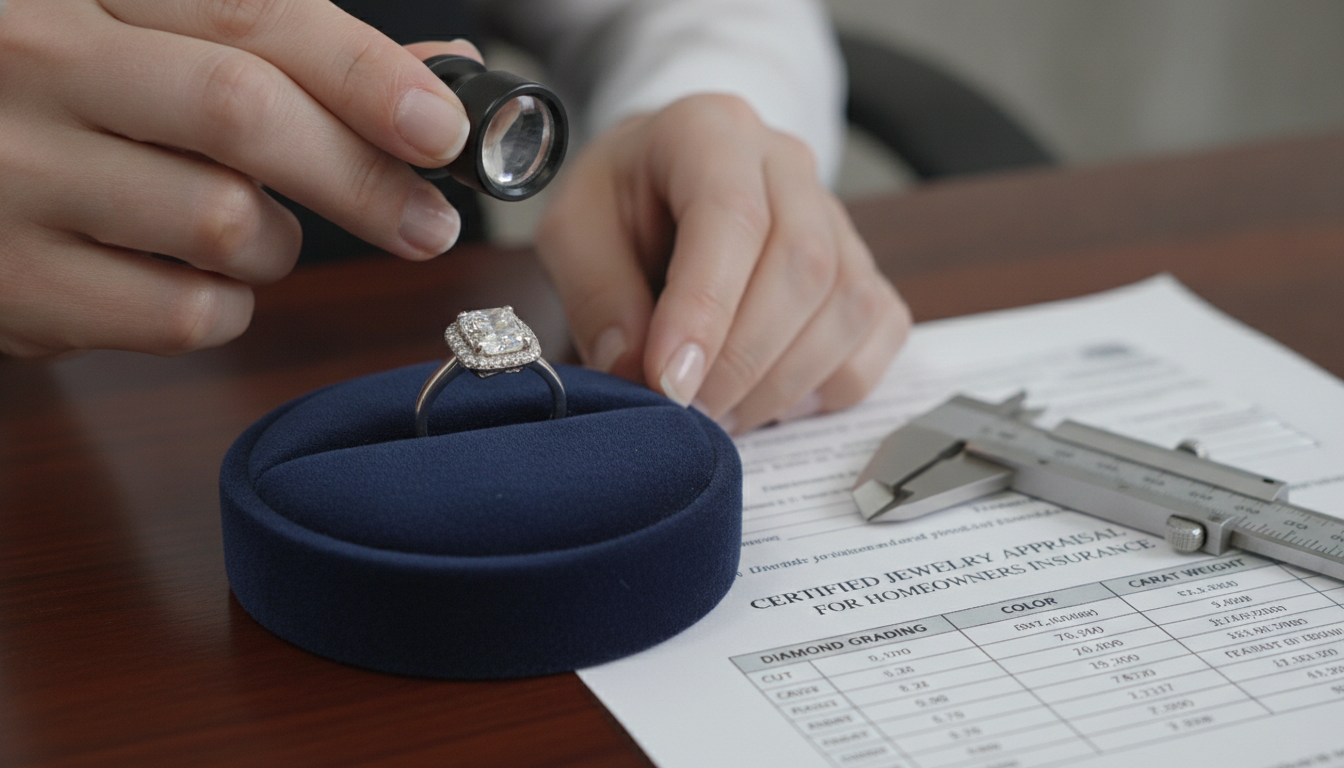
A certified appraisal establishes verified replacement cost for scheduled jewelry and luxury timepieces.
Standard Coverage C vs. Scheduled Personal Property
Understanding the differences between blanket personal property coverage and a dedicated floater prevents surprises during a claim. Here is how the two compare across crucial policy terms:
| Feature | Standard Personal Property (Coverage C) | Scheduled Personal Property Endorsement |
|---|---|---|
| Coverage Limit | Subject to category sub-limits ($1,500-$2,500) | Itemized up to full appraised value |
| Deductible | Standard policy deductible ($500-$2,500) applies | Usually $0 deductible per scheduled item |
| Covered Perils | Named perils only (fire, theft, storms) | Open perils / all-risk (accidental loss included) |
| Mysterious Disappearance | Excluded (lost ring at beach is denied) | Fully covered worldwide |
| Valuation Method | Often actual cash value (ACV) | Agreed value or full replacement cost |
| Worldwide Travel | Off-premises limit (often 10% of Coverage C) | Comprehensive worldwide coverage |
According to the National Association of Insurance Commissioners (NAIC), standard homeowners policies only cover named perils. If an earring slips down a hotel drain or a diamond loosens from its setting during vacation, standard insurance offers zero compensation. In contrast, a personal articles floater covers accidental loss and mysterious disappearance worldwide.
Common Personal Property Sub-Limits You Must Know
Every standard property insurance policy carries internal sub-limits. Typical sub-limits include:
- Jewelry, watches, and gemstones: $1,500 to $2,500 total for theft losses.
- Silverware, goldware, and tableware: $2,500 total limit for theft.
- Firearms and accessories: $2,000 to $3,000 total limit for theft.
- Fine art and antiques: Often restricted or paid on depreciated cash value.
- Business property kept at home: Capped at $2,500 on-premises.
As documented by the Insurance Information Institute (III), these caps keep baseline premiums affordable for average households without subsidizing luxury items. Homeowners with valuable collections must actively request specialized riders to secure adequate financial protection.

High-value paintings and rare antiques require scheduled endorsements to protect true market value.
What Items Should You Schedule on Your Policy?
Focus your scheduling efforts on specific categories where replacement costs exceed standard policy sub-limits:
1. Fine Jewelry and Luxury Watches
Wedding rings, engagement bands, necklaces, and Swiss watches are the most frequently scheduled items. A dedicated jewelry insurance endorsement offers invaluable protection. It covers loose prongs, cracked gemstones, and accidental loss during travel without a deductible.
2. Fine Art, Paintings, and Rare Sculptures
Original oil paintings, limited-edition lithographs, and bronze sculptures often appreciate over time. Standard insurance only reimburses standard materials, ignoring artistic provenance. Scheduling fine art locks in an agreed value coverage amount verified by an accredited appraiser.
3. Musical Instruments and Audio Equipment
Concert violins, grand pianos, vintage guitars, and studio gear represent substantial investments. If you play in community performances or local venues, standard policies may classify your gear as business property and deny claims. An instrument floater covers your instruments both at home and on stage.
4. High-End Sporting Gear and Photography Equipment
Professional camera bodies, specialty telephoto lenses, and competitive bicycles easily cost $5,000 to $15,000. These items regularly leave your premises, increasing exposure to damage and theft. A scheduled floater protects this gear wherever your hobbies take you.
How Much Does Scheduled Personal Property Coverage Cost in 2026?
Adding scheduled coverage to your policy is cost-effective compared to standalone specialty insurance. On average, annual premiums range between 1% and 2% of the item’s insured value, or roughly $10 to $20 per $1,000 of coverage.
Here is a breakdown of realistic annual costs across common categories in 2026:
- $5,000 Engagement Ring: $50 to $100 per year ($4 to $8 per month).
- $10,000 Luxury Wristwatch: $100 to $180 per year ($8 to $15 per month).
- $15,000 Fine Art Oil Painting: $120 to $200 per year ($10 to $17 per month).
- $8,000 Professional Camera Kit: $120 to $200 per year ($10 to $17 per month).
- $25,000 Multi-Piece Jewelry Collection: $250 to $450 per year ($21 to $38 per month).
Factors that influence your premium include geographic crime rates, home security systems, and whether you store valuables in a bolted safe or bank vault.
Just like securing an equipment breakdown coverage endorsement for essential home mechanicals, adding a floater for your prized possessions fills dangerous gaps in your primary insurance policy.
Agreed Value vs. Stated Value: Key Differences
When setting up your endorsement, review the valuation clause carefully:
- Agreed Value (Agreed Amount): The insurer and policyholder agree upfront on the exact dollar value of the item. If a total loss occurs, the insurer issues a check for that predetermined sum without deducting depreciation or disputing current replacement prices.
- Stated Value (or Actual Replacement Cost): The policy lists the maximum ceiling the insurer will pay. At the time of the claim, the insurer reserves the right to replace the item with one of like kind and quality or pay the current market price, whichever is lower.
Always ask your insurance agent whether your rider provides guaranteed agreed value settlement to avoid stressful disputes during a claim.
Step-by-Step Guide to Scheduling Your Valuables
Protecting your valuables requires straightforward documentation:
Step 1: Conduct a Valuables Inventory
Walk through your home and list possessions worth more than $1,000. Record serial numbers, brands, model specifications, purchase dates, and store receipts.
Step 2: Obtain Certified Professional Appraisals
Most insurers require a recent appraisal (within 2 to 3 years) for items valued over $2,500 or $5,000. Ensure your appraiser belongs to a recognized organization such as the American Gem Society (AGS) or Appraisers Association of America (AAA).
Step 3: Photograph Each Item from Multiple Angles
Take crisp photographs of each piece. Capture close-up images of hallmarks, serial stamps, artist signatures, and gemstone cuts. Store digital copies securely in the cloud.
Step 4: Contact Your Insurance Carrier
Submit appraisals, receipts, and photos to your insurer. Request a scheduled personal property endorsement with a $0 deductible and confirm open-perils protection.
Step 5: Schedule Regular Appraisal Updates
Precious metals and art fluctuate in market value. Re-appraise scheduled possessions every three to five years to ensure policy limits keep pace with inflation.
Real-World Example: Standard Policy vs. Scheduled Endorsement
Consider David and Sarah, who experienced a residential burglary while traveling. Among the stolen items was Sarah’s vintage diamond ring appraised at $12,000 and David’s $7,000 watch.
Scenario A: Standard HO-3 Policy with No Endorsement
David and Sarah held a standard policy with a $1,500 jewelry theft sub-limit and a $1,000 deductible. Their loss totaled $19,000. Their insurer applied the $1,500 sub-limit and subtracted the $1,000 deductible. The total insurance payout was just $500, leaving them with an out-of-pocket loss of $18,500.
Scenario B: Scheduled Personal Property Endorsement
Prior to the trip, David and Sarah scheduled both items for an annual premium of $210 with a $0 deductible. Following the burglary, the insurer promptly issued a claim settlement check for the full $19,000. Spending $17 per month saved them $18,500 in devastating loss.
How Scheduled Property Complements Other Endorsements
Securing high-value belongings is one part of a complete homeowners protection strategy. Just as luxury items need dedicated floaters, your physical property faces structural hazards excluded under basic policies:
- Water backup coverage pays for sewage and drain overflows that ruin finished basements.
- Service line coverage repairs buried exterior water and utility pipes on your land.
- Ordinance or law coverage absorbs mandated building code upgrades after structural repairs.
- Loss assessment coverage shields condominium owners from HOA special assessments.
Frequently Asked Questions About Scheduled Personal Property
Does scheduled personal property have a deductible?
In most cases, scheduled personal property endorsements carry a $0 deductible. If a scheduled item is stolen, damaged, or lost, your insurer pays the full covered amount without deducting your standard policy deductible.
Does scheduled personal property cover accidental loss or dropping a ring?
Yes. One of the greatest advantages of scheduling valuables is broad open-perils coverage. This includes mysterious disappearance, unexplained loss, or accidentally dropping jewelry into water or down a drain.
Is an appraisal always mandatory before scheduling an item?
Not always. For newly purchased items, insurers often accept a detailed store receipt if purchased within the past 30 to 90 days. For older items or valuables exceeding $2,500, an appraisal is usually required.
Can I schedule property on a renters or condo policy?
Yes. Scheduled personal property endorsements can be added to renters insurance (HO-4) and condo insurance (HO-6) policies under the exact same guidelines and pricing as standard homeowners policies.
What is the difference between blanket coverage and scheduled coverage?
Blanket coverage applies a single total limit across multiple items in a category, subject to per-item caps. Scheduled coverage itemizes each possession with its own dedicated limit, valuation agreement, and zero-deductible terms.
Protect Your Valuables with the Right Coverage Today
Your fine jewelry, family heirlooms, art collections, and luxury timepieces represent years of memories and financial investment. Relying on basic homeowners contents coverage leaves your most valuable assets exposed to restrictive sub-limits and costly deductibles.
Review your personal belongings today, gather receipts and appraisals, and contact your insurance provider to add a scheduled personal property endorsement. Taking proactive steps now guarantees that your most cherished possessions remain fully protected wherever life takes you.